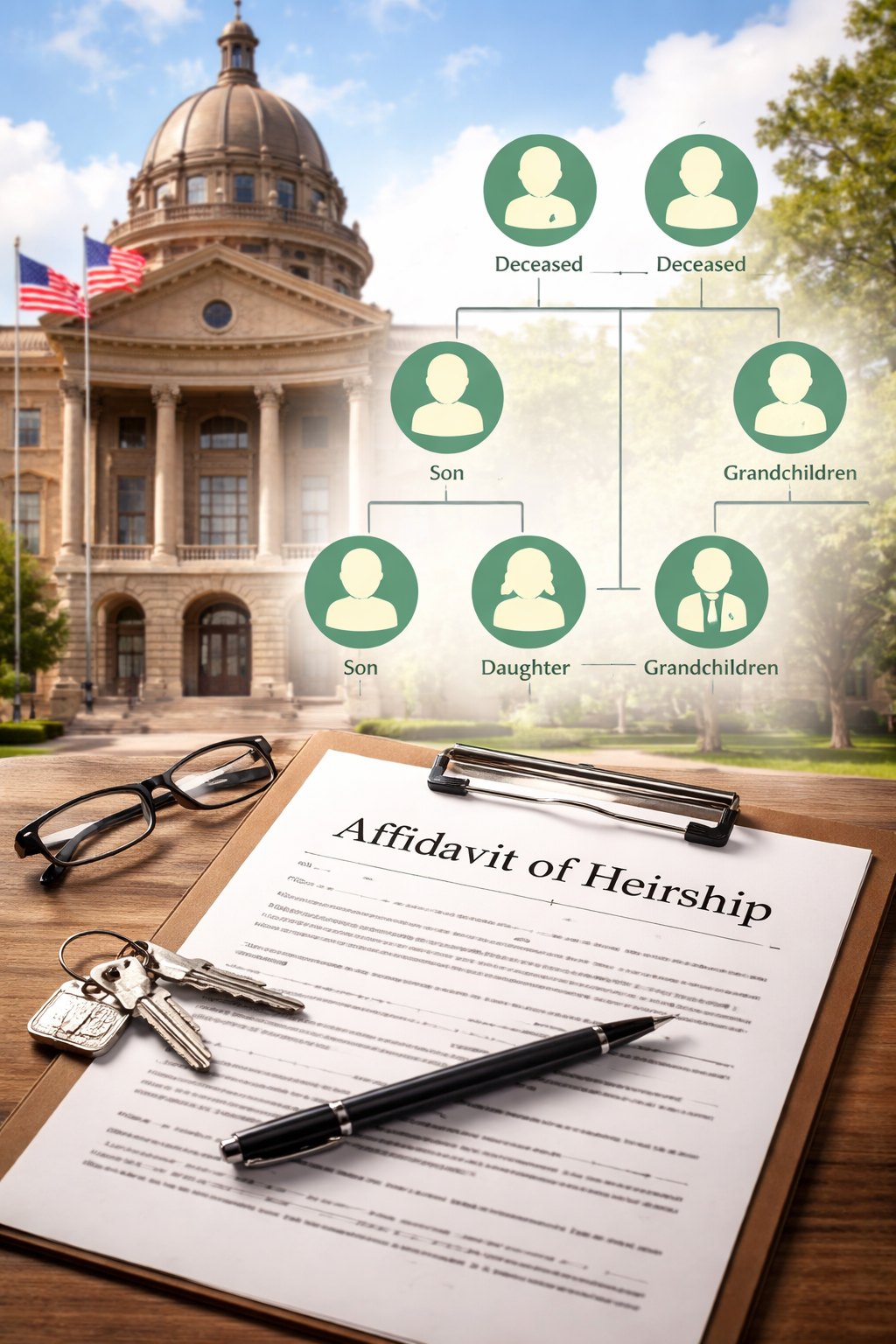
A Technical Look at Texas Estates Code § 203.001
When someone dies without a will in Texas, family members often assume that probate is automatically required. In many cases, however—particularly when real estate is involved—Texas law allows a simpler alternative called an Affidavit of Heirship.
This document can sometimes transfer property without opening a full probate proceeding. But it has limitations, and using it incorrectly can create title problems years later.
Below is a technical explanation of how affidavits of heirship work under Texas law, when they are appropriate, and when probate is still required.
What Is an Affidavit of Heirship?
An Affidavit of Heirship is a sworn statement describing a deceased person's family history and identifying their legal heirs under Texas intestacy law.
Texas law expressly recognizes this tool.
Texas Estates Code § 203.001(a) provides:
“A court may admit into evidence in a suit involving title to property the affidavit of an heir of a decedent… stating facts concerning the decedent’s family history, genealogy, marital status, or the identity of the decedent’s heirs.”
These affidavits are typically recorded in the county property records where the decedent owned real estate.
Once recorded and relied upon for a sufficient period of time, they can help establish ownership of inherited property.
Who Can Sign an Affidavit of Heirship?
The law requires disinterested witnesses.
Under Texas Estates Code § 203.001(b):
“The affidavit must be signed and sworn to by the affiant before an officer authorized to administer oaths.”
Best practice is to use two witnesses who are not heirsand who personally knew the decedent and their family history.
Typical affiants include:
- Long-time family friends
- Neighbors
- Church members
- Former coworkers
Heirs themselves generally should not be the affiantsbecause they have a financial interest in the outcome.
Information Required in an Affidavit of Heirship
A proper affidavit usually includes:
• Date and place of the decedent’s death
• Marital history of the decedent
• Names of all children (including deceased children)
• Names of parents and siblings if no children exist
• A description of the property owned
• Confirmation that the decedent died without a will
The affidavit must also describe the family tree clearly enough to determine inheritance under Texas intestacy statutes.
When Affidavits of Heirship Become Evidence of Ownership
Texas law gives affidavits increasing evidentiary weight over time.
Under Texas Estates Code § 203.001(d):
“An affidavit… that has been of record in the deed records of a county for five years or more is prima facie evidence of the facts stated in the affidavit.”
This means that after five years, the affidavit can serve as presumptive evidence of heirship in property disputes.
Title companies often rely on this statute when insuring property transfers involving inherited land.
When an Affidavit of Heirship Is Commonly Used
Affidavits of heirship are most commonly used when:
1. The Estate Is Small
If the decedent had minimal assets other than a house, heirs sometimes avoid probate using an affidavit.
2. The Death Occurred Many Years Ago
Title companies frequently rely on heirship affidavits when a property owner died decades earlier and no probate was opened.
3. Family Members Agree on Ownership
Affidavits work best when all heirs cooperate and there are no disputes.
When an Affidavit of Heirship Is NOT Enough
Despite their convenience, affidavits of heirship have important limitations.
Title Companies May Require Probate
Many title companies still require:
- Determination of heirship
- Independent administration
before issuing title insurance.
They Do Not Transfer Title Automatically
An affidavit does not legally transfer title by itself. Instead, it creates evidence of ownership.
Disputes Can Invalidate the Affidavit
If an omitted heir appears or someone challenges the facts, a court may disregard the affidavit entirely.
Alternatives to Affidavits of Heirship
Depending on the circumstances, other legal procedures may be more appropriate:
Determination of Heirship
Texas Estates Code Chapter 202 allows a court to formally determine heirs.
Small Estate Affidavit
Texas Estates Code § 205 allows simplified probate when estates meet certain requirements.
Independent Administration
A full probate proceeding that formally transfers title to heirs.
Each option has different legal consequences.
Why Affidavits of Heirship Can Cause Problems Later
While affidavits are often used to save money, they sometimes create long-term issues such as:
- Clouded title
- Difficulty selling property
- Missing heirs discovered decades later
- Title insurance refusals
For that reason, many attorneys recommend probate if the property value is significant.
Final Thoughts
Affidavits of heirship can be a useful tool in Texas real estate and probate practice, particularly for older estates and cooperative families.
However, they are not a substitute for probate in every situation. Because real estate ownership is involved, mistakes can create legal problems that last for generations.
If you inherit property in Texas and are unsure whether an affidavit of heirship is sufficient, consulting a qualified attorney can prevent serious title issues later.
At David C. Barsalou, Attorney at Law, PLLC, we help clients navigate business, family, tax, estate planning, and real estate matters ranging from document drafting to litigation with clarity and confidence. If you’d like guidance on your situation, schedule a consultation today. Call us at (713) 397-4678, email barsalou.law@gmail.com, or reach us through our Contact Page. We’re here to help you take the next step.