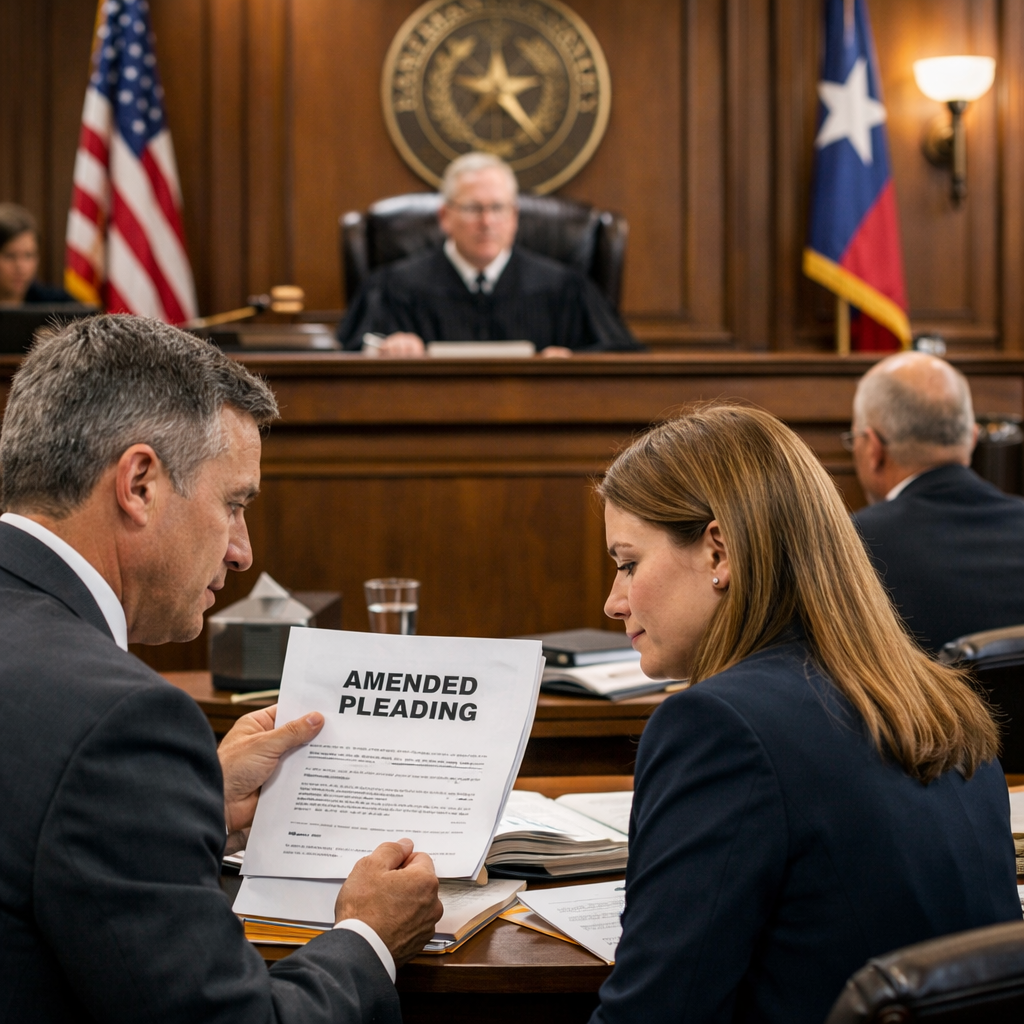
In Texas litigation, many cases are not decided by dramatic courtroom moments—but by quiet procedural moves. One of the most overlooked is the strategic use (or misuse) of amended pleadings under the Texas Rules of Civil Procedure.
If you do not understand TRCP 63 and 66, you risk either:
- losing viable claims or defenses, or
- allowing your opponent to reshape the case at the last minute.
This post breaks down the technical mechanics, codified law, and litigation strategy behind amended pleadings in Texas.
The Baseline Rule: Amendments Are Freely Allowed—Until They’re Not
Texas follows a liberal amendment policy.
TRCP 63 (Amended and Supplemental Pleadings) provides:
“Parties may amend their pleadings... at such time as not to operate as a surprise to the opposite party.”
However, there is a critical limitation:
“Any pleadings... offered for filing within seven days of the date of trial or thereafter... shall be filed only after leave of the judge is obtained.”
Key Takeaway:
- Before 7 days of trial: amendments are generally allowed as a matter of right
- Within 7 days of trial: you need leave of court
But that’s only half the story.
The Real Battleground: “Surprise” and Prejudice
Even when an amendment is technically allowed, courts can strike it if it causes unfair surprise or prejudice.
Texas courts consistently hold:
- The burden is on the opposing party to show surprise
- Mere inconvenience is not enough
- The surprise must be real and material
Practical Example:
If a party adds:
- a new cause of action
- a new damages theory
- or a new affirmative defense
…on the eve of trial, courts are far more likely to strike it.
TRCP 66: Trial Amendments—The Nuclear Option
Even more powerful is TRCP 66, which governs trial amendments.
It states:
“If evidence is objected to at the trial on the ground that it is not within the issues made by the pleadings... the court may allow the pleadings to be amended... freely when the presentation of the merits will be subserved thereby.”
This is where things get dangerous.
Translation:
- If evidence comes in that wasn’t pleaded,
- the court can allow a trial amendment on the spot
Unless:
“The objecting party satisfies the court that the admission... would prejudice him in maintaining his action or defense.”
Trial by Consent: When Pleadings Stop Mattering
Closely tied to Rule 66 is the doctrine of trial by consent.
If both parties:
- introduce evidence on an unpleaded issue, and
- fail to object
…that issue is treated as if it was properly pleaded.
Why this matters:
You can lose a case based on:
- issues never formally pleaded
- simply because you didn’t object in time
Strategic Use in Texas Litigation
For Plaintiffs:
- Use late amendments to expand damages theories
- Introduce alternative claims if discovery reveals new facts
- Push the boundary before the 7-day cutoff
For Defendants:
- Object early and clearly to surprise amendments
- Preserve error by showing specific prejudice
- Avoid accidentally consenting to new issues at trial
The “Leave of Court” Standard Is More Lenient Than You Think
Texas courts favor decisions on the merits.
Even when leave is required, courts often grant it unless:
- the amendment is clearly prejudicial, or
- it would delay trial
This creates a subtle but important reality:
👉 Judges often allow amendments—even late—if they think it helps “get to the truth.”
Common Litigation Mistakes
1. Failing to Object to Late Amendments
Silence = consent.
2. Assuming Pleadings Control the Case
They don’t—evidence can reshape everything.
3. Waiting Too Long to Amend
Courts are forgiving—but not infinitely so.
4. Ignoring the 7-Day Rule
That deadline matters more than most lawyers think.
How This Fits Into Your Case Strategy
In real-world litigation—especially in Texas state courts—procedure is leverage.
Amended pleadings can:
- revive weak cases
- inject new theories late
- or completely derail trial strategy
When used properly, they are one of the most powerful tools available under the Texas Rules of Civil Procedure.
Final Thought: This Is Where Cases Quietly Turn
Most clients assume cases are won by:
- evidence
- witnesses
- or legal arguments
But often, cases are won because one side:
- amended at the right time
- objected at the right time
- or understood these rules better
And the other side didn’t.
At David C. Barsalou, Attorney at Law, PLLC, we help clients navigate business, family, tax, estate planning, and real estate matters ranging from document drafting to litigation with clarity and confidence. If you’d like guidance on your situation, schedule a consultation today. Call us at (713) 397-4678, email barsalou.law@gmail.com, or reach us through our Contact Page. We’re here to help you take the next step.