Most people think estate planning begins and ends with a will. In reality, one of the most important legal documents you may ever sign could become effective while you are still alive.
Texas law allows competent adults to create advance directives that communicate medical decisions if they later become unable to speak for themselves. These documents can reduce family conflict, provide guidance to physicians, and ensure that your wishes are respected during a medical emergency.
For many families, these documents become just as important as a will.
What Is an Advance Directive?
The Texas Health and Safety Code governs advance directives in Chapter 166.
Section 166.002 provides:
"This chapter may be cited as the Advance Directives Act."
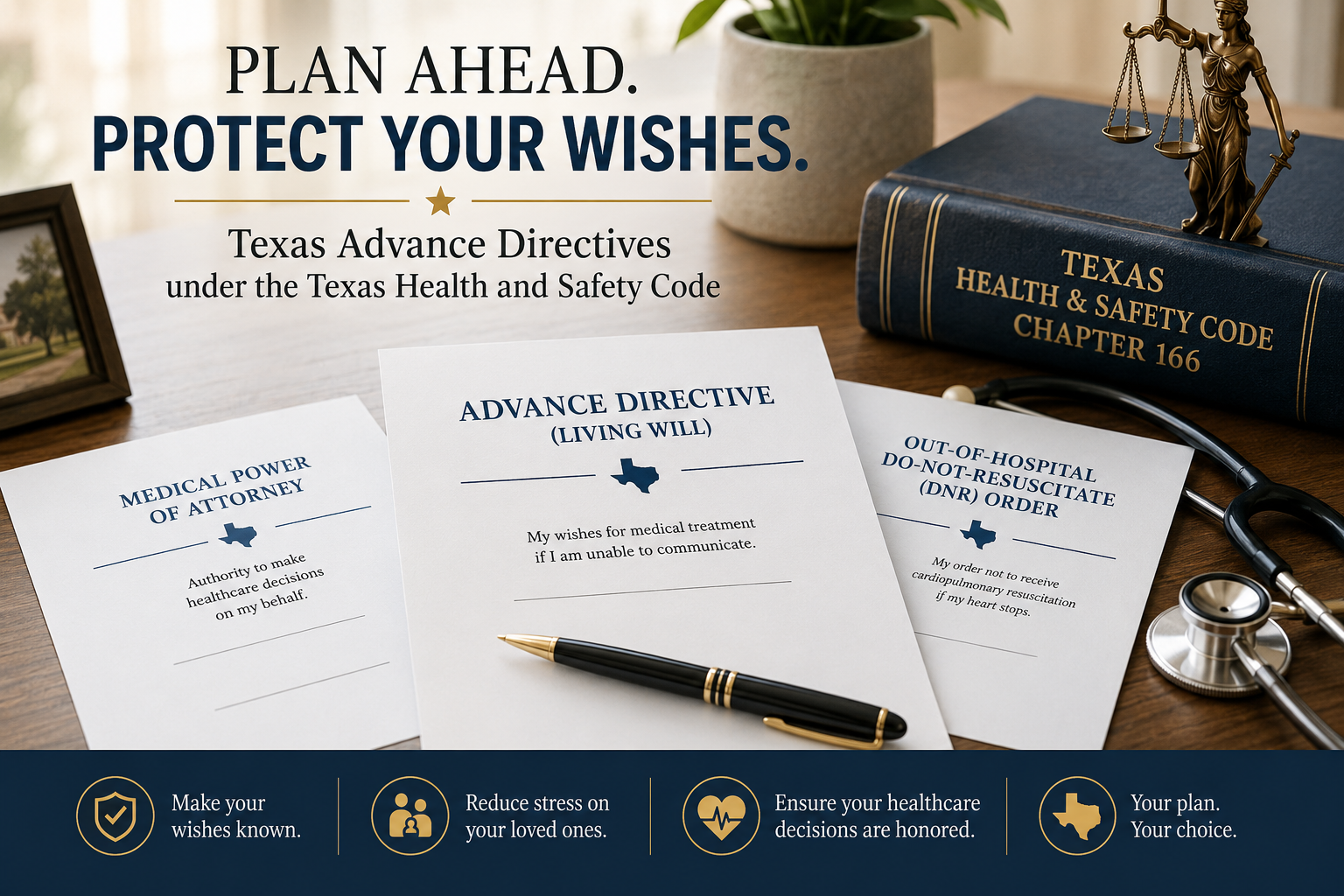
The Act establishes the legal framework for documents such as:
- Directives to physicians (commonly called living wills)
- Medical powers of attorney
- Out-of-hospital do-not-resuscitate (DNR) orders
- Other healthcare decision-making documents authorized by Texas law
These documents become particularly important if someone suffers a severe accident, stroke, dementia, or other condition that leaves them unable to communicate.
Does an Advance Directive Replace a Will?
No.
A will controls what happens after death.
An advance directive controls certain medical decisions while you are alive but incapacitated.
Many people mistakenly believe these documents serve the same purpose. They do not.
A complete estate plan often includes both.
When Does a Living Will Take Effect?
Generally, a directive to physicians becomes relevant when a patient cannot communicate medical decisions and is suffering from conditions described by the statute.
Instead of forcing family members to guess your wishes during an emotional crisis, the document provides guidance in advance.
This can significantly reduce disagreements among spouses, adult children, and other relatives.
Why These Documents Matter
Without clear written instructions, difficult medical decisions may fall to family members who sincerely disagree about what you would have wanted.
Questions may include:
- Should life-sustaining treatment continue?
- Would you want artificial nutrition or hydration?
- Who should communicate with doctors?
- Who has legal authority to consent to treatment?
Advance directives help answer these questions before emotions and uncertainty complicate the situation.
Common Misconceptions
"I'm too young."
Unexpected illnesses and accidents can happen at any age.
"My spouse automatically decides everything."
Not always.
Although spouses often have significant authority under Texas law, having properly executed advance directives removes uncertainty and provides clearer legal guidance.
"A will covers this."
A will generally speaks after death.
Advance directives are designed for medical decisions during life.
Can Doctors Simply Ignore an Advance Directive?
Texas law provides detailed procedures governing advance directives, including circumstances involving disagreements about treatment. While healthcare providers generally seek to honor valid directives, the law also addresses situations involving medical judgment and transfers of care.
Because these issues can become legally and emotionally complex, it is important that advance directives are prepared correctly and are readily available when needed.
Why Estate Planning Should Include Healthcare Planning
Many people spend considerable time deciding who should inherit their property but spend little time considering who should make medical decisions if they cannot.
A thoughtful estate plan often includes:
- A properly drafted will
- Appropriate powers of attorney
- Medical decision-making documents
- Advance directives
- Other documents tailored to the client's circumstances
Preparing these documents together can provide peace of mind for both you and your family.
Contact a Texas Attorney
Whether you are preparing your first estate plan or updating older documents, advance directives deserve careful attention. An attorney can help ensure that your documents comply with Texas law and reflect your wishes before a medical emergency occurs.
At David C. Barsalou, Attorney at Law, PLLC, we help clients navigate business, family, tax, estate planning, and real estate matters ranging from document drafting to litigation with clarity and confidence. If you’d like guidance on your situation, schedule a consultation today. Call us at (713) 397-4678, email barsalou.law@gmail.com, or reach us through our Contact Page. We’re here to help you take the next step.
