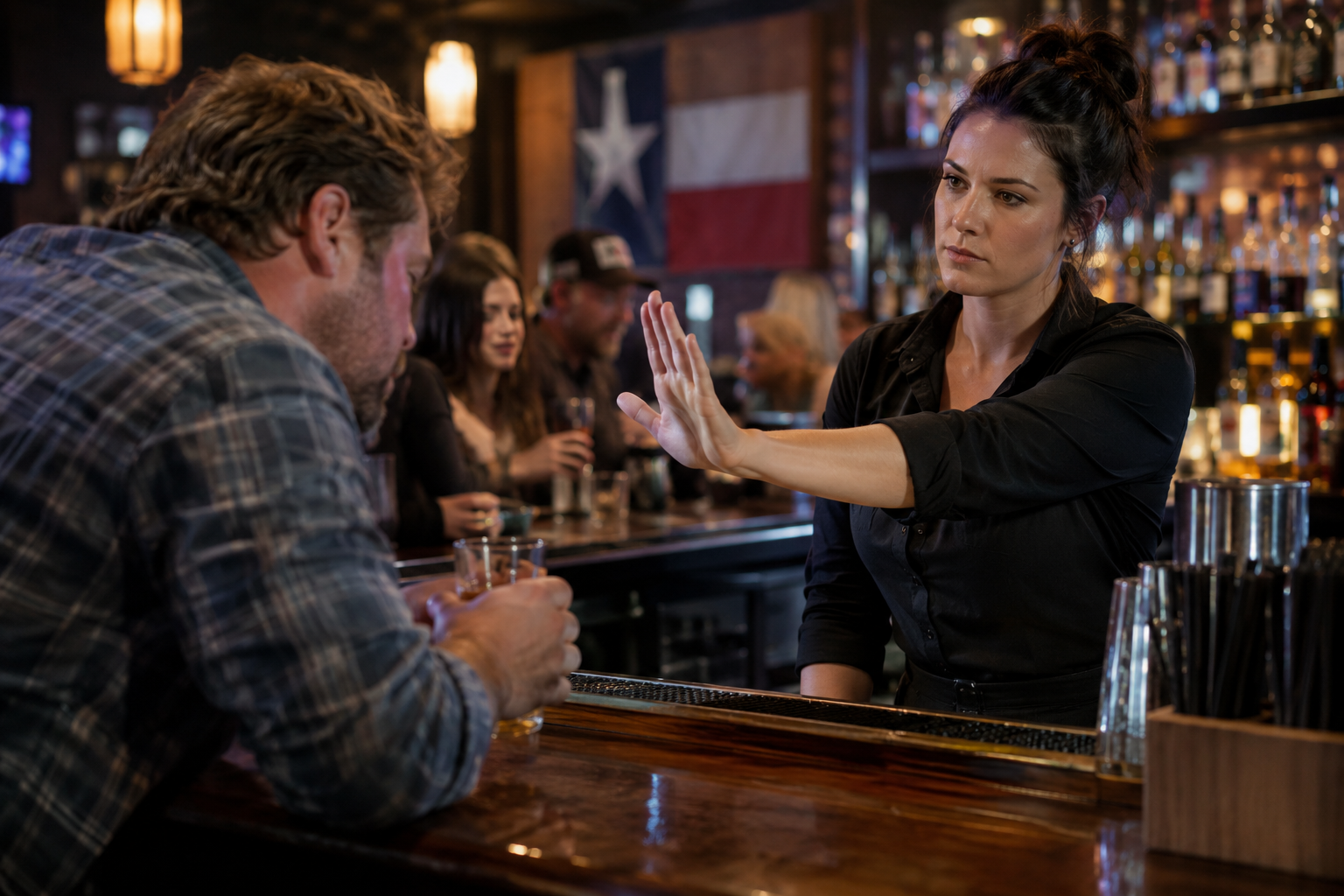
Whether you own a restaurant, operate a bar, manage a convenience store, or are simply wondering about your legal rights after an alcohol-related accident, Texas law imposes specific duties on businesses that sell alcoholic beverages. Many people assume that all alcohol-related lawsuits fall under "dram shop" law, but the Texas Alcoholic Beverage Code also creates independent statutory duties regarding when alcohol may—and may not—be sold.
Understanding these rules can help businesses reduce liability and help injured parties recognize when a violation of Texas law may have occurred.
Texas Generally Prohibits Sales to Obviously Intoxicated Persons
One of the most important provisions appears in Texas Alcoholic Beverage Code § 101.63, which provides:
"A person commits an offense if he sells an alcoholic beverage to an intoxicated person."
While the statute itself is concise, its practical implications are significant. The law does not merely regulate licensing—it establishes a criminal prohibition against selling alcohol to someone who is already intoxicated.
Whether a person appeared intoxicated often becomes one of the central factual issues in later civil litigation.
Why This Matters in Civil Lawsuits
Although a criminal violation does not automatically establish civil liability, evidence that a business continued serving an obviously intoxicated customer may become important evidence in a negligence or dram shop case.
For example, litigation may involve questions such as:
- How many drinks were served?
- Over what period of time?
- Did employees observe slurred speech?
- Was the customer stumbling?
- Were surveillance cameras operating?
- Were receipts preserved?
- Did other patrons or employees witness obvious intoxication?
These factual disputes frequently determine whether a business exercised reasonable care.
Businesses Should Train Their Employees
Many establishments invest substantial time training bartenders and servers to recognize visible signs of intoxication.
Training commonly includes recognizing:
- Slurred speech
- Difficulty maintaining balance
- Glassy or bloodshot eyes
- Aggressive behavior
- Confusion
- Difficulty handling money or identification
Proper training not only promotes public safety but may also reduce the likelihood of expensive litigation.
Criminal Law and Civil Law Are Different
Many people assume that because conduct violates a criminal statute, the injured person automatically wins a civil lawsuit. That is not necessarily true.
Civil cases require proof of the legal elements of the applicable cause of action. Depending upon the circumstances, issues may include:
- causation;
- foreseeability;
- comparative responsibility;
- damages; and
- whether the statutory violation contributed to the injuries.
Each case turns on its own facts.
Alcohol Sales Affect More Than Bars
The Texas Alcoholic Beverage Code applies to many licensed businesses, including:
- Restaurants
- Bars
- Nightclubs
- Liquor stores
- Grocery stores
- Convenience stores
- Sporting venues
- Entertainment facilities
Every licensed seller should understand when a lawful sale becomes an unlawful one.
Documentation Often Becomes Critical
If litigation arises, attorneys may seek evidence including:
- Surveillance video
- Point-of-sale records
- Credit card receipts
- Employee schedules
- Incident reports
- Police reports
- Witness testimony
- Training records
Businesses that maintain organized records are often in a much stronger position during litigation.
When Should You Speak with an Attorney?
If you own a business that sells alcoholic beverages, obtaining legal advice before problems arise can be far less expensive than defending a lawsuit later.
Likewise, if you were injured in an incident involving an allegedly intoxicated individual, consulting an attorney can help determine what evidence should be preserved and whether a viable civil claim exists.
Contact David C. Barsalou, Attorney at Law, PLLC
If you have questions involving Texas business litigation, commercial disputes, landlord-tenant matters, real estate litigation, or other Texas civil legal issues, David C. Barsalou, Attorney at Law, PLLC serves clients throughout Texas with practical, results-oriented legal representation.
This article is provided for informational purposes only and does not constitute legal advice. Reading this article does not create an attorney-client relationship.
At David C. Barsalou, Attorney at Law, PLLC, we help clients navigate business, family, tax, estate planning, and real estate matters ranging from document drafting to litigation with clarity and confidence. If you’d like guidance on your situation, schedule a consultation today. Call us at (713) 397-4678, email barsalou.law@gmail.com, or reach us through our Contact Page. We’re here to help you take the next step.
