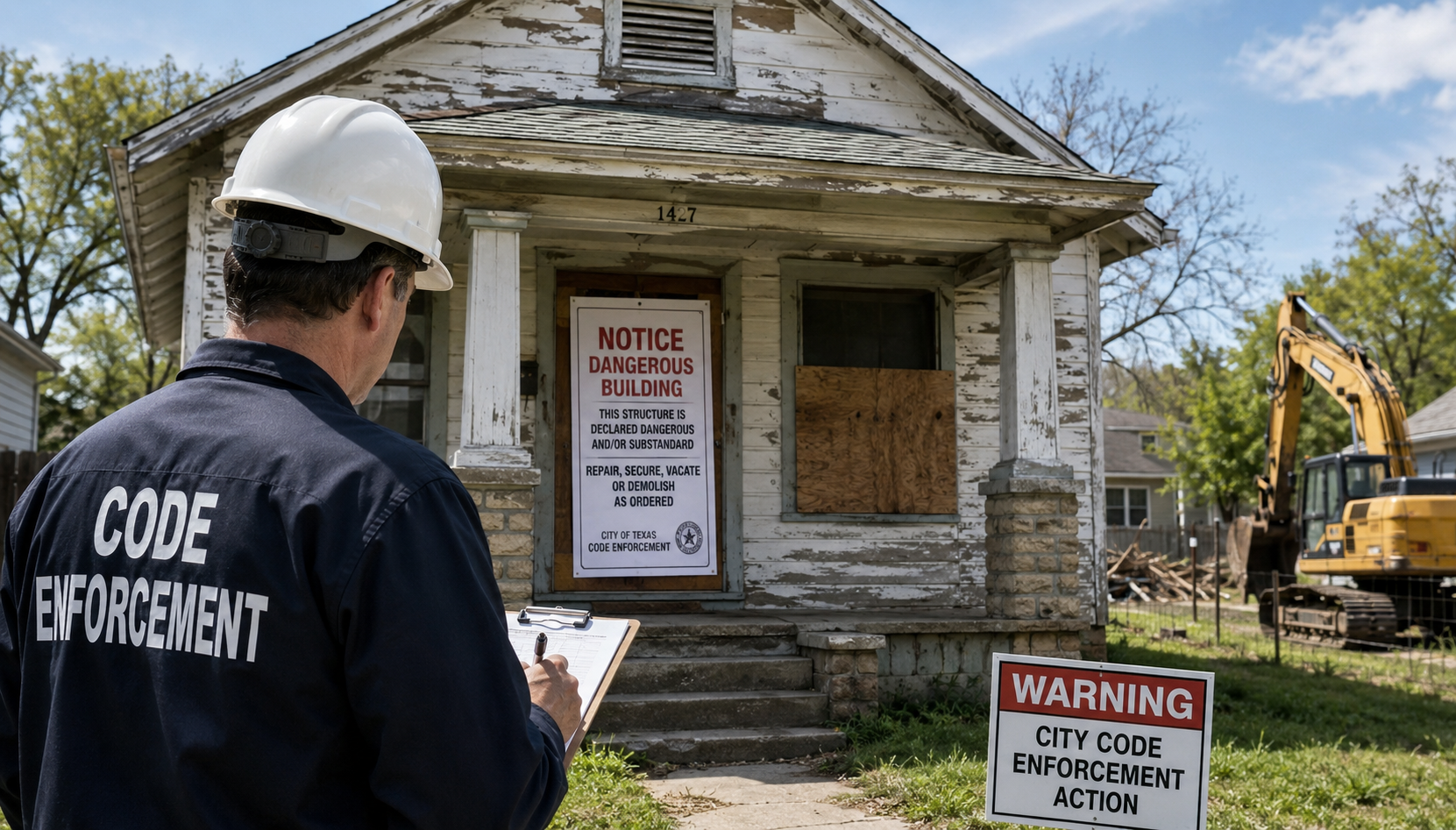
Property owners are often surprised to learn that a city may have the authority to require repairs—or even order the demolition—of a building that it determines is substandard or dangerous. Although these disputes are administrative in nature at first, they frequently develop into real estate litigation involving title issues, liens, injunctions, constitutional claims, or disputes over compliance with municipal ordinances.
If you own investment property, inherited property, rental property, or vacant structures in Texas, understanding the Texas Local Government Code can help you avoid significant legal problems.
The City's Authority
One of the primary statutes governing dangerous structures is Texas Local Government Code Chapter 214.
Section 214.001 generally authorizes municipalities to require the vacation, securing, repair, removal, or demolition of buildings that are considered substandard, unfit for human habitation, or otherwise dangerous under applicable standards.
The statute provides in relevant part:
"The governing body of a municipality may by ordinance require the vacation, securing, repair, removal, or demolition of a building."
Although the exact procedures vary by municipality, the city generally must follow statutory notice and hearing requirements before exercising many of these powers.
Why This Matters
Many owners assume these proceedings affect only abandoned buildings.
In reality, Chapter 214 issues commonly arise involving:
- Rental homes
- Vacant inherited property
- Investment property
- Commercial buildings
- Fire-damaged structures
- Properties with repeated code violations
Sometimes the owner is actively attempting to renovate the property while the city believes the work is progressing too slowly.
Can the City Simply Tear Down Your Building?
Usually not.
Texas law generally requires procedural protections before demolition occurs. Depending on the circumstances, owners may receive:
- Written notice
- An opportunity to appear before a municipal board or commission
- Time to repair or secure the property
- Administrative appeal rights in some situations
Failure to respond can have serious consequences.
Municipal Liens
Another overlooked aspect of Chapter 214 is that municipalities may recover certain expenses incurred in repairing, securing, or demolishing dangerous structures.
Those costs may become a lien against the real property under circumstances authorized by statute.
That means ignoring a municipal order can create financial consequences long after the building itself has been repaired or removed.
Common Litigation Issues
As a civil litigation attorney, I often see disputes develop beyond the administrative proceeding itself.
Examples include:
- Whether proper statutory notice was given.
- Whether the building actually met the legal standard for demolition.
- Whether the municipality complied with required procedures.
- Priority disputes involving municipal liens and other encumbrances.
- Claims involving due process or property rights.
- Title issues affecting future buyers and lenders.
These cases frequently overlap with real estate litigation, construction issues, landlord-tenant disputes, probate matters involving inherited property, and commercial property ownership.
Practical Advice for Property Owners
If you receive a notice from a city regarding a dangerous or substandard building:
- Do not ignore the deadline.
- Photograph the property's condition immediately.
- Preserve repair estimates and contractor communications.
- Determine whether the alleged violations are accurate.
- Consult an attorney before missing a hearing or allowing a demolition order to become final.
Often, early legal involvement provides substantially more flexibility than attempting to undo an adverse municipal order later.
Conclusion
Municipal code enforcement is more than a nuisance—it can affect ownership rights, property value, financing, and future litigation. Texas Local Government Code Chapter 214 gives cities meaningful authority, but that authority is accompanied by procedural requirements designed to protect property owners.
If you have received notice that your property has been declared dangerous or substandard, obtaining legal advice early may help preserve your rights and avoid costly consequences.
At David C. Barsalou, Attorney at Law, PLLC, we help clients navigate business, family, tax, estate planning, and real estate matters ranging from document drafting to litigation with clarity and confidence. If you’d like guidance on your situation, schedule a consultation today. Call us at (713) 397-4678, email barsalou.law@gmail.com, or reach us through our Contact Page. We’re here to help you take the next step.