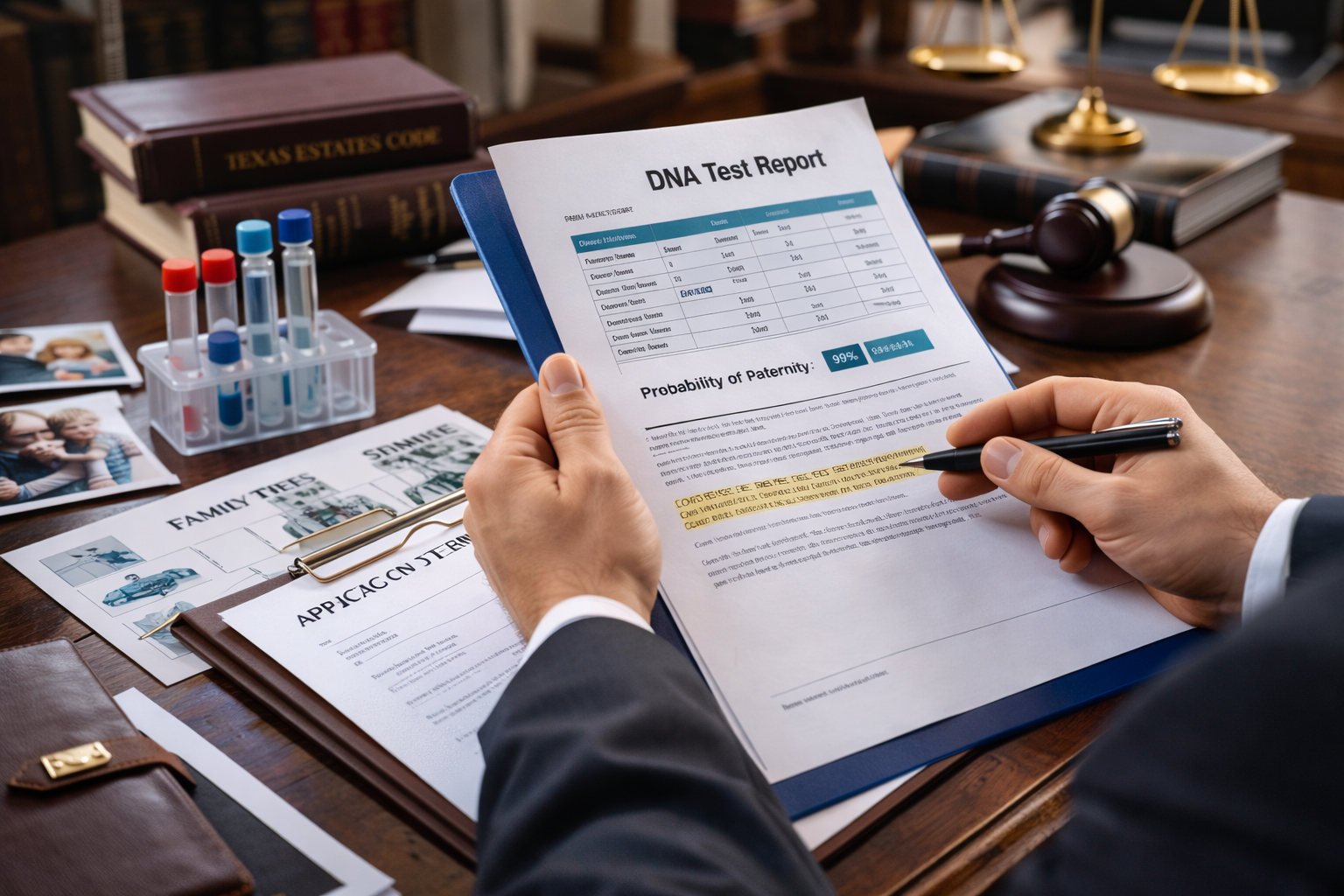
When someone dies without a valid will, Texas courts must determine who the legal heirs are. In many cases, this requires proof of biological relationships.
Sometimes, that means DNA testing.
Heirship Proceedings in Texas
When a person dies intestate, courts rely on Texas Estates Code Chapter 202 to determine heirs.
Section 202.001 authorizes courts to declare heirship when ownership of property depends on family relationships.
These proceedings establish:
- Children
- Spouses
- Parents
- Siblings
- Other descendants
Proving Paternity After Death
Under Texas Estates Code § 201.052, a child may inherit from a father if:
- Paternity was established during life, or
- Paternity is proven after death
Posthumous proof may include:
- DNA evidence
- Court orders
- Acknowledgments
- Prior support records
- Family testimony
Authority to Order Genetic Testing
Texas courts derive authority from:
Texas Family Code § 160.502
This statute allows courts to order genetic testing in parentage cases.
Probate courts frequently apply this authority when heirship depends on biological proof.
Courts may order testing of:
- Alleged children
- Living relatives
- Stored medical samples
- Exhumed remains (in rare cases)
When Courts Will Order DNA Testing
Judges typically require:
- A legitimate heirship dispute
- Reasonable evidence of biological connection
- Property rights at stake
- No adequate alternative proof
Courts avoid unnecessary intrusion unless inheritance rights are directly affected.
Evidentiary Weight of DNA Results
Under Family Code § 160.505:
A 99% probability creates a rebuttable presumption of parentage.
This is often decisive in probate litigation.
Once established, inheritance rights follow automatically under Estates Code Chapter 201.
Privacy and Ethical Limits
Courts balance:
- Property rights
- Privacy interests
- Religious objections
- Family dignity
- Practical necessity
Not every case warrants testing.
Alternative Evidence of Parentage
When DNA is unavailable, courts may consider:
- Birth certificates
- Support payments
- Written acknowledgments
- Public reputation
- Family records
- Photographs
- Correspondence
But these are weaker than genetic proof.
Why These Cases Require Counsel
DNA-based heirship disputes involve:
- Multiple statutes
- Technical evidence
- Expert testimony
- Privacy objections
- Appellate risks
Mistakes can permanently eliminate inheritance rights.
Conclusion
Texas courts may order DNA testing in probate cases when biological relationships determine inheritance.
Understanding when and how this process applies is essential for protecting estate interests.
Disputes over heirship and inheritance can permanently affect family rights and property. Speaking with an experienced Texas probate attorney early can help protect your legal interests.