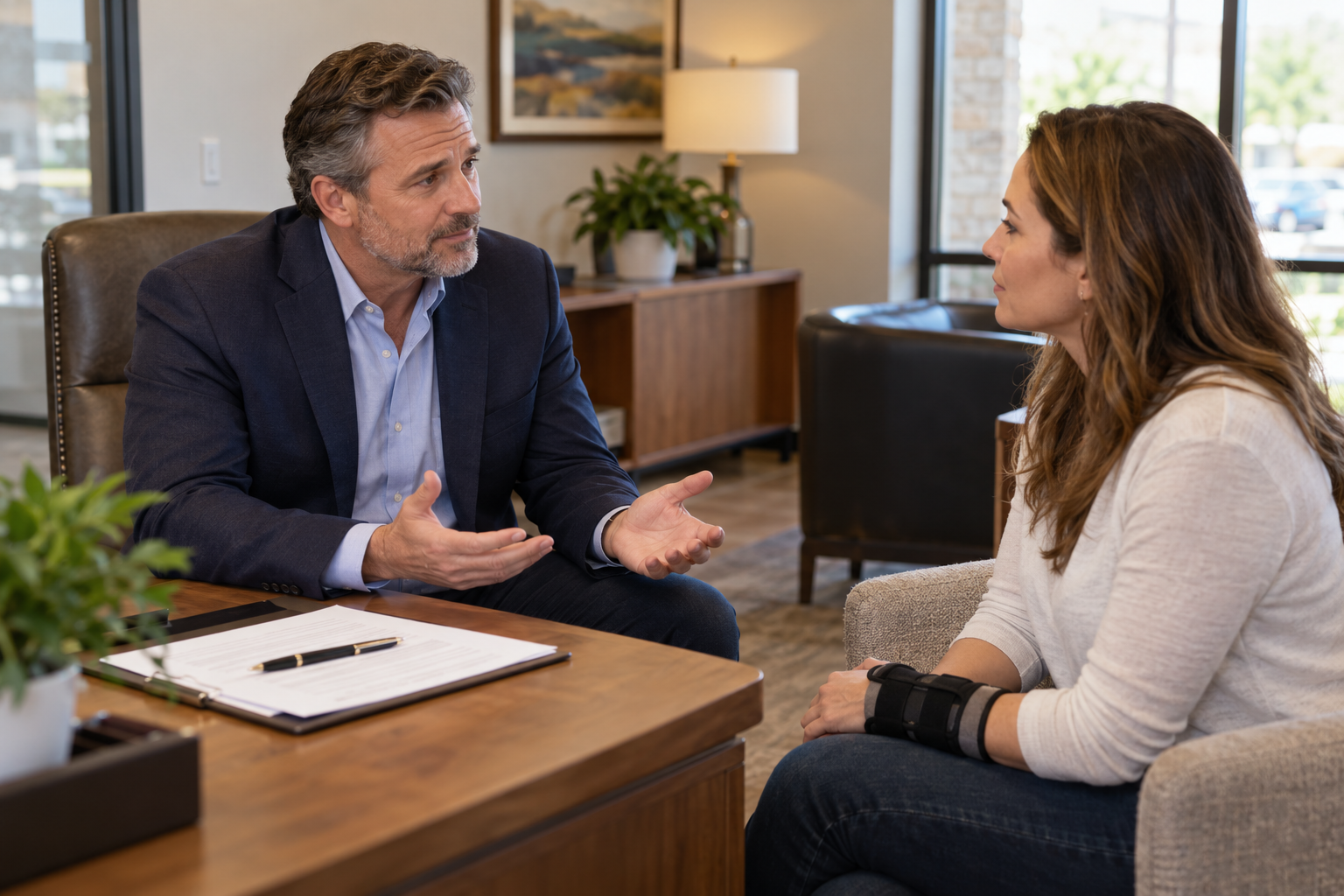
Understanding Communications of Sympathy Under Texas Civil Practice and Remedies Code § 18.061
After someone gets hurt, an ordinary human response is to express concern. A landlord may call an injured tenant. A business owner may check on a customer. A neighbor may send a message after an accident.
Then comes the uncomfortable question: did saying “I’m sorry” create a legal problem?
In Texas, a qualifying expression of sympathy cannot be admitted in a civil action to prove the speaker’s liability. But a communication that also addresses negligence or culpable conduct falls within an important statutory exception. The exact words and circumstances matter.
What Does Texas Law Say About Statements of Sympathy?
Texas Civil Practice and Remedies Code § 18.061(a) addresses communications expressing:
“sympathy or a general sense of benevolence relating to the pain, suffering, or death of an individual involved in an accident”
The protection requires a communication to the injured individual or a relative within the second degree by blood or marriage, calculated under the Government Code. It applies when the communication is offered to prove the communicator’s liability concerning that individual.
Subsection (b) includes spoken statements, writings, and compassionate gestures. The statute is an evidence rule; it does not eliminate an otherwise valid claim.
Sympathy and Admissions of Fault Are Different
Section 18.061(c) permits a communication containing statements concerning negligence or culpable conduct to be admitted to prove the communicator’s liability. It expressly includes excited utterances.
Consider two hypothetical messages after an apartment stairway accident:
· “I’m sorry you were hurt. I hope your recovery goes well.”
· “I’m sorry you were hurt. I knew the handrail was loose and decided to leave it that way.”
The second adds factual assertions about knowledge and conduct. A court must assess the actual communication, its recipient, and the purpose for which it is offered. The word “sorry” alone does not settle that analysis.
Why This Matters to Landlords and Business Owners
An incident can create several immediate responsibilities: arranging help, documenting what happened, notifying the appropriate people, and preserving records. Those tasks are difficult enough without an improvised argument about legal responsibility.
For example, a property manager responding to a fall may need to locate inspection records, identify witnesses, and preserve camera footage. A shop owner may need to document the area where a customer was injured. An early conversation is a poor substitute for that investigation.
A useful approach is to communicate concern, obtain accurate information, and avoid guessing. If you do not know how an accident happened, say so. Do not fill gaps with an explanation simply because the conversation feels awkward.
Likewise, do not pressure an injured person to agree with your account. Write down what you actually observed and distinguish it from what someone else reported.
What If You Offer to Pay Medical Expenses?
A separate rule may apply. Texas Rule of Evidence 409 excludes evidence of paying, promising to pay, or offering to pay medical, hospital, or similar expenses resulting from an injury when offered to prove liability for the injury.
That does not automatically protect every accompanying statement. An offer to help with a medical bill and a factual admission about causing an accident raise different evidentiary questions.
Before making a financial commitment, determine who has authority to make it, whether insurance is involved, and whether the proposed payment resolves anything. A hurried promise can leave both sides with different expectations.
Is an Apology the Same as a Settlement Negotiation?
No. Texas Rule of Evidence 408 addresses compromise offers and negotiations concerning a disputed claim. It generally bars covered evidence when offered to prove or disprove the claim’s validity or amount, while allowing certain other uses.
A routine conversation immediately after an accident is not automatically a negotiation over a disputed claim. Nor does adding “settlement purposes only” resolve every admissibility question. The context and substance of the exchange matter.
What Should You Preserve After an Accident?
Whether you are asserting a claim or responding to one, keep the complete record:
· The full message thread, including replies and timestamps.
· Photographs, recordings, and available surveillance footage.
· Incident reports and witness contact information.
· Relevant maintenance records, complaints, and inspection documents.
Preserving the entire exchange helps your lawyer evaluate what was actually said. A cropped screenshot may omit the explanation that gives a statement its meaning.
If you already sent an emotional message, preserve it and discuss it candidly with counsel. Sending a succession of attempted corrections can make the factual picture harder to understand.
Talk With a Texas Civil Litigation Attorney
After an accident, words are only one part of the dispute. Records, witnesses, the condition of the property, and the parties’ conduct may deserve closer attention than a brief expression of concern.
David C. Barsalou, Attorney at Law, PLLC, based in Kingwood, Texas, assists clients with civil litigation, landlord–tenant disputes, real estate matters, and business and contract disputes. Remote consultations are available to discuss the facts, relevant communications, and possible next steps.
This article provides general information and does not create an attorney–client relationship.
At David C. Barsalou, Attorney at Law, PLLC, we help clients navigate business, family, tax, estate planning, and real estate matters ranging from document drafting to litigation with clarity and confidence. If you’d like guidance on your situation, schedule a consultation today. Call us at (713) 397-4678, email barsalou.law@gmail.com, or reach us through our Contact Page. We’re here to help you take the next step.
