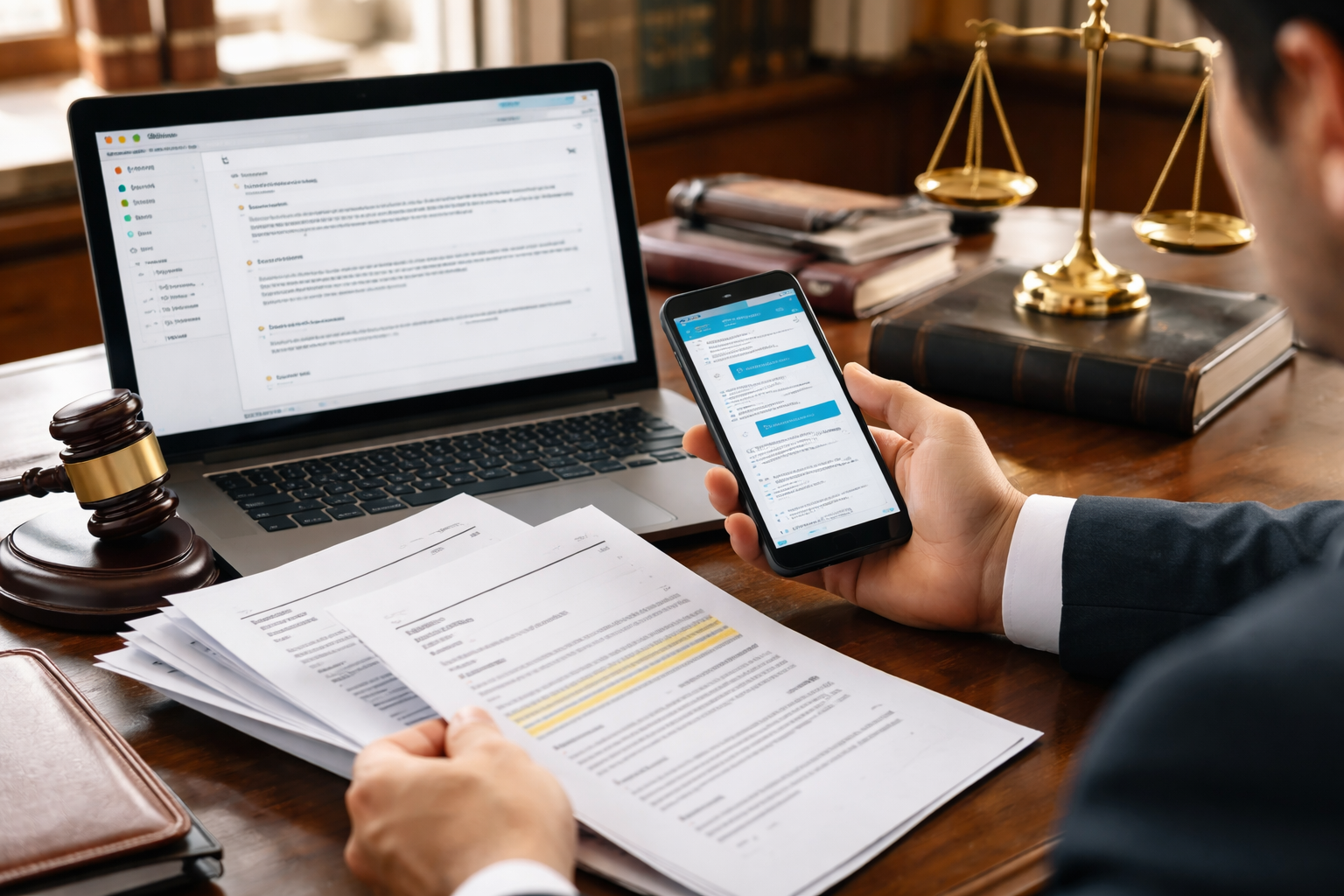
When disputes arise during probate, family members often rely on text messages, emails, and digital records to prove what the deceased intended. But not all electronic communications are automatically admissible in Texas probate court.
Understanding when digital evidence can be used — and when it cannot — can make or break a will contest or estate dispute.
Electronic Evidence Is Treated Like Any Other Evidence
Under Texas law, digital communications are treated as documents and must satisfy the Texas Rules of Evidence before they can be admitted.
Three core rules apply:
1. Relevance (Rule 401)
Evidence must make a fact more or less probable.
For example:
- A text showing intent to change a will
- An email discussing beneficiaries
- Messages confirming gifts or debts
If it helps prove intent, capacity, or undue influence, it may be relevant.
2. Authentication (Rule 901)
You must prove that the message is genuine.
Rule 901(a) provides:
“The proponent must produce evidence sufficient to support a finding that the item is what the proponent claims it is.”
This can be done by showing:
- Phone numbers
- Email addresses
- Testimony from recipients
- Metadata
- Writing style
- Device ownership
Without authentication, the message will be excluded.
3. Hearsay Rules (Rule 802 and Exceptions)
Most messages are technically hearsay.
However, many qualify for exceptions, including:
Statement of a Party Opponent (Rule 801(e)(2))
If the decedent is a party in the probate dispute, their statements may be admissible.
Then-Existing Mental Condition (Rule 803(3))
Statements showing intent, emotion, or state of mind may be allowed.
Example:
“I want my house to go to Sarah.”
This can be powerful evidence of testamentary intent.
Can Digital Messages Replace a Will?
Generally, no.
Texas Estates Code § 251.051 requires wills to meet formal execution requirements.
Texts and emails usually cannot substitute for a properly executed will — but they can be used to:
- Interpret ambiguous language
- Support lost will claims
- Prove undue influence
- Establish intent
Using Digital Evidence in Will Contests
Electronic evidence is most often used in:
- Capacity challenges
- Undue influence claims
- Fraud cases
- Family settlement negotiations
- Lost will proceedings
Courts regularly consider texts and emails when credibility is at issue.
Practical Problems with Digital Evidence
Even strong digital evidence can fail due to:
- Deleted messages
- Locked devices
- Lack of metadata
- Privacy barriers
- Authentication gaps
Preserving data early is critical.
Why Legal Guidance Matters
Improperly handled digital evidence is easily excluded.
An experienced probate attorney can:
- Issue preservation demands
- Subpoena providers
- Authenticate devices
- Lay proper foundations
- Defeat hearsay objections
Conclusion
Text messages and emails can play a major role in Texas probate disputes — but only when properly authenticated and admitted under the Rules of Evidence.
If you are involved in a contested estate, professional guidance can protect crucial digital proof before it disappears.
If you are facing a contested probate case in Kingwood, Houston, or surrounding areas, speaking with an experienced Texas probate attorney early can help preserve critical electronic evidence.