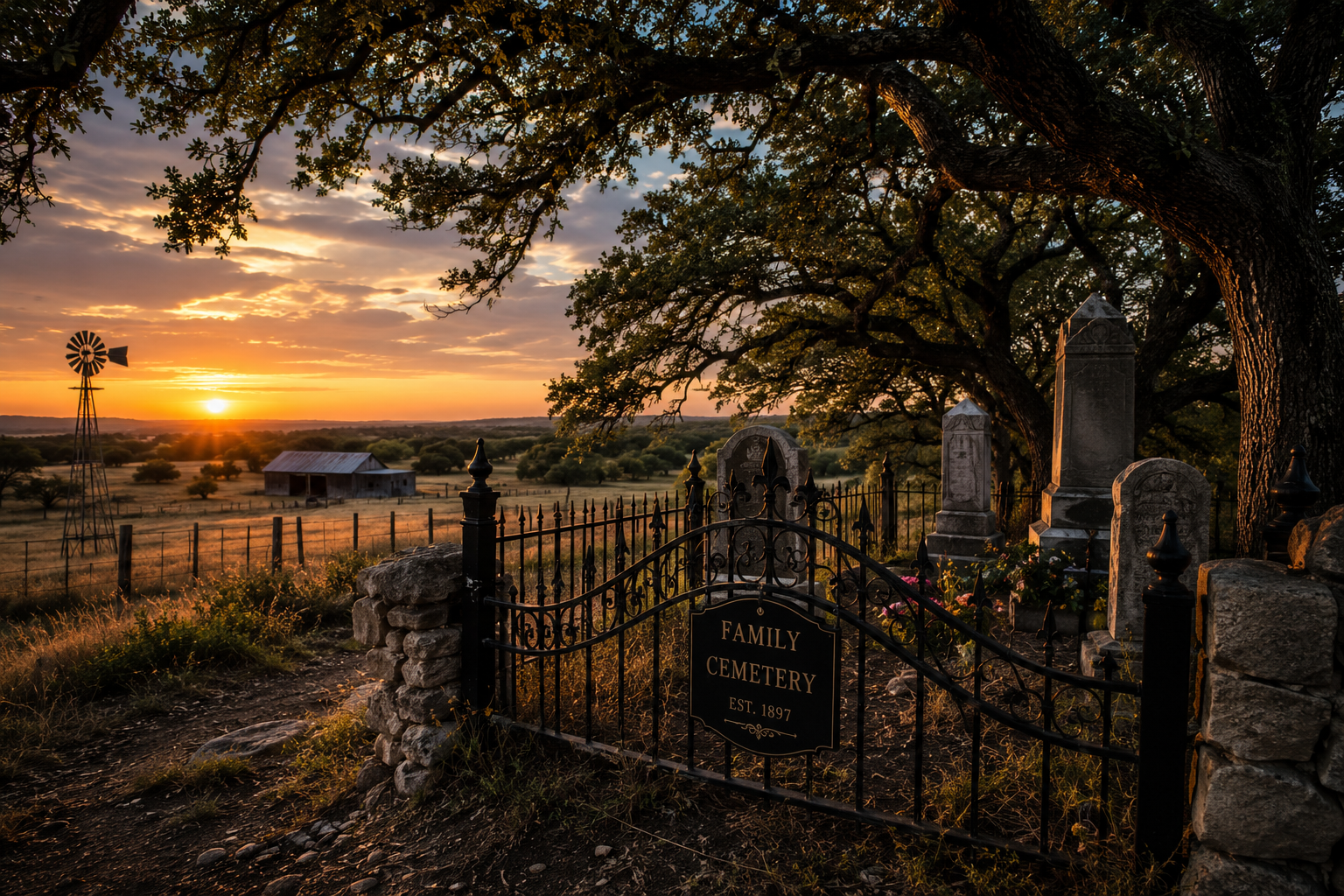
Many Texans own acreage and dream of keeping property in the family for generations. An unusual—but surprisingly common—question is whether someone can legally establish a family cemetery and bury a loved one on private land.
The short answer is yes, under certain circumstances, but the process is much more regulated than most people realize. Texas law governs the creation, maintenance, transfer, and protection of cemeteries, and overlooking these requirements can create serious legal and title issues for future property owners.
Is Burial on Private Property Legal?
Texas does not categorically prohibit private family cemeteries. Instead, the state regulates them primarily through Chapter 711 of the Texas Health and Safety Code.
One of the most important statutory definitions appears in Texas Health and Safety Code § 711.001, which provides in relevant part:
"Cemetery means a place that is used or intended to be used for interment."
That broad definition means that even a small family burial plot may legally constitute a cemetery under Texas law.
What Is a Family Cemetery?
A family cemetery is generally a private burial area located on privately owned land and intended for family members rather than the public.
Unlike commercial cemeteries, family cemeteries typically are not operated as businesses. Nevertheless, they remain subject to various state and local legal requirements.
Before establishing one, property owners should carefully review:
- Texas Health and Safety Code Chapter 711;
- applicable county regulations;
- local recording requirements; and
- environmental or public health restrictions.
Burial Rights Continue Even After the Property Is Sold
One of the most surprising aspects of Texas law is that selling the land does not necessarily eliminate access to the cemetery.
Texas Health and Safety Code § 711.041 provides, in part:
"Any person who wishes to visit a cemetery or private burial grounds shall have a reasonable right of ingress and egress."
This means future purchasers may have to allow family members, descendants, or others entitled by law to access the burial site.
For many buyers, this comes as a surprise during a real estate transaction.
Can a New Owner Remove the Graves?
Generally, no.
Disinterment is heavily regulated under Texas law. Human remains ordinarily cannot simply be relocated because a new owner wants to develop the property.
Removing remains often requires compliance with statutory procedures, appropriate authorization, and applicable permits.
Attempting to move graves without following the law can expose individuals to significant civil and criminal consequences.
How Does a Family Cemetery Affect Property Value?
The answer depends on the buyer.
Some purchasers appreciate the historical significance of family cemeteries. Others may be reluctant to purchase property burdened by perpetual visitation rights or burial restrictions.
Potential issues include:
- title concerns;
- financing complications;
- disclosure obligations during resale;
- future development limitations;
- survey considerations; and
- ongoing maintenance responsibilities.
For this reason, many title companies recommend carefully documenting the cemetery's location and reviewing any recorded instruments affecting the property.
Can You Build Over an Old Cemetery?
This is one of the worst mistakes a property owner can make.
Texas law provides substantial protections for cemeteries and human remains. Construction projects involving suspected burial sites frequently require immediate legal analysis before work continues.
Even discovering an old family cemetery during construction can significantly delay development.
Estate Planning Considerations
Family cemeteries often intersect with probate law.
Questions frequently arise concerning:
- who owns the cemetery after the landowner dies;
- whether heirs may divide the property;
- who is responsible for maintenance;
- whether visitation rights continue after multiple generations; and
- whether the cemetery affects future partition actions.
Proper estate planning can minimize disputes among future heirs and preserve both the property and the family's wishes.
Practical Advice for Texas Property Owners
If you are considering establishing a family cemetery, it is wise to consult an attorney before taking any action.
Proper planning may include:
- reviewing local regulations;
- preparing appropriate property documentation;
- coordinating with surveyors;
- considering title implications; and
- integrating the cemetery into your overall estate plan.
A small amount of planning today can prevent decades of litigation and confusion for future generations.
Conclusion
Texas law recognizes that family burial grounds carry both emotional and legal significance. While private burials may be permissible, they create long-lasting property rights that survive changes in ownership and can affect title, development, inheritance, and future real estate transactions.
If you own rural property or are purchasing land containing an existing cemetery, understanding Chapter 711 of the Texas Health and Safety Code is essential before making any major decisions.
Disclaimer: This article is for informational purposes only and does not constitute legal advice. Every situation is unique, and you should consult an attorney regarding your specific circumstances.
At David C. Barsalou, Attorney at Law, PLLC, we help clients navigate business, family, tax, estate planning, and real estate matters ranging from document drafting to litigation with clarity and confidence. If you’d like guidance on your situation, schedule a consultation today. Call us at (713) 397-4678, email barsalou.law@gmail.com, or reach us through our Contact Page. We’re here to help you take the next step.
