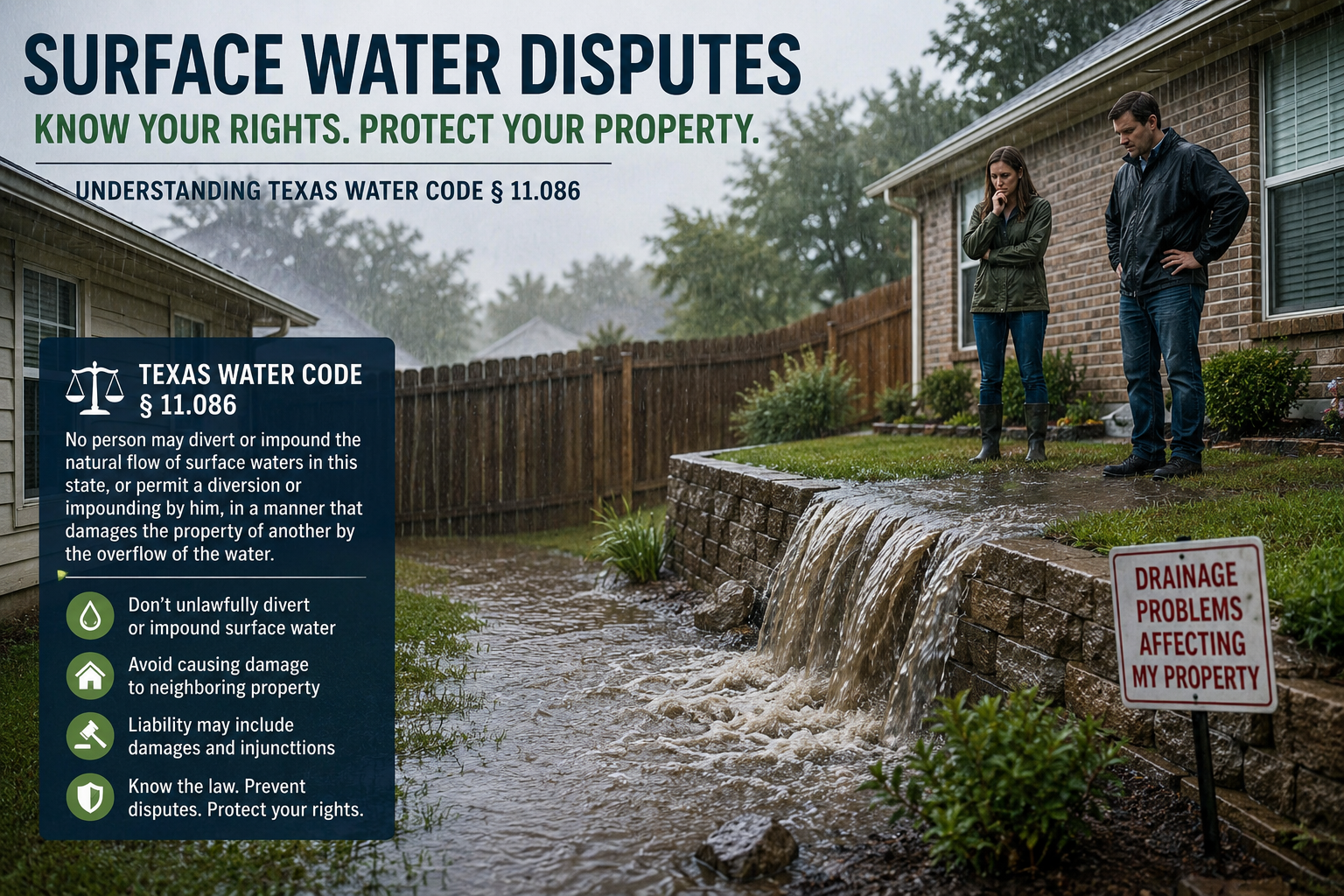
Water has a way of creating legal disputes long before anyone thinks about filing a lawsuit. A new driveway, retaining wall, fence, swimming pool, or drainage ditch can dramatically alter where rainwater flows. Suddenly one property begins flooding while another stays dry, and neighbors find themselves arguing over who is responsible.
Texas has developed a unique body of law governing surface water drainage. Although landowners generally have broad rights to improve their property, those rights are not unlimited. Both statutes and common law place restrictions on altering the natural flow of surface water.
Understanding these rules can prevent expensive litigation and help property owners resolve drainage disputes before they become major problems.
What Is Surface Water?
Surface water generally refers to rainwater, melting precipitation, or runoff that has not yet entered a natural watercourse such as a creek or river.
Examples include:
- Rainwater flowing across yards
- Storm runoff from rooftops
- Water collecting in low areas
- Runoff from driveways or parking lots
Unlike groundwater or navigable waters, surface water often becomes a source of private property disputes between neighboring landowners.
Texas Property Owners Cannot Unlawfully Divert Surface Water
The primary Texas statute governing these disputes is Texas Water Code § 11.086(a), which provides:
"No person may divert or impound the natural flow of surface waters in this state, or permit a diversion or impounding by him, in a manner that damages the property of another by the overflow of the water."
This statute creates an affirmative duty not to alter drainage in a way that causes damage to neighboring property.
Importantly, the law does not prohibit every alteration of drainage. Instead, it prohibits alterations that result in legally recognizable damage.
You May Also Be Liable for Allowing Diversions
Texas law goes even further.
Texas Water Code § 11.086(b) states:
"A person whose property is injured by an overflow of water caused by an unlawful diversion or impounding may recover damages occasioned by the overflow."
In other words, a neighboring landowner may have the right to seek monetary damages if an unlawful diversion causes flooding or other property damage.
Common Examples of Surface Water Disputes
These disputes frequently arise after construction projects such as:
- Installing retaining walls
- Raising the elevation of a lot
- Building new driveways
- Constructing large patios
- Installing swimming pools
- Regrading a backyard
- Filling natural drainage swales
- Constructing commercial developments
- Building berms or landscape barriers
Sometimes the changes appear minor, but small elevation changes can significantly affect water flow during heavy Texas storms.
Does Every Flood Create Liability?
No.
Texas law generally requires more than simply proving that water appeared on your property.
Courts often examine questions such as:
- Was the drainage altered?
- Was the alteration unreasonable?
- Did it actually cause the flooding?
- Was the flooding foreseeable?
- What damages resulted?
Engineering evidence, drainage studies, aerial photographs, historical rainfall records, and expert testimony frequently become important in these cases.
Available Remedies
Depending upon the facts, a property owner may seek:
- Monetary damages
- Temporary injunctions
- Permanent injunctions
- Orders requiring removal of drainage obstructions
- Repair costs
- Diminution in property value
In many situations, resolving the drainage issue itself becomes more valuable than recovering money damages.
Can Local Regulations Also Apply?
Yes.
Many Texas cities and counties regulate grading, stormwater management, drainage improvements, subdivision development, and floodplain construction.
A project may technically comply with local permitting requirements while still exposing the owner to civil liability if it unlawfully diverts surface water onto neighboring property.
Obtaining permits does not necessarily eliminate private legal claims.
Practical Advice Before Altering Your Property
Before making significant improvements:
- Consider how drainage currently leaves your property.
- Review any subdivision drainage plans.
- Consult an engineer for major grading projects.
- Avoid blocking established drainage paths.
- Document existing conditions before construction begins.
- Address neighbor concerns early, before litigation becomes necessary.
Preventing drainage problems is almost always less expensive than defending a lawsuit after damage has occurred.
Final Thoughts
Surface water disputes rarely begin with bad intentions. Most arise because one property improvement unintentionally changes how rainwater flows during heavy storms. However, once flooding damages a neighboring property, the legal consequences can become significant.
Texas Water Code § 11.086 strikes a balance between a property owner's freedom to improve land and the obligation not to cause unnecessary harm to neighbors. Whether you are planning construction or dealing with recurring flooding, understanding these rules can help protect both your property and your legal rights.
If you are involved in a Texas drainage dispute, consulting an attorney early can often prevent a relatively small problem from becoming years of costly litigation.
At David C. Barsalou, Attorney at Law, PLLC, we help clients navigate business, family, tax, estate planning, and real estate matters ranging from document drafting to litigation with clarity and confidence. If you’d like guidance on your situation, schedule a consultation today. Call us at (713) 397-4678, email barsalou.law@gmail.com, or reach us through our Contact Page. We’re here to help you take the next step.