Introduction
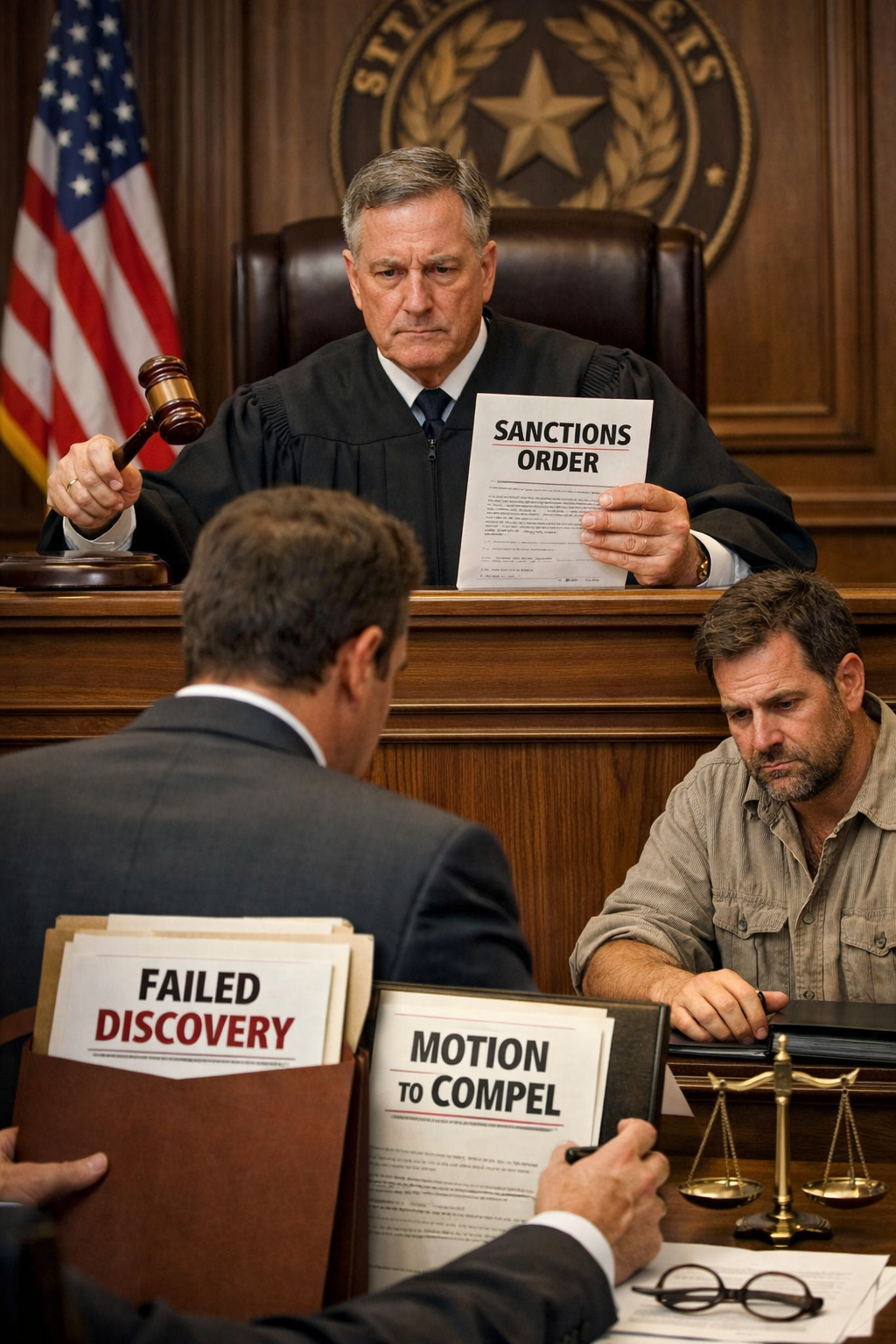
In Texas litigation, the discovery process is supposed to be a fair exchange of information. But what happens when one party refuses to cooperate, hides documents, or ignores court orders?
The answer lies in Texas Rule of Civil Procedure 215, which gives courts powerful tools to punish bad behavior—sometimes even deciding the entire case.
If you are involved in a lawsuit in Texas, understanding discovery sanctions can mean the difference between winning your case and losing it before trial even begins.
What Is Discovery Abuse in Texas?
Discovery abuse occurs when a party:
- Fails to respond to discovery requests
- Provides incomplete or misleading responses
- Ignores court orders compelling discovery
- Engages in delay tactics or obstruction
Texas courts take this seriously because litigation depends on transparency and fairness.
The Legal Authority: Texas Rule of Civil Procedure 215
Texas courts derive their authority to punish discovery abuse from TRCP 215.
Failure to Respond or Comply
Under Rule 215.1(d):
“If a party fails to respond to or supplement responses to written discovery… the court may make such orders in regard to the failure as are just.”
Sanctions for Discovery Abuse
Under Rule 215.2(b), courts may impose sanctions including:
“An order disallowing any further discovery…
An order charging all or any portion of the expenses… against the disobedient party…
An order striking out pleadings… or dismissing the action…”
This is where things get serious.
Types of Discovery Sanctions in Texas
Texas courts have a wide range of sanctions available. These generally fall into three categories:
1. Monetary Sanctions
- Attorney’s fees
- Court costs
- Expenses caused by the misconduct
👉 Most common and often the first step.
2. Evidentiary Sanctions
- Excluding evidence
- Preventing claims or defenses
- Limiting testimony
👉 These can quietly cripple a case.
3. “Death Penalty” Sanctions
- Striking pleadings
- Dismissing claims
- Entering default judgment
👉 These effectively end the case.
Texas courts reserve these for extreme misconduct.
The “Death Penalty” Standard in Texas
The Texas Supreme Court has made clear that the harshest sanctions require careful justification.
Courts must ensure:
- A direct relationship between the misconduct and the sanction; and
- That lesser sanctions would not be effective
This principle protects litigants from overly harsh punishment—but also warns that repeated abuse will not be tolerated.
Real-World Examples of Discovery Abuse
Here are common situations where sanctions arise:
- A party ignores Requests for Production
- A business “loses” key records after being sued
- A litigant deletes text messages or emails
- A party refuses to appear for deposition
- A party violates a court order compelling discovery
Sound familiar? These issues come up constantly in family law, business disputes, and real estate litigation.
Why Discovery Sanctions Matter Strategically
This is where things get interesting from a litigation strategy standpoint.
For Plaintiffs
- Sanctions can force compliance quickly
- They can limit defenses or even result in default judgment
For Defendants
- Avoiding sanctions is critical to preserving defenses
- One bad move can shift leverage dramatically
👉 In many cases, discovery battles decide the outcome long before trial.
Discovery Sanctions in Family Law Cases
In divorce and custody cases, discovery abuse is especially common:
- Hidden bank accounts
- Undisclosed income
- Failure to produce financial records
Courts may respond by:
- Awarding attorney’s fees
- Presuming facts against the non-compliant party
- Striking pleadings in extreme cases
This can directly impact property division and child support.
How to Avoid Discovery Sanctions
If you’re involved in a lawsuit:
- Respond to discovery on time
- Be truthful and complete
- Preserve all relevant evidence
- Follow court orders exactly
- Work with your attorney proactively
👉 The cost of compliance is always lower than the cost of sanctions.
How to Use Discovery Sanctions Effectively
If the other side is stonewalling:
- File a Motion to Compel
- Request attorney’s fees
- Build a record of non-compliance
- Escalate if misconduct continues
Courts are far more likely to impose serious sanctions when there is a clear pattern of abuse.
Conclusion: Litigation Is Not a Game
Texas courts expect parties to litigate in good faith. When someone refuses to follow the rules, Rule 215 gives judges the authority to restore fairness—even if it means ending the case entirely.
Whether you are pursuing a claim or defending one, understanding discovery sanctions is critical to protecting your position.
Need Help With a Texas Lawsuit?
If you’re dealing with a difficult opposing party—or facing accusations of discovery abuse—getting experienced legal guidance early can make all the difference.
At David C. Barsalou, Attorney at Law, PLLC, we help clients navigate business, family, tax, estate planning, and real estate matters ranging from document drafting to litigation with clarity and confidence. If you’d like guidance on your situation, schedule a consultation today. Call us at (713) 397-4678, email barsalou.law@gmail.com, or reach us through our Contact Page. We’re here to help you take the next step.
