Many Texas business owners assume that if a commercial tenant abandons leased space before the lease expires, the landlord can simply allow the property to sit vacant while collecting every remaining dollar of rent from the tenant.
That is no longer how Texas law works.
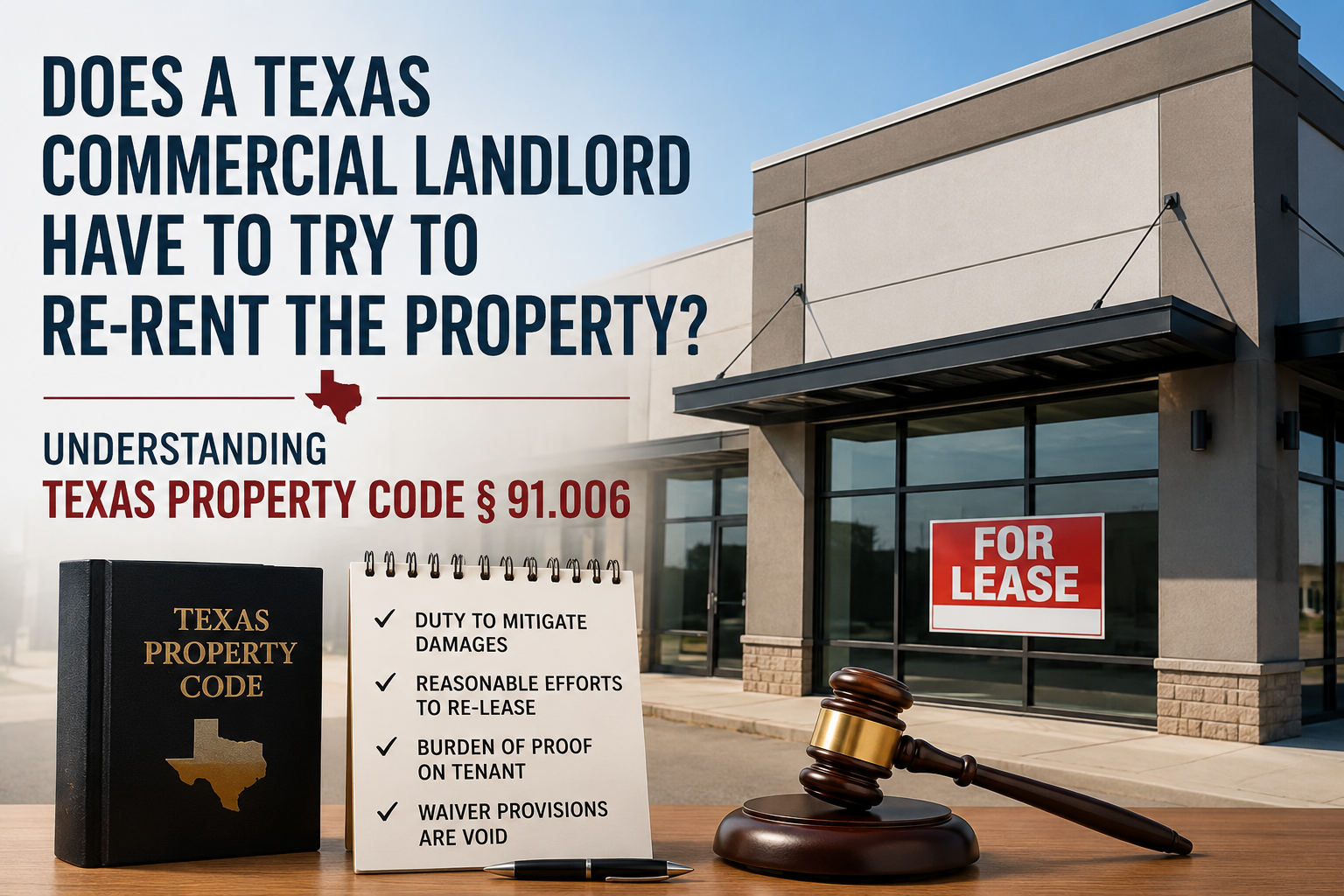
Texas Property Code § 91.006 imposes a statutory duty on commercial landlords to mitigate damages after a tenant abandons leased premises. Understanding this rule can significantly affect both landlords pursuing unpaid rent and tenants defending against breach of lease claims.
What Is the Duty to Mitigate?
Texas Property Code § 91.006(a) provides:
"A landlord has a duty to mitigate damages if a tenant abandons the leased premises in violation of the lease."
This language fundamentally changed prior Texas common law, which generally permitted landlords to leave abandoned commercial property vacant while holding tenants responsible for all future rent.
Today, commercial landlords must take reasonable steps to reduce their losses.
What Does "Mitigate Damages" Mean?
Mitigation does not require a landlord to accept the first prospective tenant who expresses interest.
Instead, it generally means making reasonable efforts to reduce financial losses. Depending upon the circumstances, that may include:
- Advertising the vacant space;
- Listing the property with commercial brokers;
- Showing the property to prospective tenants;
- Negotiating in good faith with qualified replacement tenants; and
- Attempting to lease the premises within a reasonable time.
The law requires reasonable efforts, not perfect ones.
Does the Landlord Have to Accept a Worse Deal?
Not necessarily.
A landlord is generally not required to:
- Accept an unqualified tenant;
- Agree to dramatically below-market rent;
- Accept materially different lease terms; or
- Take actions that would be commercially unreasonable.
The question is whether the landlord acted reasonably under the circumstances.
Who Has the Burden of Proof?
One frequently overlooked provision appears in Texas Property Code § 91.006(b), which states:
"The burden of proving that the landlord failed to mitigate damages is on the tenant."
This is an important procedural advantage for landlords.
A tenant cannot merely speculate that the landlord could have found another tenant. Instead, the tenant must produce evidence showing that reasonable mitigation efforts were not undertaken.
Can the Parties Waive This Duty?
Generally, no.
Texas Property Code § 91.006(c) provides:
"A lease provision that purports to waive a right or to exempt a party from a liability or duty under this section is void."
Even sophisticated commercial parties typically cannot contract around this statutory duty.
What Counts as "Abandonment"?
Whether abandonment has occurred depends on the facts.
Examples may include:
- Vacating the premises before the lease expires;
- Ceasing business operations;
- Returning the keys;
- Removing inventory and equipment; or
- Otherwise surrendering possession without legal justification.
A dispute often arises over whether the tenant truly abandoned the property or whether the landlord accepted a surrender of the lease. Those are separate legal questions that can materially affect damages.
Why This Matters in Commercial Litigation
For landlords, documenting mitigation efforts can substantially strengthen a claim for unpaid rent.
Helpful evidence may include:
- Broker engagement agreements;
- Marketing records;
- Online listings;
- Emails with prospective tenants;
- Showing logs;
- Lease negotiations; and
- Records demonstrating when replacement tenants became available.
For tenants, evidence that comparable tenants were readily available—or that the landlord made little or no effort to re-lease the property—may reduce recoverable damages.
Practical Takeaway
Texas Property Code § 91.006 strikes a balance between protecting commercial landlords and preventing avoidable economic waste. A landlord is not required to perform miracles, but neither may the landlord simply allow damages to accumulate without making reasonable efforts to reduce them.
Because commercial lease disputes often involve substantial sums of money, both landlords and tenants should evaluate mitigation issues early in the dispute. Proper documentation can dramatically affect settlement negotiations and the ultimate outcome of litigation.
Disclaimer: This article is provided for general educational purposes only and does not constitute legal advice. Every commercial lease dispute involves unique facts. If you are involved in a Texas commercial landlord-tenant dispute, consult an attorney regarding your specific circumstances.
At David C. Barsalou, Attorney at Law, PLLC, we help clients navigate business, family, tax, estate planning, and real estate matters ranging from document drafting to litigation with clarity and confidence. If you’d like guidance on your situation, schedule a consultation today. Call us at (713) 397-4678, email barsalou.law@gmail.com, or reach us through our Contact Page. We’re here to help you take the next step.