When most people buy a house, they assume ownership transfers at closing. While that is generally true from a title standpoint, Texas law recognizes a much older legal doctrine that can dramatically affect the rights of buyers, sellers, heirs, creditors, and even probate estates before closing ever occurs.
The doctrine is called equitable conversion, and despite its importance, many property owners have never heard of it.
What Is Equitable Conversion?
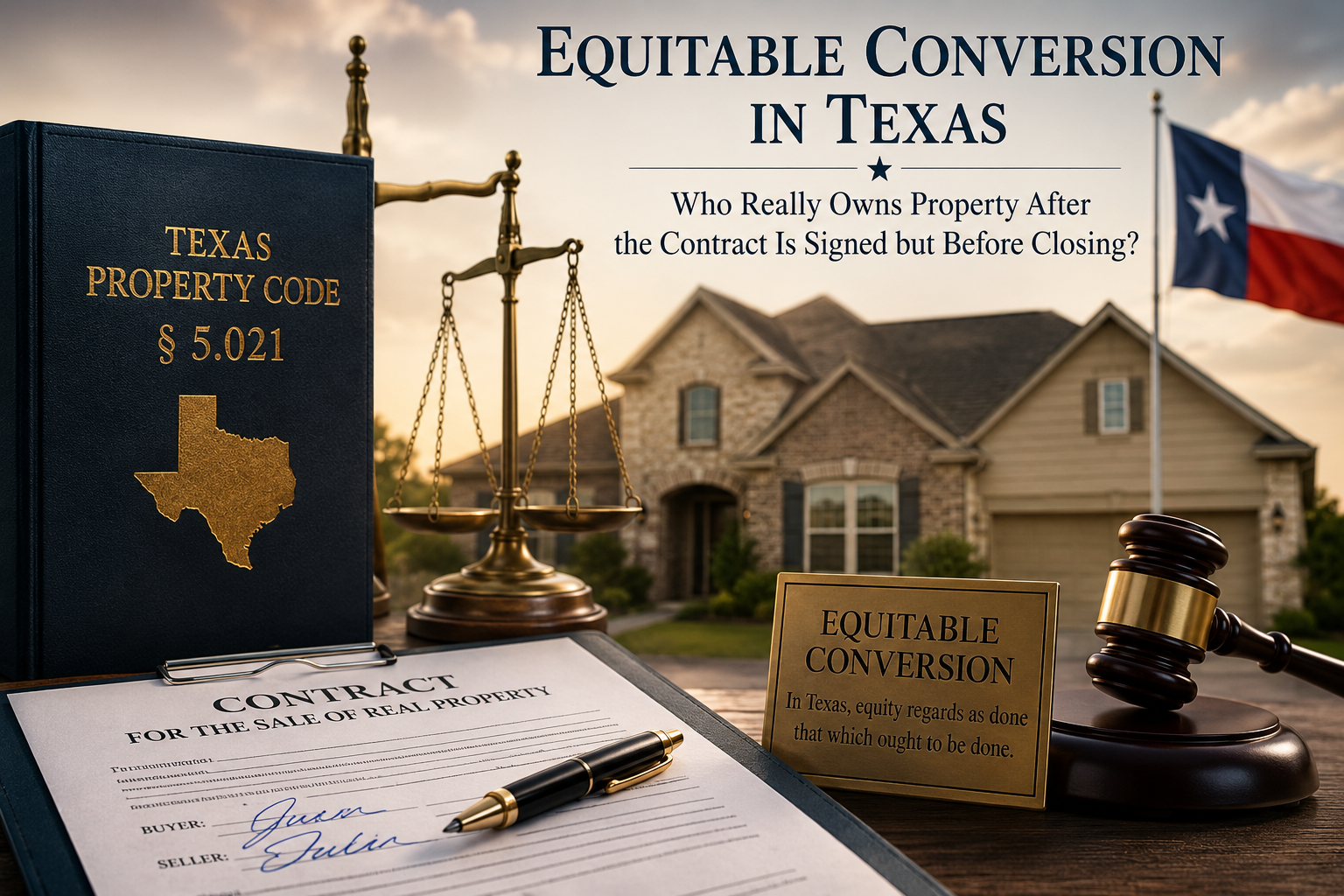
Equitable conversion is a legal doctrine providing that once a valid and enforceable contract for the sale of real property exists, equity treats the buyer as the beneficial owner of the property and the seller as the owner of the purchase money.
In simple terms, the buyer obtains an equitable interest in the property before the deed is delivered, while the seller's primary interest becomes the right to receive payment.
This doctrine can create surprising results when someone dies, becomes insolvent, or attempts to transfer the property to another person after signing a contract.
The Statutory Basis for Real Estate Transfers
Texas Property Code § 5.021 provides:
"A conveyance of an estate of inheritance, a freehold, or an estate for more than one year, in land and tenements, must be in writing and must be subscribed and delivered by the conveyor or by the conveyor's agent authorized in writing."
The statute governs the formal transfer of legal title. However, equitable conversion recognizes that equitable ownership may arise before the deed is formally delivered.
Thus, legal title and equitable ownership can temporarily exist in different hands.
Why Does This Matter?
Consider the following scenario:
John signs a valid contract to sell his home to Sarah. Closing is scheduled for thirty days later.
Two weeks before closing, John unexpectedly dies.
Many people assume the property automatically passes through John's estate because the deed was never delivered.
Under equitable conversion principles, however, courts often view the property differently. The buyer may possess an equitable ownership interest, while the seller's estate may merely possess the contractual right to receive the purchase proceeds.
The practical result can significantly affect heirs, creditors, and probate proceedings.
Equitable Conversion and Probate
Probate disputes frequently arise when a deceased individual entered into a real estate contract before death.
The doctrine can determine whether:
- The property itself passes to heirs;
- The sale proceeds pass to heirs;
- The executor must complete the transaction;
- Beneficiaries can challenge the sale.
Many families are surprised to learn that a signed contract can substantially alter what property ultimately becomes part of an estate.
Equitable Conversion and Creditor Rights
The doctrine can also affect judgment creditors.
Suppose a creditor obtains a judgment against a seller after the seller enters into a binding real estate contract but before closing.
Questions may arise concerning:
- Whether the creditor can attach the property;
- Whether the creditor's lien reaches the sale proceeds;
- Whether the buyer's equitable interest takes priority.
These issues become particularly important in high-value real estate disputes and post-judgment collection matters.
Can the Seller Back Out?
Not usually.
Once a valid contract exists, Texas courts may permit the buyer to seek specific performance, an equitable remedy requiring the seller to complete the transaction.
Unlike ordinary contract cases where money damages may be sufficient, real estate is considered unique.
As a result, Texas courts frequently recognize that a buyer may be entitled to force the sale under appropriate circumstances.
The Connection to Texas Probate and Litigation
The doctrine of equitable conversion often appears unexpectedly in:
- Probate litigation;
- Contract disputes;
- Specific performance lawsuits;
- Creditor-rights cases;
- Title disputes;
- Estate administration matters.
What begins as a simple real estate transaction can quickly become a complicated legal dispute involving multiple parties claiming competing interests in the same property.
Practical Lessons for Texas Property Owners
If you are buying or selling real estate in Texas, remember:
- Signing a contract can create substantial legal rights before closing.
- Death does not necessarily terminate a valid real estate contract.
- Creditors may encounter limitations once equitable ownership transfers.
- Probate proceedings may be affected by pending real estate contracts.
- Litigation involving specific performance can arise long before title formally changes hands.
Final Thoughts
Most people focus on the closing date when buying or selling real estate. Lawyers, however, often focus on what happened the moment the contract was signed.
The doctrine of equitable conversion demonstrates why.
A signed contract may do far more than create future obligations—it may fundamentally alter ownership interests before the deed is ever delivered. Understanding these principles can help buyers, sellers, heirs, and creditors avoid costly surprises and protect their rights when real estate transactions become complicated.
Disclaimer: This article is for informational purposes only and does not constitute legal advice. Every situation is unique. If you are involved in a real estate, probate, or title dispute, consult a qualified Texas attorney regarding your specific circumstances.
At David C. Barsalou, Attorney at Law, PLLC, we help clients navigate business, family, tax, estate planning, and real estate matters ranging from document drafting to litigation with clarity and confidence. If you’d like guidance on your situation, schedule a consultation today. Call us at (713) 397-4678, email barsalou.law@gmail.com, or reach us through our Contact Page. We’re here to help you take the next step.