When buying or selling real estate in Texas, most people focus on the purchase price, financing, inspections, and closing costs. However, one of the most important documents in the entire transaction is often overlooked: the deed itself.
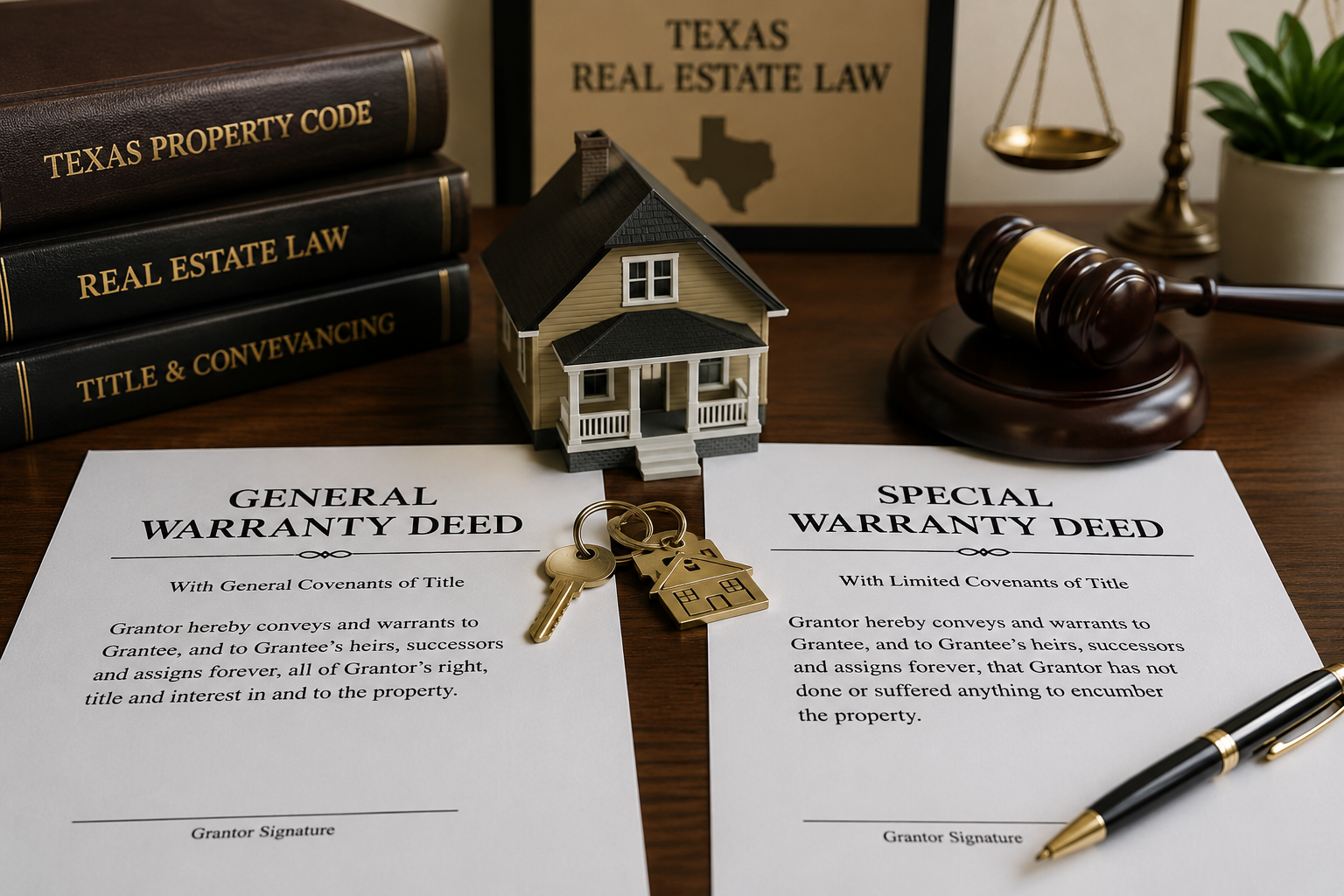
In particular, many property owners do not understand the difference between a General Warranty Deed and a Special Warranty Deed. The distinction can determine who bears responsibility if a title problem emerges years after closing.
Understanding the difference can help buyers protect themselves and help sellers understand the extent of the promises they are making.
What Is a Deed?
A deed is the legal instrument that transfers ownership of real property from one party to another. Texas law recognizes various forms of deeds, each carrying different legal consequences.
The Texas Property Code provides:
"An estate in land that is conveyed or devised is a fee simple unless the estate is limited by express words." Tex. Prop. Code § 5.001.
A deed does more than transfer ownership. It can also contain warranties regarding the condition of the title being conveyed.
What Is a General Warranty Deed?
A General Warranty Deed provides the broadest protection available to a buyer.
Under Texas law, a grantor may convey property using language such as:
"A.B. conveys and warrants to C.D."
Texas Property Code § 5.023 provides that these words imply certain covenants and warranties unless otherwise limited.
In practical terms, the seller is warranting that the title is good not only during the seller's ownership, but also against defects arising from prior owners in the chain of title.
Example
Suppose a property was improperly conveyed twenty years ago by a prior owner. The defect remains undiscovered until after the current sale closes.
If the buyer received a General Warranty Deed, the seller may be obligated to defend the title and potentially compensate the buyer for losses caused by that defect—even though the seller did not personally create the problem.
That is a powerful promise.
What Is a Special Warranty Deed?
A Special Warranty Deed is much narrower.
Rather than warranting against all title defects, the seller only warrants against defects arising during the seller's own period of ownership.
In other words, the seller is effectively saying:
"I have not done anything to impair the title while I owned the property."
However, the seller is not guaranteeing that earlier owners did everything correctly.
Example
Assume a title defect originated thirty years ago before the seller ever acquired the property.
If the property was conveyed through a Special Warranty Deed, the buyer generally cannot look to the seller for protection regarding that older defect.
Instead, the buyer may have to rely upon title insurance or pursue other legal remedies.
Why Are Special Warranty Deeds Common?
Many sophisticated parties prefer Special Warranty Deeds because they limit future liability.
They are frequently used in:
- Commercial real estate transactions;
- Transfers by corporations and LLCs;
- Bank-owned properties;
- Estate-related transfers;
- Trustee sales; and
- Certain investment property transactions.
The seller may have limited knowledge regarding the property's distant ownership history and therefore may be unwilling to guarantee matters beyond its own ownership period.
How Does Title Insurance Fit In?
Title insurance often reduces the practical significance of the distinction because buyers commonly obtain a title insurance policy at closing.
However, title insurance and deed warranties are not identical.
A title insurance company may deny coverage based on policy exclusions or exceptions. In some circumstances, a buyer may have rights under both the title insurance policy and the deed warranties.
The existence of title insurance does not automatically make the type of deed irrelevant.
What About Probate Property?
The distinction becomes especially important in probate and inherited-property situations.
An executor, administrator, trustee, or heir may be reluctant to provide broad title warranties regarding events that occurred decades before they became involved with the property.
As a result, Special Warranty Deeds are frequently encountered in estate administration and trust-related transfers.
Buyers should understand exactly what protections they are receiving before closing.
Can the Parties Negotiate the Type of Deed?
Absolutely.
The form of deed is often negotiable.
A buyer seeking maximum protection may request a General Warranty Deed. A seller concerned about future liability may insist upon a Special Warranty Deed.
The final agreement should be reviewed carefully before closing because the difference may not become apparent until years later when a title dispute arises.
Litigation Risks Arising from Deed Warranties
Disputes concerning deed warranties can lead to significant litigation.
Common claims include:
- Breach of warranty of title;
- Breach of covenant against encumbrances;
- Failure to defend title;
- Quiet title actions;
- Declaratory judgment actions; and
- Claims involving title insurance coverage.
Because real estate values are often substantial, even seemingly technical title disputes can involve significant financial exposure.
Final Thoughts
The difference between a General Warranty Deed and a Special Warranty Deed may appear subtle, but it can dramatically affect the rights and obligations of both buyers and sellers.
A General Warranty Deed provides broad protection against title defects arising anywhere in the property's history. A Special Warranty Deed generally limits those protections to issues arising during the seller's ownership.
Before buying, selling, inheriting, or transferring Texas real estate, it is wise to understand exactly what warranties are being given—and what warranties are not.
A single paragraph in a deed can determine who bears responsibility when a title problem surfaces years after closing.
At David C. Barsalou, Attorney at Law, PLLC, we help clients navigate business, family, tax, estate planning, and real estate matters ranging from document drafting to litigation with clarity and confidence. If you’d like guidance on your situation, schedule a consultation today. Call us at (713) 397-4678, email barsalou.law@gmail.com, or reach us through our Contact Page. We’re here to help you take the next step.