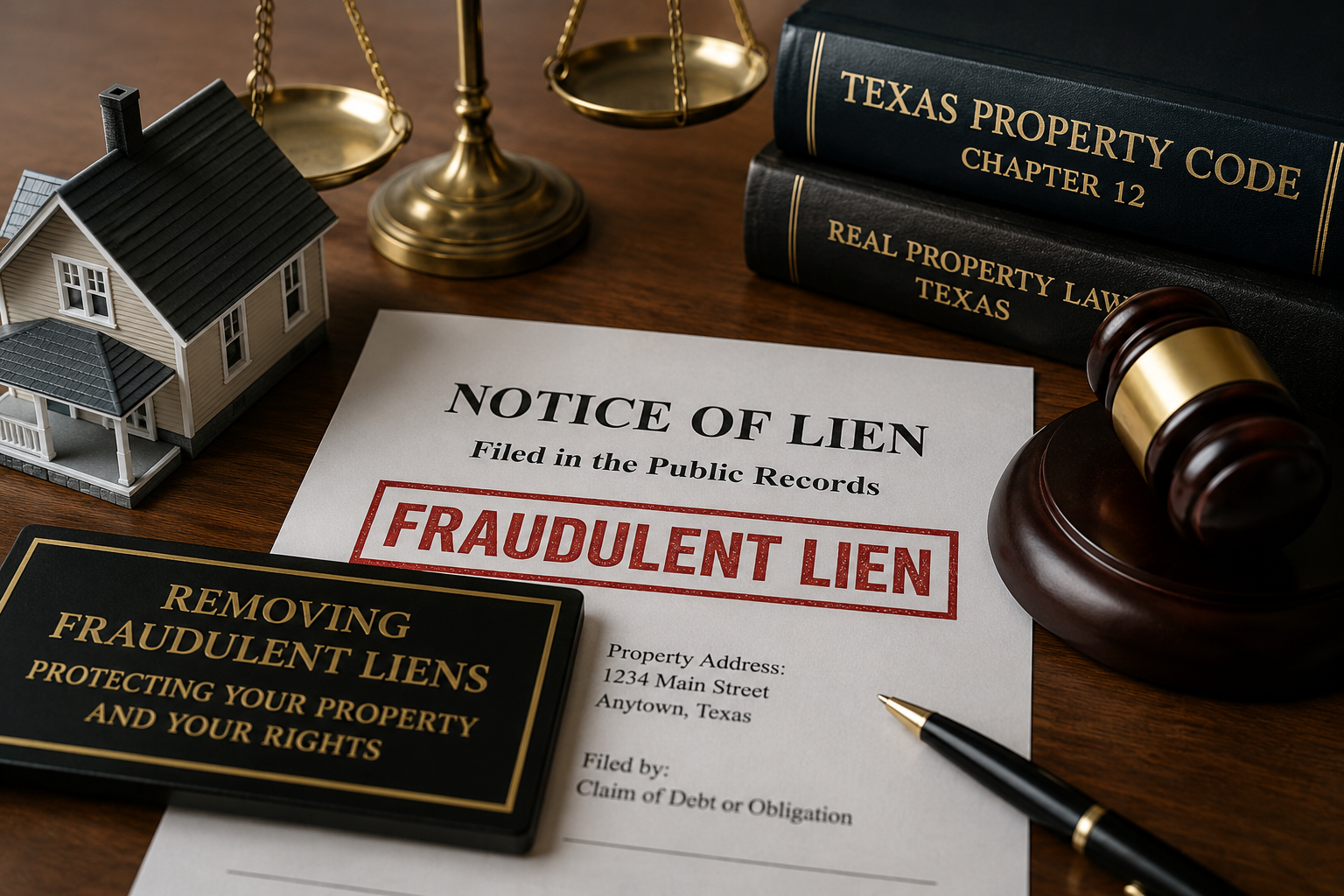
Few things cause panic for a Texas property owner faster than discovering a lien filed against their home or land. Whether the lien was filed by a disgruntled former business partner, an upset contractor, a sovereign-citizen-type litigant, or someone attempting to gain leverage in a dispute, an improper lien can cloud title, disrupt a sale, and create significant financial harm.
Fortunately, Texas law provides remedies for property owners who become victims of fraudulent liens.
What Is a Fraudulent Lien?
A fraudulent lien is generally a document filed in the public records that purports to create an interest in property even though the filer knows—or should know—that no valid legal basis exists for the claim.
Texas Property Code § 12.002(a) provides:
"A person may not make, present, or use a document or other record with:
(1) knowledge that the document or other record is a fraudulent court record or a fraudulent lien or claim against real or personal property or an interest in real or personal property;
(2) intent that the document or other record be given the same legal effect as a court record or document of a court created by or established under the constitution or laws of this state or the United States or another entity listed in Section 37.01, Penal Code, evidencing a valid lien or claim against real or personal property or an interest in real or personal property; and
(3) intent to cause another person to suffer:
(A) physical injury;
(B) financial injury; or
(C) mental anguish or emotional distress."
This statute is designed to prevent individuals from weaponizing public filing systems to harass or damage others.
Why Fraudulent Liens Are Dangerous
Even a completely invalid lien can create serious problems.
A fraudulent filing may:
- Delay the sale of real estate;
- Interfere with refinancing;
- Damage business transactions;
- Increase title insurance complications;
- Force the owner to incur legal fees;
- Create uncertainty regarding ownership rights.
Many title companies will refuse to close a transaction until a questionable lien has been addressed.
Common Examples of Fraudulent Liens
Examples frequently include:
- Liens filed by former romantic partners;
- Retaliatory filings by disgruntled tenants;
- Fake mechanic's liens;
- Improper "commercial liens" filed by sovereign-citizen groups;
- Documents falsely claiming ownership interests;
- Fabricated debt claims against real estate.
Not every invalid lien is fraudulent. Sometimes a contractor genuinely believes money is owed and files a lien that later turns out to be defective. Fraud requires more than mere mistake.
Civil Liability Under Texas Law
Texas law allows victims of fraudulent liens to seek damages.
Texas Property Code § 12.002(b) provides that a person who violates the statute is liable to each injured person for:
- Actual damages;
- Court costs;
- Reasonable attorney's fees;
- Exemplary damages; and
- Statutory damages in certain circumstances.
This can transform what the filer thought was a harmless nuisance into a very expensive lawsuit.
How Can a Property Owner Remove a Fraudulent Lien?
Texas law provides several potential avenues.
Depending on the circumstances, a property owner may pursue:
- A lawsuit under Chapter 12 of the Texas Property Code;
- A declaratory judgment action;
- A quiet title action;
- A motion challenging the validity of the lien;
- Other statutory procedures designed to remove invalid encumbrances.
The proper strategy depends on the type of lien, the identity of the filer, and whether litigation is already pending.
Evidence Matters
The success of a fraudulent-lien claim often depends on documentation.
Helpful evidence may include:
- The recorded lien itself;
- Contracts between the parties;
- Payment records;
- Emails and text messages;
- Prior litigation records;
- Title reports;
- Witness testimony.
The key issue is frequently whether the filer knew there was no legitimate legal basis for the claimed lien.
Don't Ignore a Suspicious Lien
Many property owners assume that an obviously bogus filing can simply be ignored.
That is often a mistake.
An invalid lien can remain in county records indefinitely and may surface years later when the owner attempts to sell or refinance property. Addressing the issue promptly can prevent far greater expense down the road.
Conclusion
Fraudulent liens are more than mere paperwork nuisances. They can cloud title, derail transactions, and create substantial financial harm. Texas Property Code Chapter 12 provides powerful remedies for property owners who become victims of fraudulent filings, including the potential recovery of attorney's fees, damages, and court costs.
If you discover a suspicious lien against your Texas property, obtaining legal advice early may help preserve your rights and prevent costly complications later.
At David C. Barsalou, Attorney at Law, PLLC, we help clients navigate business, family, tax, estate planning, and real estate matters ranging from document drafting to litigation with clarity and confidence. If you’d like guidance on your situation, schedule a consultation today. Call us at (713) 397-4678, email barsalou.law@gmail.com, or reach us through our Contact Page. We’re here to help you take the next step.
