Introduction
In Texas litigation, there is a subtle but powerful evidentiary concept that can completely change the trajectory of a trial: “opening the door.”
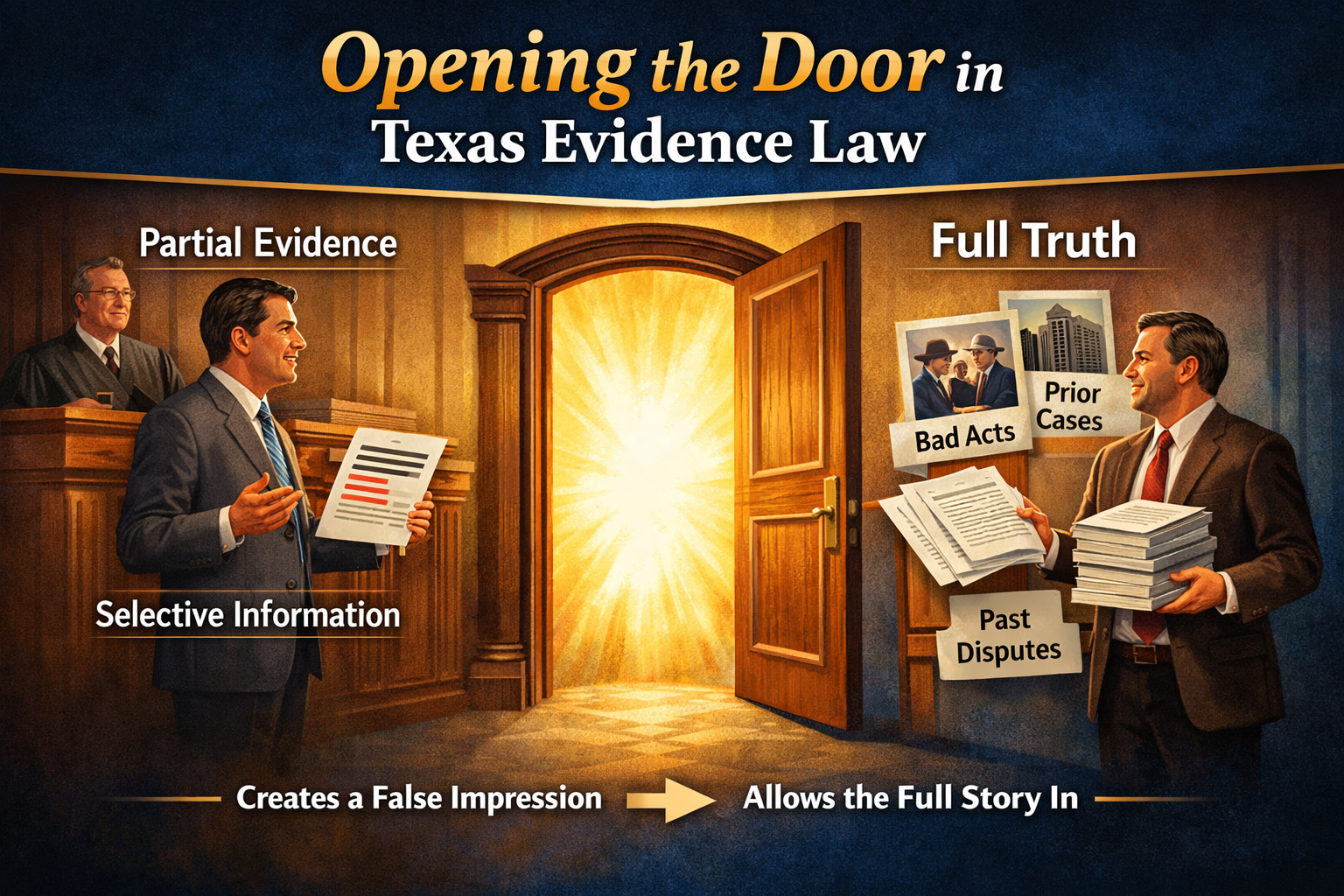
This doctrine—sometimes referred to as curative admissibility—allows otherwise inadmissible evidence to come in because one party created a misleading impression.
In practice, it’s one of those moments where a lawyer thinks they’re being clever… and accidentally hands the opposing side a weapon.
The Legal Foundation: Texas Rules of Evidence
While “opening the door” is not a single codified rule, it is grounded in several provisions of the Texas Rules of Evidence, especially:
1. Rule of Completeness – TRE 107
“If a party introduces part of an act, declaration, conversation, writing, or recorded statement, an adverse party may inquire into any other part… that in fairness ought to be considered at the same time.”
— Tex. R. Evid. 107
This rule prevents a party from cherry-picking evidenceto create a misleading narrative.
2. Relevance and Fairness – TRE 401 & 403
- TRE 401 defines relevant evidence
- TRE 403 allows exclusion if unfairly prejudicial
But here’s the twist:
👉When a party “opens the door,” courts may allow evidence that would otherwise be excluded under 403 to correct a false impression.
3. Character Evidence – TRE 404
Normally, character evidence is restricted:
“Evidence of a person’s character… is not admissible to prove that on a particular occasion the person acted in accordance with the character…”
— Tex. R. Evid. 404(a)
But once a party introduces character (even subtly), they may open the door for the other side to respond.
What Does “Opening the Door” Actually Mean?
At its core:
If you create a misleading impression, the court may allow the other side to fix it—even with evidence that would normally be inadmissible.
It’s a fairness doctrine.
Courts don’t like half-truths.
Real-World Examples (Where Lawyers Get Burned)
1. The “Selective Statement” Problem
A party introduces:
“The defendant told me, ‘I wasn’t even there.’”
But leaves out the rest of the statement.
Now the opposing party can introduce the full statement—even if parts would otherwise be hearsay—because of TRE 107.
2. The “Good Character” Trap
A witness testifies:
“He’s an honest guy. He would never lie.”
Congratulations—you’ve now opened the door to:
- Prior bad acts
- Impeachment evidence
- Reputation testimony
All of which may have been inadmissible minutes earlier.
3. The “Clean Record” Mistake
A party implies:
“I’ve never had issues with contracts before.”
That can open the door to:
- Prior lawsuits
- Breach history
- Business disputes
Even if those would normally be excluded under relevance or prejudice rules.
Texas Case Law Perspective
Texas courts consistently recognize this doctrine as a fairness-based corrective tool.
The guiding principle:
A party cannot create a misleading impression and then hide behind the rules of evidence to prevent correction.
Courts will often allow otherwise inadmissible evidence not because it’s independently admissible—but because fairness requires it.
Strategic Implications for Texas Lawyers
1. Less Is More (Seriously)
Trying to “win” a point with partial evidence often backfires.
If you introduce something:
- Assume the rest is coming in
- Assume the judge will lean toward fairness
2. Object—but Know When You’ve Lost It
You can still object, but if:
- Your side created the issue, or
- The jury has a misleading impression
👉 The objection is likely going nowhere.
3. Use It Aggressively (When the Other Side Slips)
This doctrine is a great equalizer:
- Opponent cherry-picks? → Bring in the rest
- Opponent implies innocence? → Bring in context
- Opponent softens facts? → Restore the full picture
Why This Doctrine Matters More Than People Think
In real Texas courtrooms—especially:
- JP courts
- Bench trials
- Fast-moving hearings
Judges are not rigidly academic about evidence.
They care about fairness and context.
And “opening the door” is one of the primary tools they use to get there.
Conclusion
“Opening the door” is one of those doctrines that feels informal—but carries serious legal consequences.
It stands for a simple rule:
You don’t get to tell half the story and block the other side from finishing it.
For Texas litigators, the takeaway is clear:
- Be careful what you introduce
- Think two steps ahead
- And always assume the door swings both ways
At David C. Barsalou, Attorney at Law, PLLC, we help clients navigate business, family, tax, estate planning, and real estate matters ranging from document drafting to litigation with clarity and confidence. If you’d like guidance on your situation, schedule a consultation today. Call us at (713) 397-4678, email barsalou.law@gmail.com, or reach us through our Contact Page. We’re here to help you take the next step.