Texas litigation encourages settlement—but not every agreement made between lawyers (or parties) is legally binding. One of the most misunderstood tools in Texas civil and family law is the Rule 11 Agreement. Many people believe that if “everyone agreed,” the deal is done. Texas law says otherwise.
Understanding Rule 11 can mean the difference between a clean resolution and a costly fight over whether a settlement even exists.
What Is a Rule 11 Agreement?
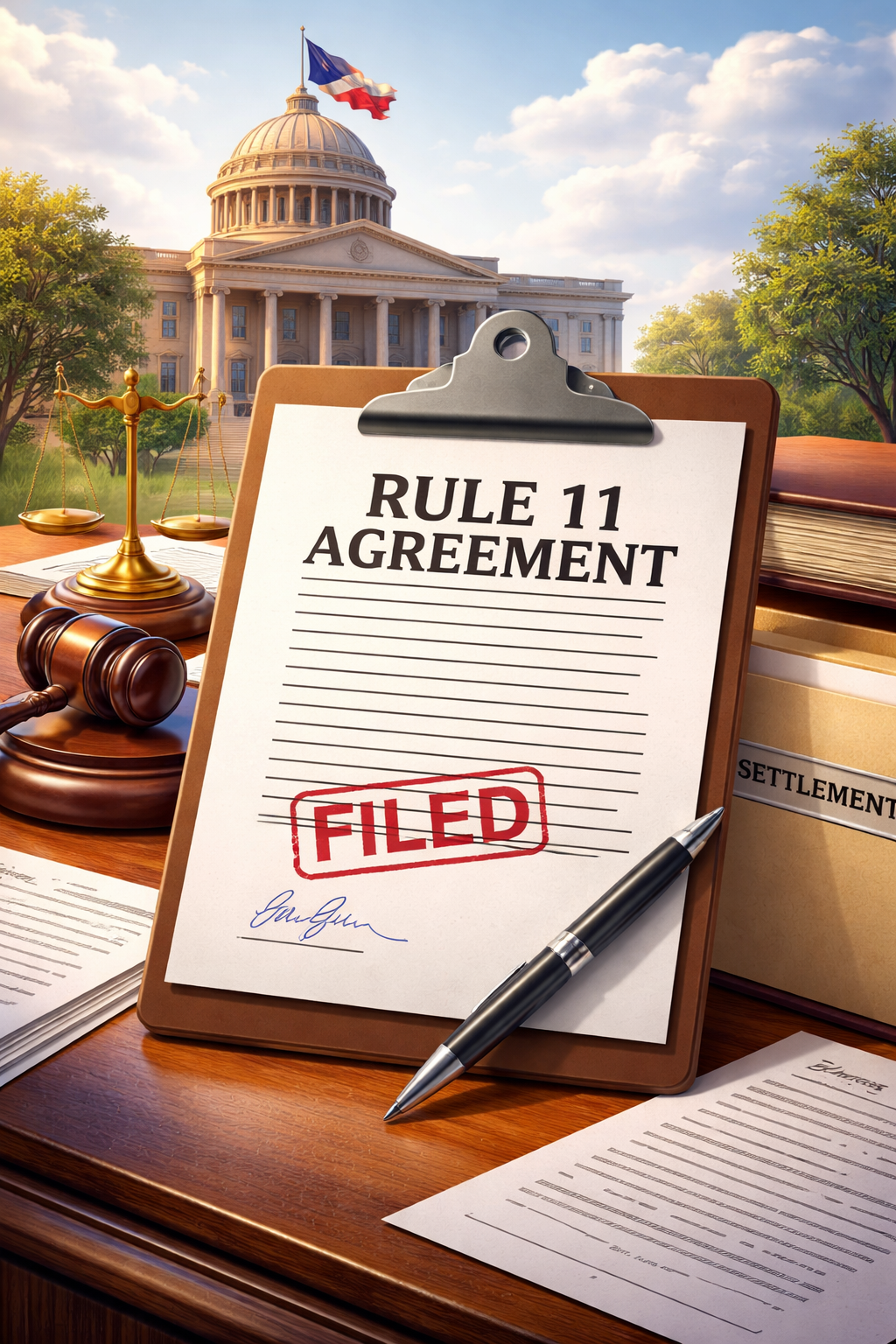
A Rule 11 Agreement is a procedural rule that governs when settlement agreements are enforceable in Texas courts. The rule is short, but unforgiving.
“Unless otherwise provided in these rules, no agreement between attorneys or parties touching any suit pending will be enforced unless it be in writing, signed and filed with the papers as part of the record, or made in open court and entered of record.”
Texas Rule of Civil Procedure 11
That’s it. No email chains. No text messages. No “we shook hands.” Either Rule 11 is satisfied, or the agreement generally cannot be enforced.
Why Rule 11 Exists
Rule 11 exists to prevent disputes about disputes. Courts do not want to hold mini-trials over who said what, who agreed, or whether a condition was implied.
The rule creates bright-line certainty:
- Writing
- Signature
- Filed with the court
—or— - Stated in open court and recorded
If those boxes are not checked, the court usually cannot enforce the agreement, even if the deal was otherwise reasonable.
Common Situations Where Rule 11 Problems Arise
1. Email or Text “Settlements”
Lawyers frequently exchange emails stating that a case is “settled subject to paperwork.” That phrase alone often kills enforceability.
Texas courts routinely hold that:
- An agreement “subject to drafting” is not final
- Missing signatures are fatal
- Ambiguous terms void enforcement
Emails can satisfy Rule 11—but only if they clearly show mutual assent, contain all material terms, are signed (including electronic signatures), and are filed with the court.
2. Mediation Agreements Gone Wrong
Mediated settlement agreements are usually enforceable—but problems arise when:
- The agreement is unsigned
- Terms are incomplete
- One party later refuses to execute formal paperwork
If the mediation agreement itself satisfies Rule 11, courts can enforce it. If it does not, the deal may collapse entirely.
3. Family Law “Agreements in Principle”
Divorce and custody cases are especially vulnerable. Parties often believe they have a deal on property or parenting issues, only to discover later that:
- The agreement was never filed
- It lacked required signatures
- It conflicted with public policy
Rule 11 applies in family cases just as strictly as in civil litigation.
What Counts as “In Writing” and “Signed”?
Texas courts interpret “signed” broadly—but not infinitely.
Generally acceptable:
- Handwritten signatures
- Electronic signatures
- Typed names intended as signatures (context matters)
Generally insufficient:
- Oral agreements
- Unsigned drafts
- Messages showing continued negotiation
Intent is key. If the writing shows that further approval was contemplated, Rule 11 likely fails.
Can a Court Enforce an Agreement That Violates Rule 11?
Usually, no.
Courts consistently hold that Rule 11 is mandatory, not discretionary. Even equitable arguments (“that’s unfair,” “they relied on it”) usually fail.
There are narrow exceptions—such as separate contract claims or estoppel—but those require additional pleadings and proof and are far from guaranteed.
Practical Takeaways
- No Rule 11 compliance = no enforceable deal
- “Subject to final documents” is dangerous language
- File the agreement immediately once signed
- In contested cases, insist on either:
- A filed written agreement, or
- Stating the agreement on the record in open court
Why This Matters for Clients
Clients often assume that once lawyers agree, the case is over. Rule 11 reminds everyone that procedure matters. A poorly documented settlement can reopen litigation, increase fees, and destroy trust.
Getting it right the first time saves time, money, and leverage.
At David C. Barsalou, Attorney at Law, PLLC, we help clients navigate business, family, tax, estate planning, and real estate matters ranging from document drafting to litigation with clarity and confidence. If you’d like guidance on your situation, schedule a consultation today. Call us at (713) 397-4678, email barsalou.law@gmail.com, or reach us through our Contact Page. We’re here to help you take the next step.