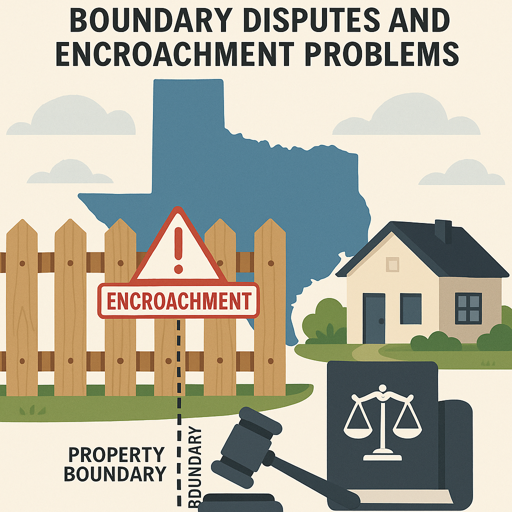
In Texas, real estate ownership is one of the strongest property rights recognized under the law—but with that comes a frequent and frustrating problem: boundary disputes and encroachments between neighboring landowners. Whether you own a home in Houston, a lot in Liberty Hill, or acreage in rural East Texas, unclear boundaries can turn a friendly neighbor situation into a costly legal fight.
Why Boundary Disputes Happen
Boundary issues typically arise when:
- Surveys don’t match (often because properties were divided decades ago using outdated methods).
- Fences, driveways, or structures were built in the wrong place.
- A property owner mistakenly uses or maintains land that isn’t actually theirs.
- Easements weren’t properly recorded or understood.
- Someone claims ownership through adverse possession.
Because Texas is a “metes and bounds” state, property descriptions can be incredibly detailed—but also incredibly confusing. A single mistake in a measurement or a misunderstanding of an old deed can create years of conflict.
Encroachment: A Very Texas Problem
One of the most common real estate issues is encroachment—when one property owner builds something that crosses onto another person’s land. Examples include:
- A fence built a few feet over the line
- A storage shed sitting on the neighbor’s property
- A driveway poured partially across the boundary
- Tree roots or branches crossing onto another lot
Even minor encroachments can cloud title, interfere with future sales, or trigger legal obligations.
Why These Issues Matter Legally
Boundary disputes can:
- Reduce the market value of your home
- Create title defects that delay or kill real estate closings
- Expose owners to claims of trespass, nuisance, or damages
- Trigger litigation costing far more than early resolution
Title companies often refuse to insure over unresolved boundary problems. Buyers may walk away. Neighbors may escalate the issue. What starts small can grow fast.
How Boundary Disputes Are Resolved
Property owners in Texas typically resolve these disputes through one or more of the following:
1. A New Survey
Often the fastest way to identify the true boundary. Licensed surveyors in Texas must follow strict standards, making their findings highly persuasive.
2. Negotiation Between Neighbors
Sometimes a simple conversation (or lawyer-guided discussion) is enough to resolve the matter through:
- Fence relocation
- Shared maintenance agreements
- Granting or receiving a formal easement
3. Boundary Line Agreements
A formal contract between neighbors that clarifies ownership and is recorded in the county property records.
4. Quiet Title or Declaratory Judgment Actions
When parties cannot agree, the issue may need to be resolved in court. A quiet title or declaratory judgment action asks a judge to determine the legal boundary so both parties can close the matter permanently.
5. Adverse Possession Claims
In rare cases, someone may gain ownership of the disputed land if they have openly, continuously, and exclusively possessed it under Texas’s statutory framework. These cases are fact-intensive and require careful legal analysis.
Why Legal Counsel Matters
Boundary disputes involve deeds, easements, surveys, title commitments, and often decades of property history. A Texas real estate attorney can:
- Evaluate competing surveys
- Identify title defects
- Negotiate with the other landowner or their attorney
- Draft the necessary agreements
- File and litigate quiet title actions
- Protect your long-term property rights
Early legal intervention can stop a small disagreement from becoming a full-blown lawsuit.
At David C. Barsalou, Attorney at Law, PLLC, we help clients navigate business, family, tax, estate planning, and real estate matters ranging from document drafting to litigation with clarity and confidence. If you’d like guidance on your situation, schedule a consultation today. Call us at (713) 397-4678, email barsalou.law@gmail.com, or reach us through our Contact Page. We’re here to help you take the next step.