Many Texas Landlords Don't Realize This Disclosure Requirement Exists
Most landlords know they need a lease, collect rent, and maintain the property. However, many are surprised to learn that the Texas Property Code requires landlords to disclose who owns and manages residential rental property.
These disclosure rules are not merely administrative. They allow tenants to identify the proper person for legal notices, repairs, security deposit disputes, and litigation. Failing to comply can create unnecessary legal complications and, in some circumstances, expose the landlord to statutory remedies.
What Does the Texas Property Code Require?
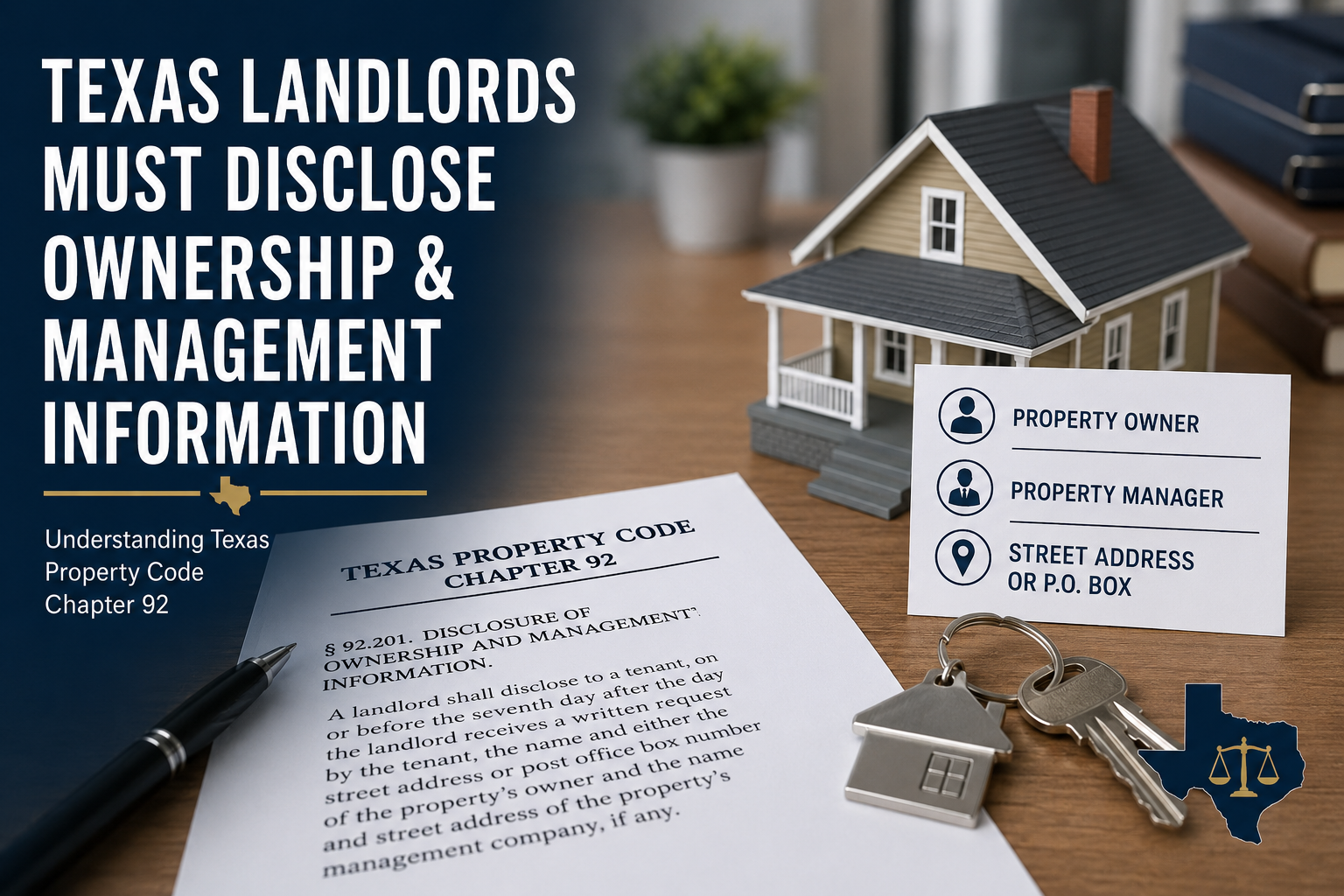
The Texas Legislature addressed this issue in Texas Property Code § 92.201, which provides:
"A landlord shall disclose to a tenant, on or before the seventh day after the day the landlord receives a written request by the tenant, the name and either the street address or post office box number of the property's owner and the name and street address of the property's management company, if any."
This statute gives tenants a mechanism to determine exactly who owns the property and who is authorized to manage it.
The request must be made in writing.
Why Does This Matter?
Knowing the identity of the property owner can become important in many situations, including:
- Filing a lawsuit.
- Sending statutory notices.
- Requesting repairs.
- Disputing security deposit deductions.
- Determining who actually has authority to make decisions regarding the lease.
Many tenants mistakenly believe the leasing office owns the property. Frequently, however, the property is owned by an LLC or investment group while day-to-day operations are handled by a separate management company.
The statute helps eliminate that uncertainty.
What Happens If the Landlord Does Not Respond?
Texas Property Code § 92.205 provides an enforcement mechanism. It states:
"A landlord who fails to comply with this subchapter is liable to the tenant for one month's rent plus $100 and court costs."
The statute also authorizes recovery of reasonable attorney's fees under appropriate circumstances.
Although the potential damages are relatively modest, they often provide significant leverage when a landlord simply refuses to identify the proper owner or manager.
Does the Tenant Have to Ask First?
Yes.
Unlike certain disclosures that must automatically be provided, this particular statutory duty is generally triggered by the tenant's written request.
If no written request is made, the landlord may not have violated this particular portion of the statute.
Does This Apply to Every Rental Property?
These provisions generally apply to residential rental property governed by Chapter 92 of the Texas Property Code.
Commercial leases are governed by different statutory provisions and common-law principles, so business tenants should not assume these residential disclosure requirements automatically apply.
Practical Advice for Landlords
Landlords and property managers should:
- Respond promptly to written disclosure requests.
- Maintain current ownership information.
- Keep management company addresses up to date.
- Train leasing staff on statutory response deadlines.
- Maintain copies of all written responses.
These simple steps can prevent avoidable disputes and demonstrate compliance if litigation later occurs.
Practical Advice for Tenants
If you need to identify the true owner of your rental property:
- Submit a written request.
- Keep a copy of the request.
- Document when it was delivered.
- Retain any response you receive.
Creating a paper trail can become valuable if a dispute later arises over repairs, security deposits, or lease enforcement.
Final Thoughts
Many landlord-tenant disputes become more complicated simply because the parties do not know who actually owns or manages the property. Texas Property Code Chapter 92 provides a straightforward solution by requiring landlords to disclose this information upon written request.
Whether you are a landlord attempting to comply with Texas law or a tenant trying to identify the proper party to contact, understanding these disclosure requirements can help avoid unnecessary litigation and keep disputes focused on the real issues.
If you have questions regarding residential leases, security deposits, eviction matters, or other Texas real estate disputes, an experienced Texas attorney can help you understand your rights and obligations under the Texas Property Code.
At David C. Barsalou, Attorney at Law, PLLC, we help clients navigate business, family, tax, estate planning, and real estate matters ranging from document drafting to litigation with clarity and confidence. If you’d like guidance on your situation, schedule a consultation today. Call us at (713) 397-4678, email barsalou.law@gmail.com, or reach us through our Contact Page. We’re here to help you take the next step.
