Most Business Owners Have Never Heard of This Automatic Lien
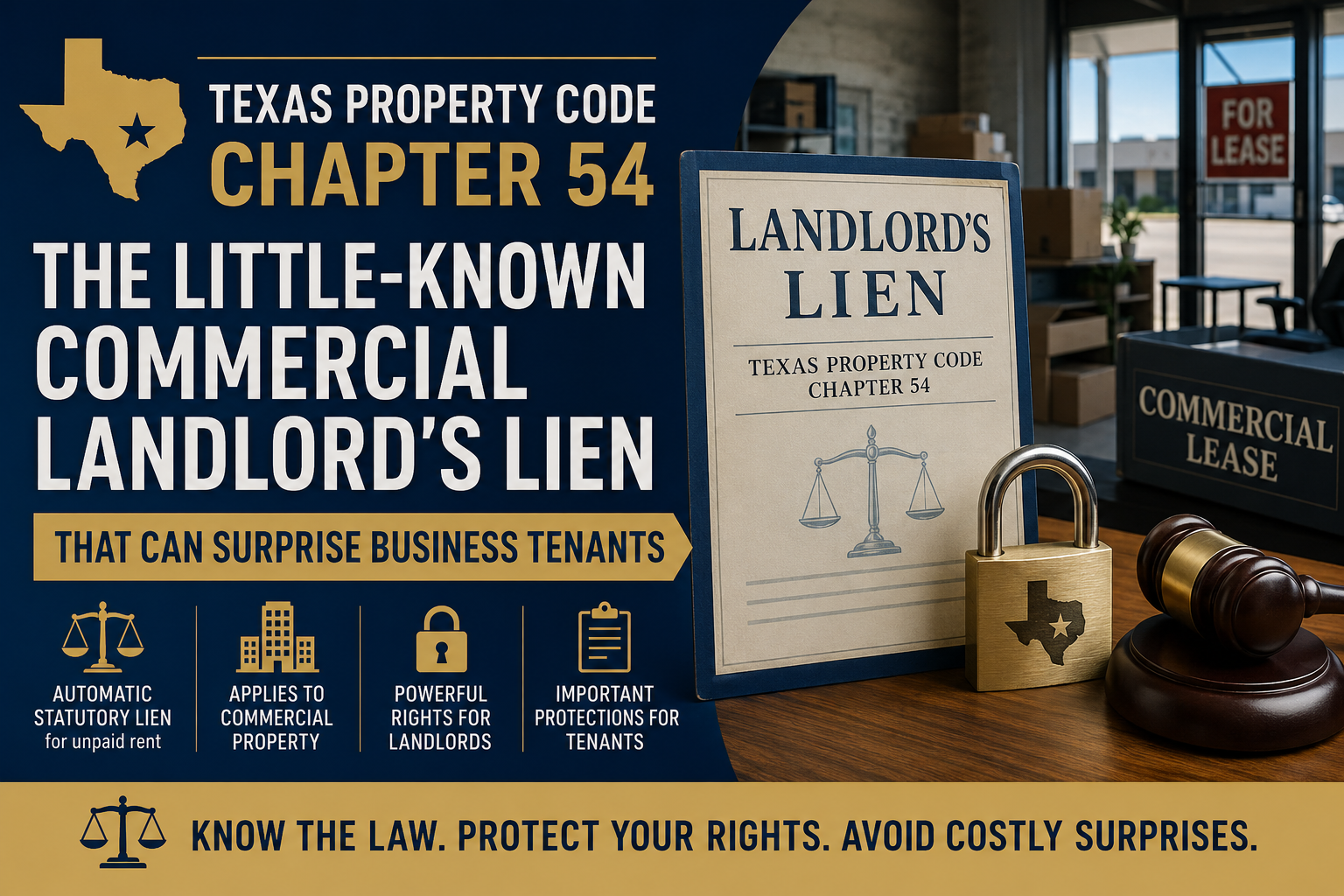
When most people think about liens, they imagine mechanic's liens, tax liens, or judgment liens. Few realize that Texas law gives many commercial landlords an automatic statutory lien against certain property belonging to their tenants.
This right exists under Chapter 54 of the Texas Property Code, and it can become extremely important when a commercial tenant falls behind on rent.
Unlike many liens that require filing paperwork with the county clerk, a landlord's lien may arise simply because the law says it does.
What Does the Texas Property Code Say?
Texas Property Code § 54.021 provides, in relevant part:
"A landlord has a preference lien for rent that is due and unpaid against the property of the tenant..."
That single sentence creates powerful rights for qualifying commercial landlords.
What Property Can Be Subject to the Lien?
Generally speaking, the lien may attach to certain property located in or on the leased premises that belongs to the tenant.
Depending upon the circumstances and the applicable provisions of Chapter 54, this may include business equipment, inventory, furniture, fixtures owned by the tenant, and other commercial property used in the business.
However, the statute also contains important limitations and exemptions. Not every item located inside a commercial space may be seized or sold.
Does This Apply to Residential Apartments?
Generally, no.
Texas has largely eliminated traditional landlord's liens in ordinary residential leasing relationships. Residential landlord-tenant disputes are instead primarily governed by Texas Property Code Chapter 92, which contains extensive protections regarding security deposits, repairs, lockouts, notices, and evictions.
Chapter 54 primarily concerns commercial leasing.
Is the Lien Automatic?
Often, yes.
Unlike many other liens that require recording documents in the public records, Chapter 54 provides a statutory lien under qualifying circumstances.
That does not mean a landlord may simply take whatever property it wants whenever rent becomes overdue. Enforcement must comply with Texas law, the lease agreement, and any applicable judicial procedures.
Can the Lease Expand or Modify These Rights?
Frequently.
Commercial leases often contain contractual landlord's lien provisions that supplement or modify the statutory rights found in Chapter 54.
Because commercial parties generally enjoy greater freedom of contract than residential landlords and tenants, many commercial leases include detailed provisions addressing:
- Additional collateral
- Default procedures
- Notice requirements
- Self-help remedies where permitted
- Security interests under the Uniform Commercial Code
A careful review of both the lease and Chapter 54 is therefore essential.
Why This Matters for Commercial Tenants
Many business owners focus almost exclusively on rent amounts and lease terms while overlooking default provisions.
If financial problems arise, the landlord may possess rights that the tenant never anticipated. Understanding those rights before signing a lease can help businesses negotiate better terms and avoid unpleasant surprises.
Why This Matters for Commercial Landlords
The statutory landlord's lien can be a valuable collection tool when a tenant defaults.
However, improperly exercising lien rights can expose a landlord to significant legal liability. Landlords should understand precisely what property may be subject to the lien, what procedures must be followed, and how Chapter 54 interacts with the lease and other areas of Texas law.
Final Thoughts
Texas Property Code Chapter 54 is one of those statutes that receives relatively little public attention but can dramatically affect commercial leasing disputes.
For landlords, it provides an additional method of protecting unpaid rent claims.
For commercial tenants, it serves as a reminder that signing a lease creates obligations extending well beyond simply paying monthly rent.
Whether you are negotiating a new commercial lease or facing a default situation, understanding Texas's commercial landlord lien laws can help you protect your rights and avoid costly mistakes.
Disclaimer: This article is intended solely for general educational purposes and does not constitute legal advice. Every commercial lease and dispute presents unique facts. If you are involved in a commercial landlord-tenant dispute, consult a qualified Texas attorney regarding your specific circumstances.
At David C. Barsalou, Attorney at Law, PLLC, we help clients navigate business, family, tax, estate planning, and real estate matters ranging from document drafting to litigation with clarity and confidence. If you’d like guidance on your situation, schedule a consultation today. Call us at (713) 397-4678, email barsalou.law@gmail.com, or reach us through our Contact Page. We’re here to help you take the next step.