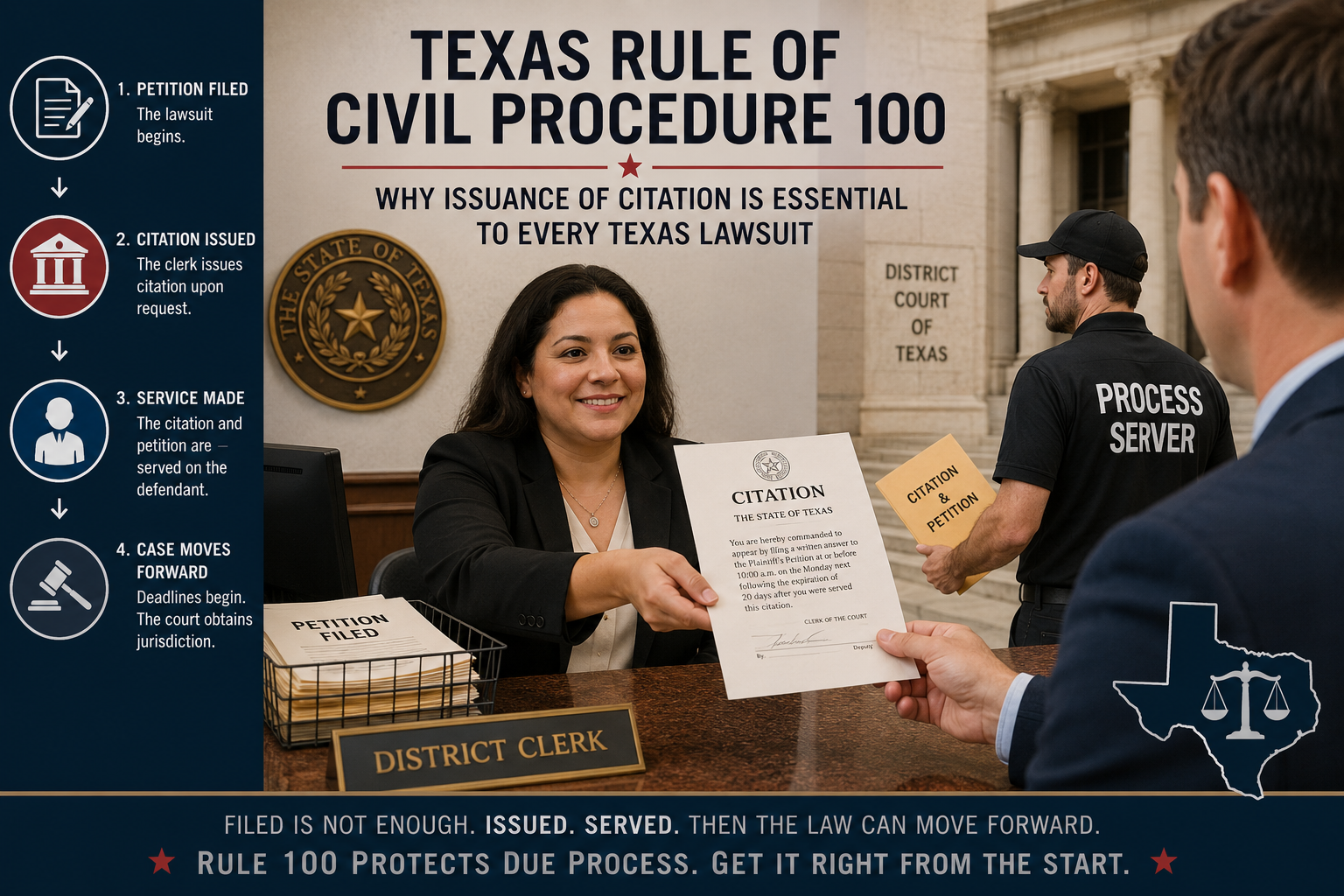
If you have been sued—or are preparing to file a lawsuit—you might assume that filing the petition is enough to start the legal process. Under Texas law, however, filing a petition is only the first step. A lawsuit generally cannot move forward until the clerk issues citation for service upon the defendant.
Although this may sound like a technical procedural requirement, Rule 100 of the Texas Rules of Civil Procedure plays a critical role in ensuring due process and providing defendants with proper notice before a court exercises jurisdiction over them.
What Is Citation?
Citation is the formal document issued by the court clerk directing a defendant to answer the lawsuit.
It serves several important purposes:
- It officially notifies the defendant that a lawsuit has been filed.
- It informs the defendant when an answer must be filed.
- It authorizes service of process by an authorized person.
Without properly issued citation, service is generally defective, and any resulting default judgment may be vulnerable to attack.
Texas Rule of Civil Procedure 100
Texas Rule of Civil Procedure 100 provides:
"Upon the filing of the petition, the clerk, when requested, shall forthwith issue a citation and deliver the citation as directed by the requesting party."
Although deceptively short, this rule establishes several important procedural principles.
First, citation is issued by the clerk—not by the judge or the plaintiff.
Second, the clerk issues citation upon request after the petition has been filed.
Third, the citation is then delivered in the manner directed by the requesting party so that service can be accomplished by an authorized process server, sheriff, constable, or other person authorized under the Rules.
Why Rule 100 Matters
Many deadlines in civil litigation are tied not merely to filing a lawsuit, but to proper service of citation.
For example:
- A defendant's answer deadline generally depends upon when citation is served.
- The court generally cannot enter a valid default judgment unless service strictly complies with the Rules of Civil Procedure.
- Statutes of limitation may continue to present issues if a plaintiff files suit but fails to exercise diligence in obtaining issuance and service of citation.
Accordingly, filing a petition and then allowing citation to sit unissued for an extended period can create significant legal problems.
Filing Alone Does Not Guarantee Jurisdiction
A common misconception is that once a lawsuit has been electronically filed, the defendant is automatically before the court.
That is incorrect.
Texas courts require proper service—or a valid waiver of service—before personal jurisdiction over the defendant is ordinarily established.
This constitutional requirement reflects basic due process: people are entitled to notice before a court adjudicates their rights.
Practical Problems Lawyers See
Experienced litigators regularly encounter procedural mistakes involving citation, including:
- Filing suit but forgetting to request issuance of citation.
- Requesting citation with an incorrect defendant name.
- Using an outdated address.
- Serving someone other than the proper registered agent.
- Delaying issuance or service long enough to create limitations issues.
- Attempting to obtain a default judgment based upon defective service.
Many default judgments are later set aside because one seemingly minor defect appears somewhere in the issuance or service process.
Citation Is Different from Service
These terms are often used interchangeably, but they describe different events.
Citation is the document prepared and issued by the clerk.
Service is the act of delivering that citation and the filed petition to the defendant through an authorized method.
Both steps must generally be completed correctly.
Can a Defendant Waive Citation?
Yes.
Under certain circumstances, a defendant may execute a written waiver of service that complies with the Texas Rules of Civil Procedure.
When that occurs, formal service of citation may become unnecessary, although the waiver itself must satisfy specific legal requirements.
The Bottom Line
Texas Rule of Civil Procedure 100 may be only a few lines long, but it begins one of the most important phases of every civil lawsuit. Proper issuance of citation protects due process, starts the service process, and helps ensure that any judgment ultimately entered will withstand later attack.
Whether you are filing a lawsuit or defending one, understanding the procedural mechanics of citation can prevent costly delays, avoid jurisdictional problems, and protect the validity of your case from the very beginning.
This article is provided for educational purposes only and does not constitute legal advice. Every case presents unique facts, and individuals should consult a qualified Texas attorney regarding their specific legal issues.
At David C. Barsalou, Attorney at Law, PLLC, we help clients navigate business, family, tax, estate planning, and real estate matters ranging from document drafting to litigation with clarity and confidence. If you’d like guidance on your situation, schedule a consultation today. Call us at (713) 397-4678, email barsalou.law@gmail.com, or reach us through our Contact Page. We’re here to help you take the next step.