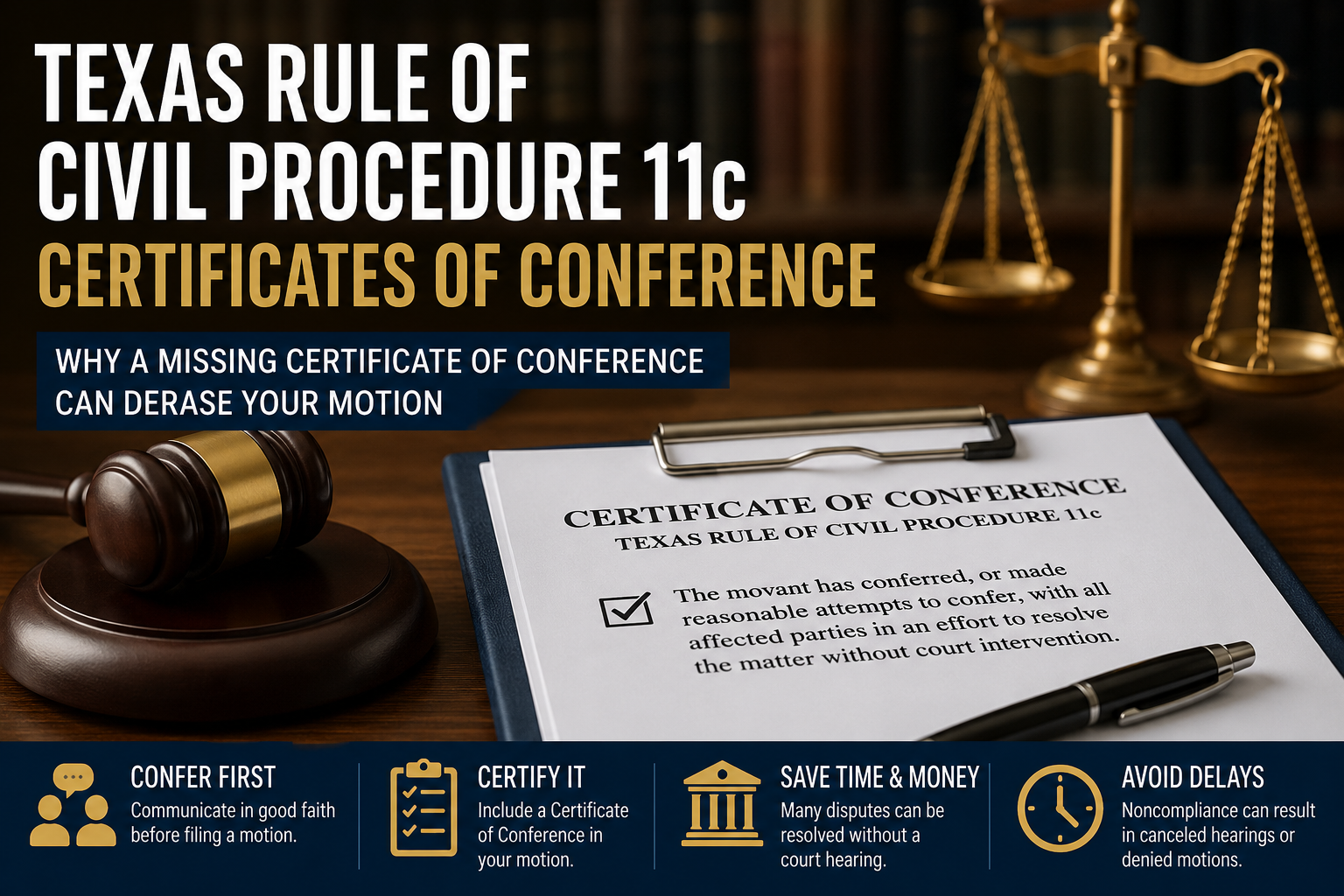
When most people imagine litigation, they picture dramatic courtroom arguments. In reality, many disputes are resolved—or delayed—because of procedural rules that require attorneys to communicate before asking a judge to intervene.
One such rule is Texas Rule of Civil Procedure 11c, which generally requires parties to certify that they attempted to resolve certain disputes before filing many motions. Although it may seem like a technicality, failing to comply can result in delays, hearings being reset, or even motions being denied without reaching the merits.
If you are involved in Texas civil litigation, understanding the Certificate of Conference requirement can save both time and money.
What Is a Certificate of Conference?
A Certificate of Conference is a written statement filed with certain motions informing the court that the moving party attempted to resolve the issue with opposing counsel before seeking judicial intervention.
The purpose is simple:
- reduce unnecessary hearings;
- encourage cooperation;
- conserve judicial resources; and
- narrow issues actually requiring court involvement.
Texas courts expect lawyers to genuinely attempt to resolve disputes whenever possible before asking the court to intervene.
The Rule
Texas Rule of Civil Procedure 11c provides in part:
"A motion must state that the movant has conferred, or made reasonable attempts to confer, with all affected parties in an effort to resolve the matter without court intervention."
The precise wording and local implementation may vary depending upon statewide amendments and local court procedures, but the underlying concept remains the same: parties should attempt to work things out before involving the judge.
What Counts as "Conferring"?
A genuine conference usually involves:
- telephone calls;
- Zoom or video conferences;
- in-person discussions;
- meaningful email exchanges; or
- other direct communications aimed at resolving the dispute.
Simply sending a one-line email moments before filing a motion generally is not considered a meaningful effort.
Courts expect a sincere attempt—not merely checking a procedural box.
Which Motions Usually Require a Conference?
Many Texas courts require certificates of conference for motions involving:
- discovery disputes;
- motions to compel;
- motions for protective orders;
- scheduling disputes;
- continuances;
- certain procedural motions; and
- other non-dispositive matters.
Many counties also supplement Rule 11c through local rules or standing orders, making compliance even more important.
Why the Rule Matters
Judges have crowded dockets.
If two attorneys can resolve a discovery disagreement through a five-minute phone call, there is little reason for the court to spend valuable hearing time deciding the issue.
The Certificate of Conference requirement encourages professionalism and efficiency while reducing unnecessary litigation costs.
What Happens If You Do Not Comply?
Failure to include a proper Certificate of Conference may result in:
- the hearing being canceled;
- the motion being denied without prejudice;
- the motion being struck from the docket;
- instructions to confer before refiling; or
- unnecessary delay in obtaining relief.
Although courts often have discretion, many judges strictly enforce procedural compliance.
Practical Advice for Litigants
If your attorney tells you that they must first contact opposing counsel before filing a motion, they are usually not delaying your case—they are complying with Texas procedure.
Likewise, if opposing counsel contacts your attorney before filing a motion, participating in that discussion may save significant legal fees.
Many disputes are resolved without a hearing simply because both sides finally discuss the issue.
The Bottom Line
Texas litigation is not just about knowing the substantive law—it is also about following procedural rules that keep cases moving efficiently.
Rule 11c reflects an important principle: courts should be the last resort, not the first stop, for routine disputes that lawyers can resolve themselves. Whether you are involved in commercial litigation, real estate litigation, landlord-tenant disputes, probate litigation, or family law matters, understanding this requirement can help avoid unnecessary expense and delay.
If you have questions about Texas civil litigation or need representation in a lawsuit, consulting with an experienced Texas attorney early in the process can help ensure that procedural requirements are met before they become costly obstacles.
At David C. Barsalou, Attorney at Law, PLLC, we help clients navigate business, family, tax, estate planning, and real estate matters ranging from document drafting to litigation with clarity and confidence. If you’d like guidance on your situation, schedule a consultation today. Call us at (713) 397-4678, email barsalou.law@gmail.com, or reach us through our Contact Page. We’re here to help you take the next step.
