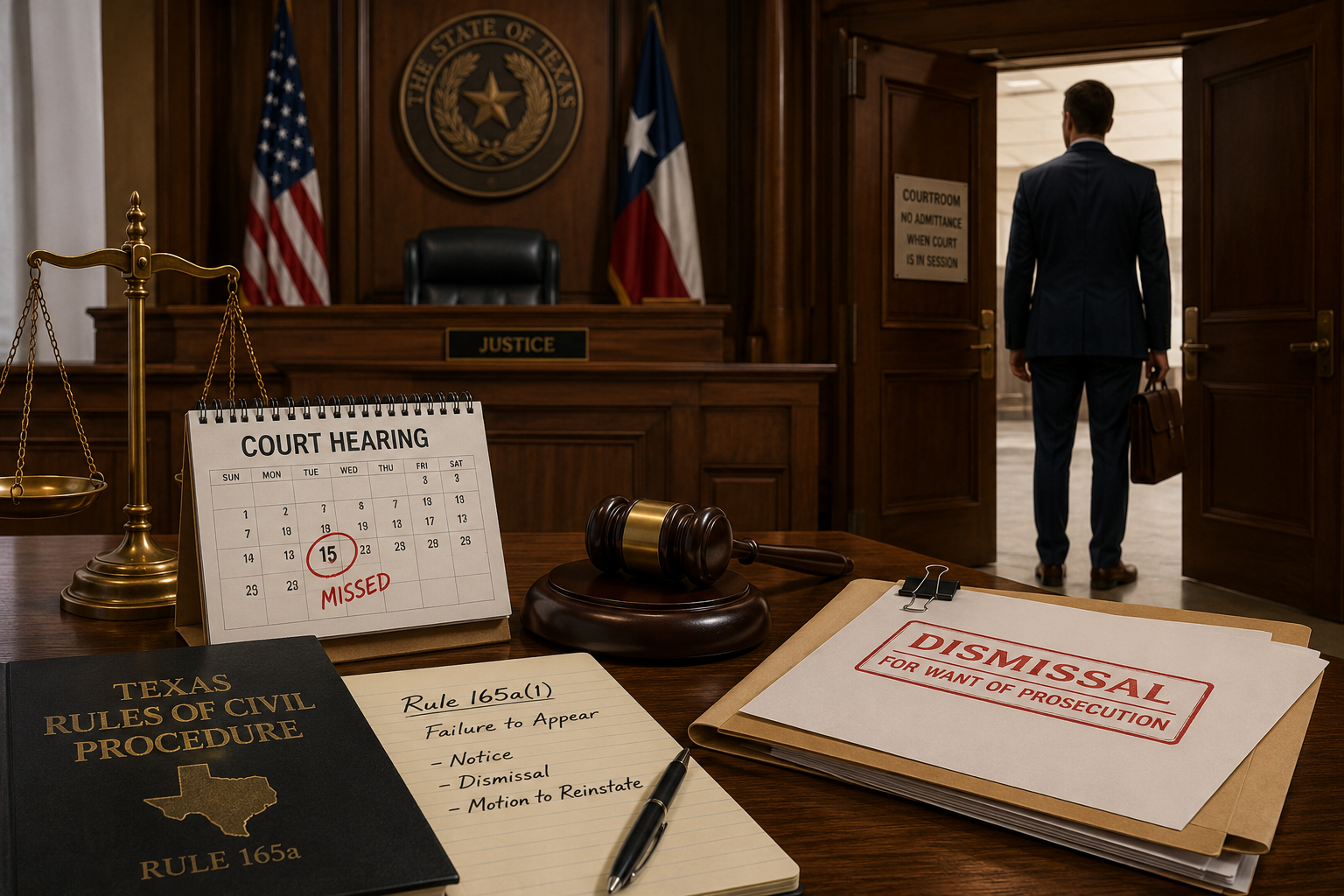
Understanding Dismissal for Failure to Appear Under Texas Law
Most people assume that once a lawsuit is filed, it will remain pending until a judge decides the merits. In reality, Texas courts have the authority to dismiss a case simply because a party or attorney fails to appear at a scheduled hearing or trial.
Texas Rule of Civil Procedure 165a(1) provides courts with a powerful case-management tool that can abruptly end a lawsuit—even if the underlying claims are otherwise valid.
Whether you are a plaintiff, defendant, business owner, landlord, heir in a probate dispute, or party to a family law case, understanding Rule 165a can help prevent costly mistakes that may derail your case.
What Is Rule 165a(1)?
Texas Rule of Civil Procedure 165a(1) states:
"A case may be dismissed for want of prosecution on failure of any party seeking affirmative relief to appear for any hearing or trial of which the party had notice."
Tex. R. Civ. P. 165a(1).
In plain English, if the party asking the court for relief fails to attend a hearing or trial after receiving proper notice, the court may dismiss the case.
This rule commonly affects:
- Plaintiffs in civil lawsuits;
- Petitioners in family law cases;
- Creditors pursuing collection actions;
- Probate applicants;
- Businesses suing for unpaid debts; and
- Property owners involved in real estate litigation.
Why Courts Use Rule 165a
Texas courts manage thousands of cases. When parties fail to appear, judicial resources are wasted and court dockets become congested.
Rule 165a gives judges authority to move cases efficiently and discourage litigants from filing lawsuits that they do not actively pursue.
A dismissal under Rule 165a serves as a reminder that filing a lawsuit is only the beginning. Parties must continue participating throughout the case.
What Counts as a Failure to Appear?
The most obvious example is simply not showing up to court.
However, Rule 165a issues frequently arise when:
- An attorney incorrectly calendars a hearing;
- A party misunderstands a Zoom hearing date;
- A litigant changes addresses and misses notices;
- A party assumes a continuance has been granted when it has not;
- Technical issues prevent participation in a remote hearing; or
- A party appears late after the case has already been called.
The court generally focuses on whether proper notice was provided and whether the party actually appeared when required.
Is the Dismissal Automatic?
No.
The rule states that a case "may" be dismissed.
That means dismissal is discretionary rather than mandatory.
Some judges may grant a continuance or reset the hearing if there is a reasonable explanation. Others may dismiss the case immediately if they believe the failure to appear reflects a lack of diligence.
Because dismissal decisions are discretionary, a party should never assume a court will simply reschedule a missed setting.
Notice Requirements
Before dismissal, Rule 165a requires notice.
The rule provides:
"Notice of the court's intention to dismiss and the date and place of the dismissal hearing shall be sent by the clerk to each attorney of record, and to each party not represented by an attorney."
Tex. R. Civ. P. 165a.
The notice requirement is important because due process generally requires that parties have an opportunity to explain why their case should remain pending.
Can a Dismissed Case Be Reinstated?
Often, yes.
Rule 165a(3) permits a party to seek reinstatement.
The rule states in part:
"The court shall reinstate the case upon finding after a hearing that the failure of the party or his attorney was not intentional or the result of conscious indifference but was due to an accident or mistake."
Tex. R. Civ. P. 165a(3).
This language is similar to the well-known Craddock standard used in default judgment cases.
Examples that may support reinstatement include:
- Clerical calendar errors;
- Miscommunication between attorney and client;
- Medical emergencies;
- Technology failures during remote proceedings;
- Incorrect notice information; or
- Other genuine mistakes.
The key issue is usually whether the failure was accidental rather than intentional.
Important Deadlines for Reinstatement
A motion to reinstate must generally be filed:
- Within 30 days after the dismissal order is signed; or
- Within the extended periods authorized by Texas procedural rules if notice of the dismissal was delayed.
Missing these deadlines can create significant procedural hurdles.
Because reinstatement motions affect the trial court's plenary power, timing is critical.
Is a Rule 165a Dismissal With or Without Prejudice?
Usually, dismissals for want of prosecution are without prejudice.
This means the lawsuit may often be refiled.
However, there is a major catch.
If the statute of limitations has expired, the practical effect may be the same as a dismissal with prejudice because the claims may no longer be timely.
For that reason, a dismissal that appears procedural can sometimes become outcome-determinative.
Practical Advice for Texas Litigants
To reduce the risk of dismissal:
- Keep your contact information current.
- Monitor e-filing notifications carefully.
- Confirm hearing dates directly with the court when necessary.
- Do not assume a continuance has been granted.
- Appear early for Zoom hearings.
- Maintain redundant calendar systems.
- Immediately investigate any missed setting.
A single missed hearing can place an otherwise meritorious case in jeopardy.
Conclusion
Texas Rule of Civil Procedure 165a(1) gives courts authority to dismiss lawsuits when parties seeking relief fail to appear for hearings or trial settings. Although reinstatement may be available, litigants should never rely on post-dismissal remedies when simple diligence can avoid the problem altogether.
Whether you are pursuing a contract claim, probate matter, real estate dispute, family law case, or business litigation, keeping track of court settings is one of the most important responsibilities in any lawsuit.
Need Help With a Texas Lawsuit?
If your case has been dismissed for want of prosecution—or you have received a notice of intent to dismiss—consult an experienced Texas attorney immediately. Prompt action can make the difference between saving your case and losing valuable legal rights.
At David C. Barsalou, Attorney at Law, PLLC, we help clients navigate business, family, tax, estate planning, and real estate matters ranging from document drafting to litigation with clarity and confidence. If you’d like guidance on your situation, schedule a consultation today. Call us at (713) 397-4678, email barsalou.law@gmail.com, or reach us through our Contact Page. We’re here to help you take the next step.
