Few events in litigation create more anxiety than the belief that the judge assigned to your case may not be impartial. Yet many litigants—and even some attorneys—misunderstand the distinction between a judge who should be recused and a judge who is legally disqualified.
Texas law provides a specific procedure for requesting recusal through Texas Rule of Civil Procedure 18a, and failure to follow that procedure can result in losing the complaint altogether.
The Difference Between Recusal and Disqualification
Many people use these terms interchangeably, but Texas law treats them differently.
A judge is constitutionally disqualified in certain circumstances, including when the judge has a direct interest in the case or is related to a party within a prohibited degree.
By contrast, recusal generally involves situations where a judge's impartiality might reasonably be questioned.
The Texas Rules of Civil Procedure provide:
"A judge must recuse in any proceeding in which:
(a) the judge's impartiality might reasonably be questioned; or
(b) the judge has a personal bias or prejudice concerning the subject matter or a party..."
Tex. R. Civ. P. 18b(b).
The distinction matters because different procedural rules may apply.
What Rule 18a Actually Does
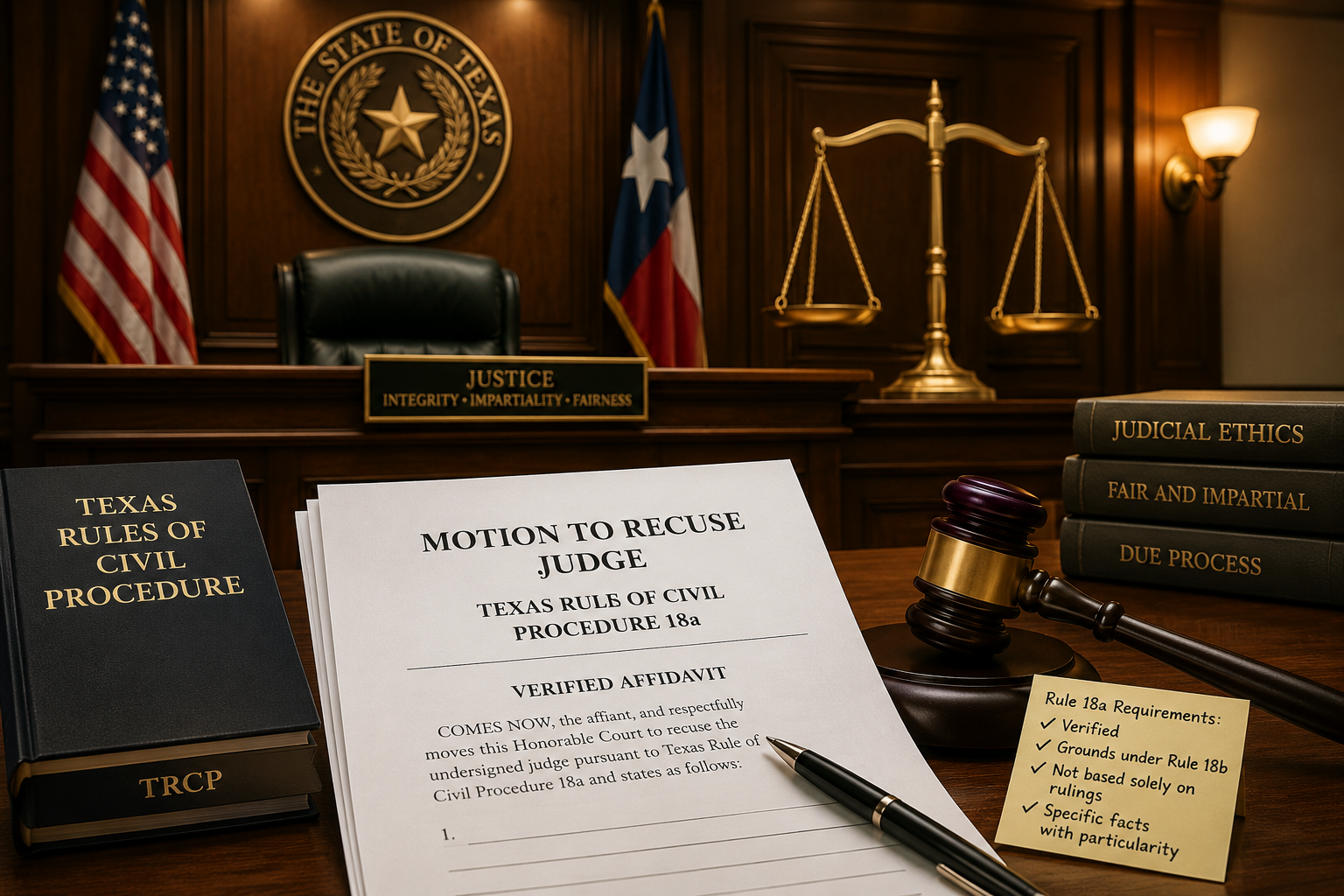
Texas Rule of Civil Procedure 18a establishes the procedure for filing a motion to recuse.
The Rule provides:
"A motion to recuse:
(1) must be verified;
(2) must assert one or more of the grounds listed in Rule 18b;
(3) must not be based solely on the judge's rulings in the case; and
(4) must state with detail and particularity facts that:
(A) are within the affiant's personal knowledge... ."
Tex. R. Civ. P. 18a(a).
In other words, simply claiming that a judge ruled against you is not enough.
The Biggest Mistake Litigants Make
The most common error is confusing unfavorable rulings with judicial bias.
Judges routinely make decisions that one side dislikes. That does not establish prejudice.
Rule 18a specifically warns that a motion cannot be based solely on judicial rulings.
A litigant who files a recusal motion merely because the judge denied a motion, sustained an objection, or granted summary judgment is almost certain to fail.
Verification Is Not Optional
Unlike many motions, a Rule 18a motion must be verified.
The rule requires factual allegations supported by sworn statements based upon personal knowledge.
This requirement exists because accusations of judicial bias are serious matters.
Courts expect more than speculation, rumors, or generalized dissatisfaction.
What Happens After Filing?
One unusual feature of Rule 18a is that the challenged judge generally does not decide the merits of the recusal motion.
Instead, the matter is referred according to procedures established by the rule and the regional presiding judge system.
This process is intended to ensure that a neutral judicial officer evaluates the request.
Timing Matters
A recusal motion filed on the eve of trial may face scrutiny if it appears to be a delay tactic.
Courts expect parties to raise concerns promptly after learning the facts that allegedly support recusal.
Waiting until the last minute can undermine credibility and create procedural problems.
Strategic Considerations
Recusal motions are among the most delicate filings in Texas litigation.
A weak motion can damage credibility with the court and opposing counsel.
A strong motion, however, can protect a litigant's right to a fair tribunal when genuine concerns exist.
Before filing, attorneys should carefully distinguish between:
- Judicial bias and adverse rulings;
- Actual facts and speculation;
- Strategic disagreement and ethical concerns;
- Recusal grounds and constitutional disqualification grounds.
Why This Rule Matters
Most lawsuits are won or lost based on facts, evidence, and law—not judicial misconduct. Nevertheless, public confidence in the legal system depends upon impartial judges and procedures that allow legitimate concerns to be heard.
Texas Rule of Civil Procedure 18a provides that procedural safeguard. The challenge is that the rule is highly technical, and litigants who do not comply with its requirements can lose the issue before the merits are ever considered.
When concerns about judicial impartiality arise, understanding Rule 18a may be just as important as understanding the underlying lawsuit itself.
Conclusion
Texas Rule of Civil Procedure 18a serves a critical role in protecting confidence in the judicial system. While recusal motions should never be filed lightly, the rule provides a structured mechanism for addressing situations in which a judge's impartiality may reasonably be questioned. Because the procedural requirements are strict, litigants should approach the process carefully and ensure that any motion is supported by specific facts, proper verification, and legally recognized grounds under Rule 18b.
At David C. Barsalou, Attorney at Law, PLLC, we help clients navigate business, family, tax, estate planning, and real estate matters ranging from document drafting to litigation with clarity and confidence. If you’d like guidance on your situation, schedule a consultation today. Call us at (713) 397-4678, email barsalou.law@gmail.com, or reach us through our Contact Page. We’re here to help you take the next step.
