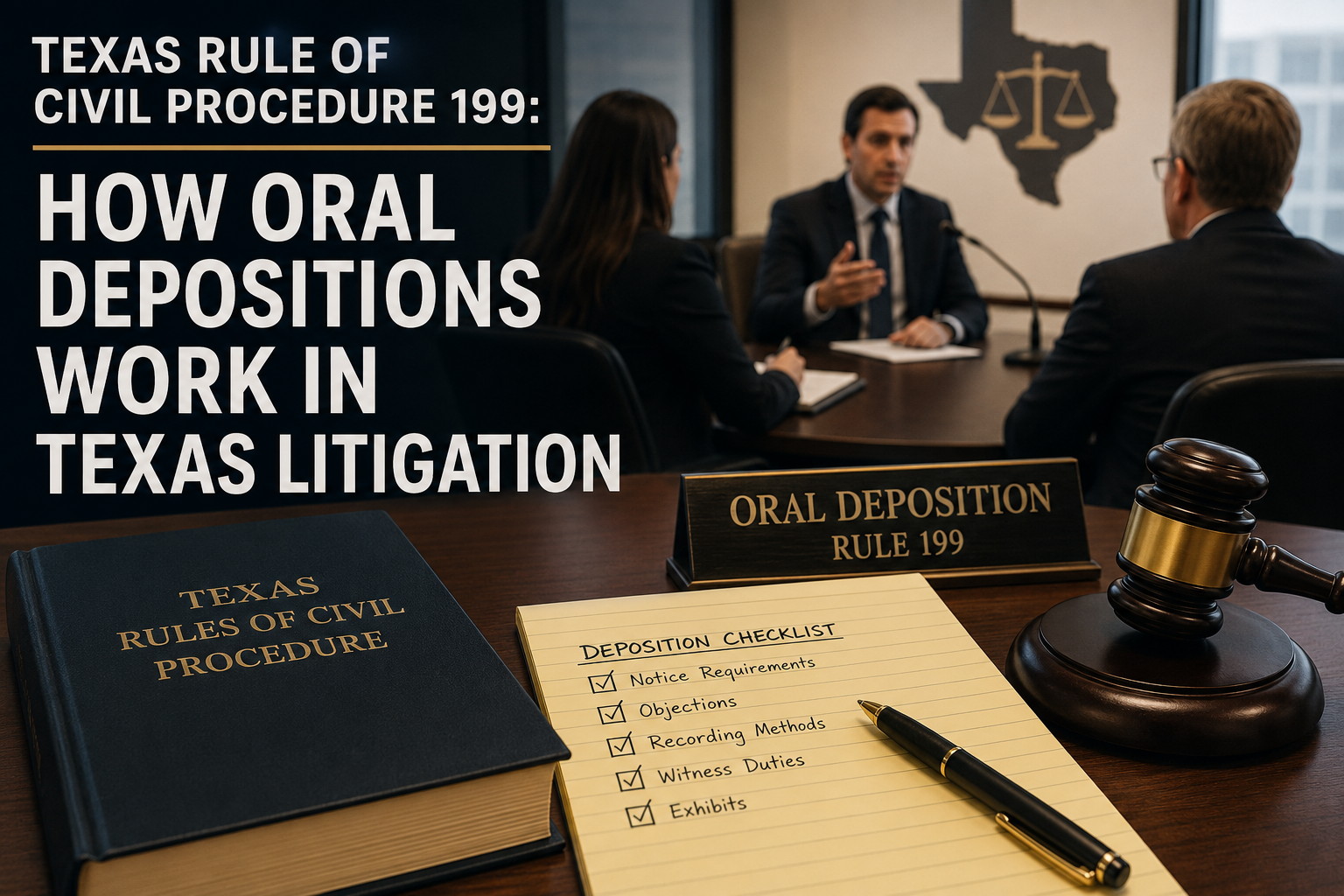
Most people have seen depositions portrayed on television. A lawyer asks difficult questions, a witness answers under oath, and someone occasionally yells, "Objection!"
Real Texas depositions are much less dramatic—but often far more important.
In many civil lawsuits, the deposition is where the case is actually won or lost. Witness testimony becomes permanently preserved, factual disputes become clearer, and attorneys begin evaluating the strengths and weaknesses of each side's evidence.
The procedures governing oral depositions are found primarily in Texas Rule of Civil Procedure 199.
What Is an Oral Deposition?
An oral deposition is sworn testimony taken outside the courtroom before trial.
Unlike testimony given during trial, depositions usually occur in an attorney's office or another agreed location. A certified court reporter administers the oath and records everything that is said. In some cases, the deposition is also video recorded.
Because the witness is under oath, intentionally false testimony may constitute perjury.
Rule 199 Begins with Proper Notice
Rule 199.2 establishes the requirements for noticing a deposition.
The Rule provides:
"A party may take the testimony of any person or entity by deposition on oral examination before any officer authorized by law to take depositions."
The notice must generally identify:
- the witness;
- the time;
- the place;
- the method of recording;
- and, when appropriate, any documents requested under Rule 199.2(b)(5).
Providing adequate notice is essential because failure to comply may result in objections or protective orders.
Depositions Are Not Limited to Parties
Many people mistakenly believe only the plaintiff or defendant may be deposed.
That is incorrect.
Texas discovery rules allow parties to depose:
- parties;
- fact witnesses;
- corporate representatives;
- treating physicians (subject to applicable rules);
- expert witnesses;
- and numerous other individuals possessing relevant information.
Sometimes the most important testimony comes from someone who is not actually a party to the lawsuit.
Corporate Depositions Are Different
Rule 199.2(b)(1) contains a procedure similar to the federal Rule 30(b)(6) deposition.
Rather than naming an individual employee, a party may notice the deposition of an organization and describe the matters for examination.
The organization must then designate one or more individuals to testify on its behalf regarding those subjects.
This prevents businesses from avoiding discovery by claiming no single employee has complete knowledge.
What Happens During the Deposition?
The witness is sworn in by the court reporter.
The examining attorney asks questions, and opposing counsel may object when appropriate.
Unlike trial objections, however, most objections during depositions are simply noted for the record while questioning continues.
The witness generally must still answer unless:
- a privilege applies;
- the court has entered a protective order; or
- the attorney properly instructs the witness not to answer under the Texas Rules.
This system allows discovery to proceed efficiently while preserving legal objections for later court rulings.
Depositions May Be Recorded in Different Ways
Rule 199 permits several methods of recording testimony.
The deposition may be recorded by:
- stenographic means;
- audio recording;
- video recording; or
- multiple methods simultaneously if proper notice is given.
Video depositions have become increasingly common because they preserve demeanor, tone, and body language that cannot be fully reflected in a written transcript.
Can Lawyers Object Constantly?
Not under the Texas Rules.
Texas strongly discourages coaching witnesses through objections.
Many objections are limited to concise statements such as:
- "Objection, form."
- "Objection, leading."
- "Objection, privilege."
Lengthy speaking objections designed to suggest answers or interrupt testimony may draw judicial criticism and, in extreme situations, sanctions.
Can a Witness Refuse to Answer?
Usually, no.
A witness generally must answer questions unless a recognized legal basis exists to refuse.
Common examples include:
- attorney-client privilege;
- Fifth Amendment concerns where applicable;
- court-ordered limitations;
- or other recognized privileges under Texas law.
Simply disliking the question is generally not enough.
Why Depositions Matter So Much
Experienced litigators often learn more during depositions than during trial.
Depositions can:
- lock in testimony;
- expose inconsistencies;
- evaluate witness credibility;
- authenticate evidence;
- support summary judgment;
- preserve testimony if a witness later becomes unavailable;
- encourage settlement by revealing weaknesses;
- and significantly narrow issues before trial.
Many lawsuits settle shortly after important depositions because both sides gain a much clearer understanding of the evidence.
Practical Considerations
If you are scheduled for a deposition:
- review the facts carefully beforehand;
- answer only the question asked;
- avoid guessing;
- tell the truth;
- ask for clarification if you do not understand a question;
- remain calm, even if questioning becomes difficult; and
- remember that everything said under oath may later be used in court.
Preparation with counsel is often one of the most valuable investments a litigant can make before a deposition.
Conclusion
Texas Rule of Civil Procedure 199 provides the procedural framework for oral depositions, one of the most powerful discovery tools available in civil litigation. Understanding how depositions are noticed, conducted, recorded, and challenged can make a significant difference in the outcome of a lawsuit.
Whether you are filing suit, defending a claim, or preparing to testify, understanding Rule 199 can help you navigate one of the most important stages of the litigation process.
Disclaimer
This article is intended for general educational purposes only and does not constitute legal advice. Every case presents unique facts, and the application of Texas law may vary. If you are involved in litigation or have questions regarding a deposition, consult a qualified Texas attorney.
At David C. Barsalou, Attorney at Law, PLLC, we help clients navigate business, family, tax, estate planning, and real estate matters ranging from document drafting to litigation with clarity and confidence. If you’d like guidance on your situation, schedule a consultation today. Call us at (713) 397-4678, email barsalou.law@gmail.com, or reach us through our Contact Page. We’re here to help you take the next step.