When people think about winning a lawsuit, they usually focus on the facts or the law. In reality, many cases are won—or lost—because of procedural rules. One of the most important is Texas Rule of Civil Procedure 245, which governs how civil cases are set for trial.
If a court does not provide proper notice of a trial setting, the resulting judgment may be vulnerable to reversal, even if the prevailing party had a strong case on the merits.
What Does Rule 245 Require?
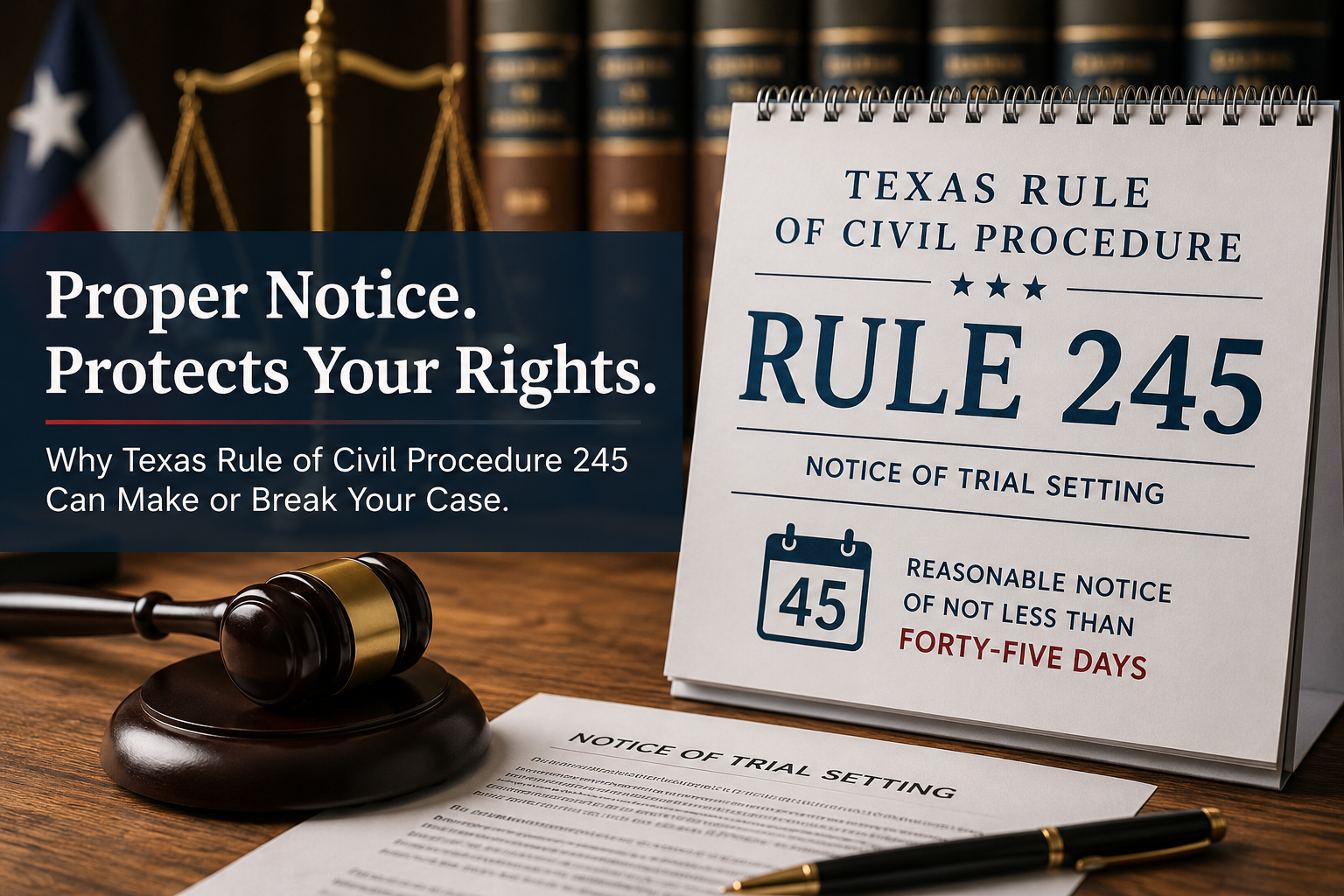
Texas Rule of Civil Procedure 245 provides, in relevant part:
"The Court may set contested cases on written request of any party, or on the court's own motion, with reasonable notice of not less than forty-five days to the parties of a first setting for trial, or by agreement of the parties..."
This seemingly straightforward requirement serves an important constitutional purpose. Parties deserve adequate notice before being required to appear for trial so they have a meaningful opportunity to prepare their case.
Why Forty-Five Days Matters
The forty-five-day notice requirement is not merely a scheduling preference. It exists to protect due process.
Preparing for trial often involves:
- Completing discovery;
- Designating expert witnesses;
- Filing motions;
- Preparing exhibits;
- Subpoenaing witnesses; and
- Developing trial strategy.
Without sufficient notice, a party may be unfairly prejudiced.
Does Every Trial Setting Require Forty-Five Days?
No.
Rule 245 specifically refers to the first trial setting. Later trial settings after a continuance or reset may be governed by different considerations, particularly where the parties already know the case is approaching trial.
Nevertheless, every party must still receive reasonable notice of subsequent settings sufficient to satisfy due process.
What Happens If Notice Is Improper?
Improper notice can have significant consequences.
Depending on the circumstances, a party may seek:
- a continuance;
- a motion for new trial;
- relief under Rule 306a if notice of judgment was delayed;
- appellate review; or
- other equitable remedies.
Texas appellate courts have repeatedly recognized that adequate notice of trial settings is a fundamental component of procedural fairness.
Can a Party Waive the Complaint?
Yes.
Like many procedural rights, objections regarding notice may be waived if they are not timely asserted.
For example, voluntarily appearing and proceeding to trial without objection may prevent a party from later complaining that notice was inadequate.
As with many procedural issues, timing is critical.
Practical Advice for Litigants
If you receive a trial setting:
- Verify the trial date immediately.
- Confirm when notice was actually sent.
- Review any scheduling orders already entered.
- Notify your attorney immediately if the notice appears defective.
- Never assume a procedural error automatically invalidates the trial setting.
Likewise, attorneys should carefully document service of notices and promptly raise any objections before trial begins.
The Bigger Picture
Civil litigation is governed as much by procedure as by substantive law.
Texas Rule of Civil Procedure 245 illustrates that courts expect lawsuits to move efficiently while still protecting every party's constitutional right to receive fair notice before trial. Understanding these procedural safeguards can prevent unnecessary appeals, expensive retrials, and avoidable mistakes.
Need Help With Texas Civil Litigation?
Whether your case involves commercial disputes, real estate litigation, landlord-tenant matters, probate litigation, family law, or general civil litigation, understanding the Texas Rules of Civil Procedure can make a substantial difference in protecting your rights. Consulting an experienced Texas attorney early in the litigation process can help ensure procedural issues do not become costly substantive problems.
At David C. Barsalou, Attorney at Law, PLLC, we help clients navigate business, family, tax, estate planning, and real estate matters ranging from document drafting to litigation with clarity and confidence. If you’d like guidance on your situation, schedule a consultation today. Call us at (713) 397-4678, email barsalou.law@gmail.com, or reach us through our Contact Page. We’re here to help you take the next step.