Introduction
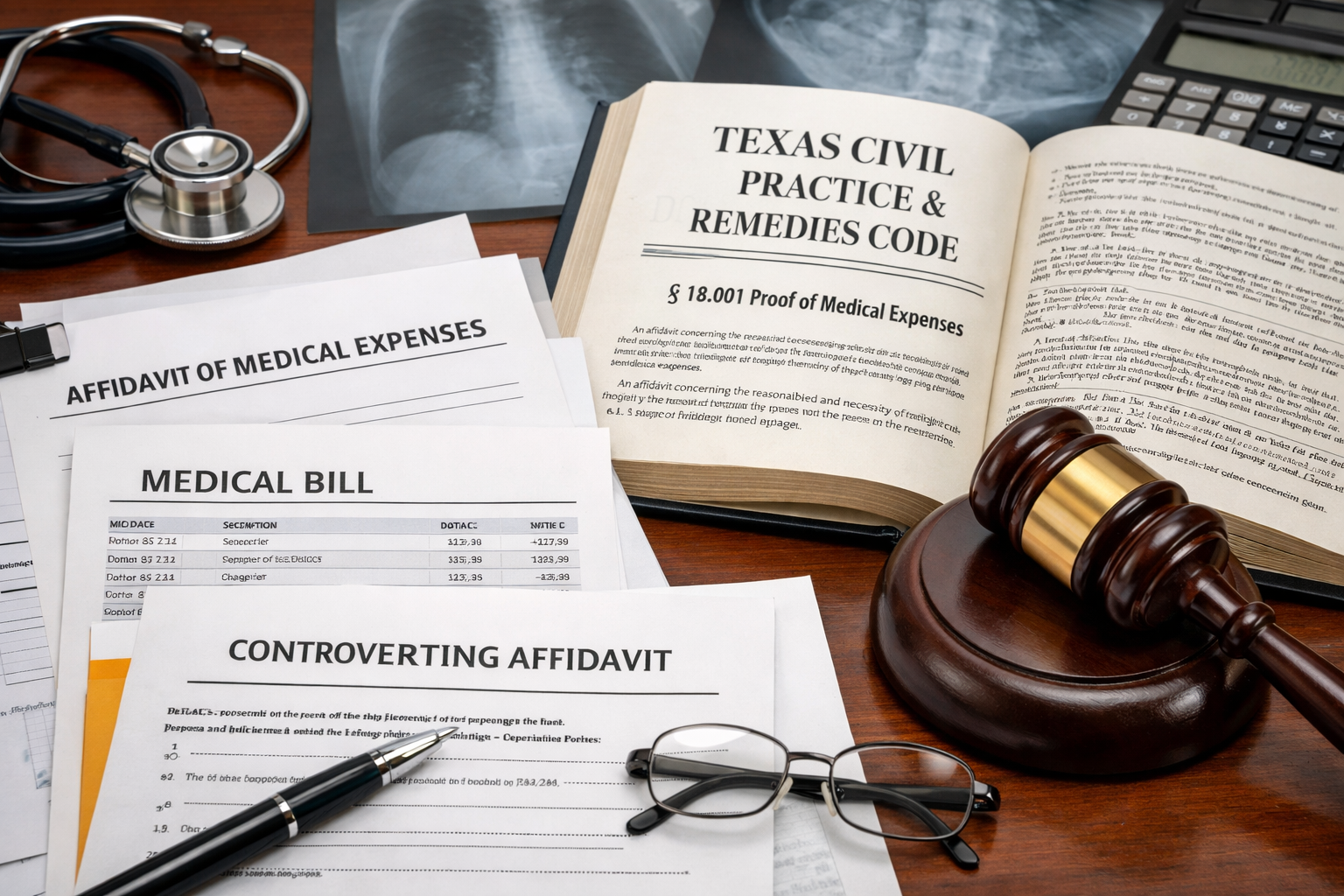
In Texas personal injury and related civil litigation, proving the reasonableness and necessity of medical expenses is often one of the most expensive and time-consuming parts of trial preparation. However, Texas law provides a procedural shortcut that can dramatically reduce costs and streamline proof: affidavits under Texas Civil Practice & Remedies Code § 18.001.
Despite its widespread use, § 18.001 is frequently misunderstood—even by practitioners. Missteps in timing, form, or rebuttal strategy can result in exclusion of evidence or loss of a key advantage at trial.
This article breaks down the statute, explains its strategic implications, and highlights common pitfalls.
The Statutory Framework: Tex. Civ. Prac. & Rem. Code § 18.001
The statute provides, in relevant part:
“Unless a controverting affidavit is served… an affidavit that the amount a person charged for a service was reasonable at the time and place that the service was provided and that the service was necessary is sufficient evidence to support a finding of fact… that the amount charged was reasonable or that the service was necessary.”
— Tex. Civ. Prac. & Rem. Code § 18.001(b)
In plain terms:
- A properly executed affidavit can replace live expert testimony on:
- Reasonableness of charges
- Necessity of services
- If the opposing party does not timely controvert the affidavit, the evidence is effectively deemed sufficient for the jury.
What § 18.001 Does (and Does NOT Do)
What It DOES Do
- Creates a procedural shortcut to admit evidence
- Allows plaintiffs to avoid calling:
- Treating physicians
- Billing experts
- Shifts the burden to the defense to actively controvert
What It DOES NOT Do
- It is not conclusive evidence
- It does not prevent cross-examination if a witness is called
- It does not establish causation
This limitation is critical. Courts consistently distinguish between:
- Necessity of treatment (covered by § 18.001)
- Causation of injury (NOT covered)
Timing Requirements: Where Lawyers Get Burned
Serving the Initial Affidavit
Under § 18.001(d):
The affidavit must be served “at least 90 days before the day evidence is first presented at trial.”
Miss this deadline, and the affidavit may be excluded.
Filing a Controverting Affidavit
Under § 18.001(e):
A controverting affidavit must be served:
- Within 30 days of receiving the affidavit, AND
- At least 14 days before trial
This creates a dual-deadline trap:
- You must act quickly (30 days),
- But also comply with the pretrial cutoff (14 days).
Failing either deadline can waive your ability to challenge reasonableness/necessity without live testimony.
The “Reasonable Notice” Requirement for Controverting Affidavits
The statute requires more than a generic denial:
“The counter-affidavit must give reasonable notice of the basis on which the party serving it intends to controvert the claim…”
— Tex. Civ. Prac. & Rem. Code § 18.001(f)
This means:
- Boilerplate objections are insufficient
- You must identify:
- Specific billing issues
- Geographic rate discrepancies
- Medical necessity disputes
Courts routinely strike vague controverting affidavits.
Strategic Implications in Litigation
For Plaintiffs
- Low-cost proof mechanism
- Reduces need for:
- Expert depositions
- Trial subpoenas
- Creates pressure on defense to respond early
Advanced Strategy:
Serve multiple affidavits early to:
- Lock in damages
- Force defense expert retention sooner than expected
For Defendants
- You must respond—or you lose leverage
Failure to controvert:
- Limits your ability to argue:
- Charges are excessive
- Treatment was unnecessary
Advanced Strategy:
Use a well-crafted controverting affidavit to:
- Open the door to expert testimony
- Undermine inflated billing (especially in lien-based treatment cases)
Interaction with Other Evidence Rules
Even though § 18.001 simplifies admissibility, it does not override:
- Texas Rules of Evidence 401–403 (relevance and prejudice)
- Rule 702 (expert testimony standards)
In fact, once controverted, the case often shifts back into a traditional expert battle governed by evidentiary rules.
Common Pitfalls
1. Treating § 18.001 as Conclusive
It is not. Juries can still reject the amounts.
2. Missing Deadlines
This is the most common—and fatal—error.
3. Weak Controverting Affidavits
Courts require specificity. Generic language gets struck.
4. Confusing Necessity with Causation
You still need separate proof tying treatment to the incident.
Practical Takeaway
Section 18.001 is not just a procedural convenience—it is a litigation leverage tool.
- Plaintiffs can use it to streamline and anchor damages
- Defendants must treat it as a deadline-driven risk event
Handled correctly, it can:
- Save thousands in expert costs
- Shape settlement posture
- Control the narrative on damages early in the case
Handled incorrectly, it can quietly decide the case before trial even begins.
Conclusion
Texas Civil Practice & Remedies Code § 18.001 is one of the most powerful—and most misused—tools in Texas civil litigation. It rewards disciplined procedural compliance and punishes inattention.
In modern practice, where efficiency and cost control matter more than ever, mastering § 18.001 is not optional—it is essential.
At David C. Barsalou, Attorney at Law, PLLC, we help clients navigate business, family, tax, estate planning, and real estate matters ranging from document drafting to litigation with clarity and confidence. If you’d like guidance on your situation, schedule a consultation today. Call us at (713) 397-4678, email barsalou.law@gmail.com, or reach us through our Contact Page. We’re here to help you take the next step.