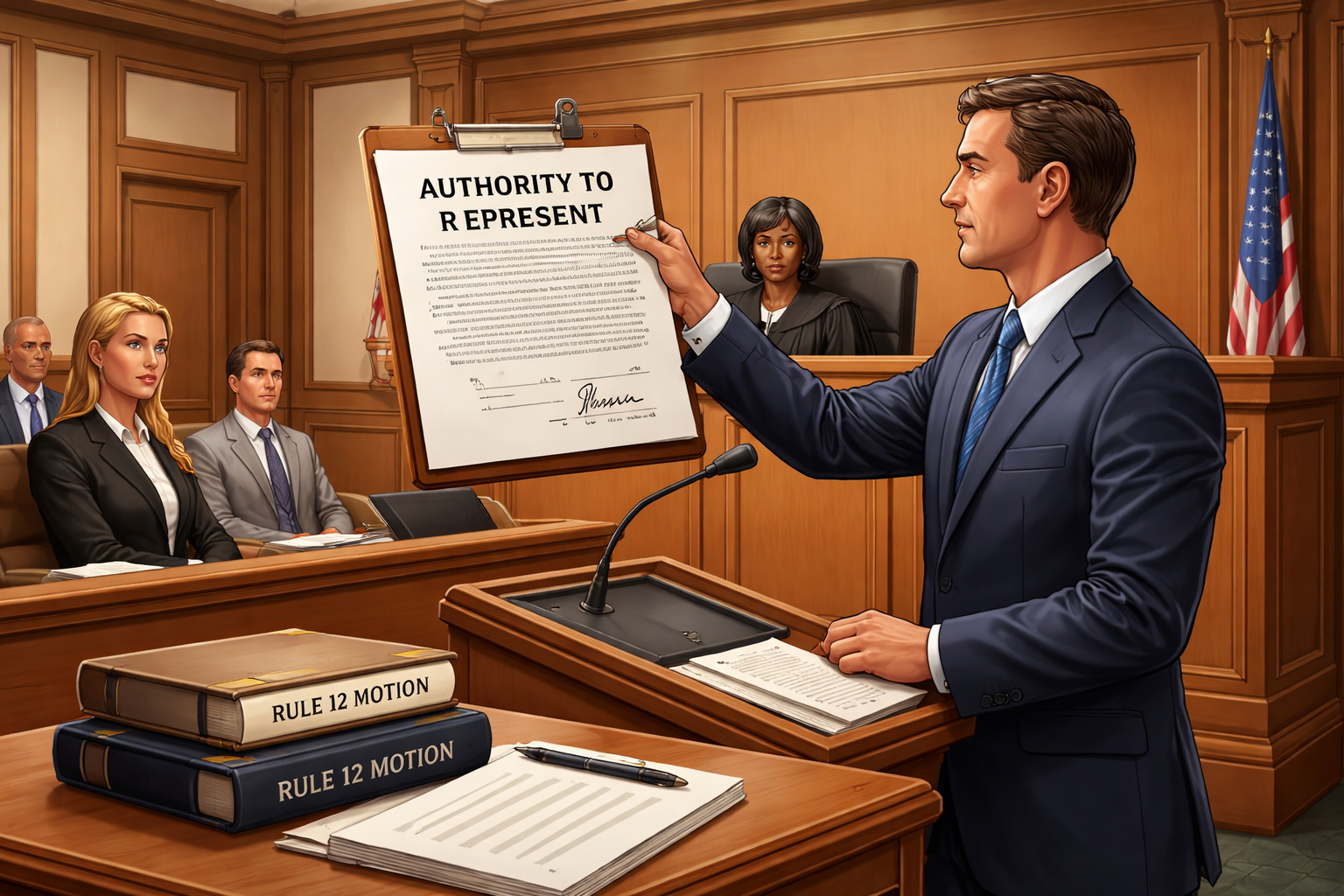
In Texas litigation, courts generally assume that an attorney appearing in a case has the authority to represent the party they claim to represent. However, Texas law provides a procedure for challenging that assumption. Under Texas Rule of Civil Procedure 12, a party can require a lawyer to prove they actually have authority to act on behalf of a client.
Although rarely used, Rule 12 motions can be powerful procedural tools in cases involving disputed representation, unauthorized filings, business entity conflicts, or family disputes.
Understanding how this rule works can help litigants avoid improper representation and ensure that only authorized attorneys appear in court.
The Legal Basis: Texas Rule of Civil Procedure 12
The rule itself is straightforward but important. Texas Rule of Civil Procedure 12 provides:
“A party in a suit or proceeding pending in a court of this state may, by sworn written motion stating that he believes the suit or proceeding is being prosecuted or defended without authority, cause the attorney to be cited to appear before the court and show his authority to act.”
— Tex. R. Civ. P. 12
If such a motion is filed, the court may require the attorney to prove they have proper authority from the client.
The rule further provides:
“If the attorney fails to show sufficient authority to prosecute or defend the suit, the court shall refuse to permit the attorney to appear in the cause and shall strike the pleadings if no person who is authorized to prosecute or defend appears.”
— Tex. R. Civ. P. 12
In other words, if the attorney cannot prove authorization, the court may remove the lawyer and strike the pleadings filed in the case.
When Rule 12 Motions Arise in Real Cases
Although Rule 12 motions are uncommon, they appear in several types of disputes.
1. Business Entity Disputes
A Rule 12 motion may arise when someone claims to represent a corporation, LLC, or partnership, but another owner disputes their authority.
For example:
- A minority owner hires counsel to file suit in the company’s name
- Another owner claims the lawyer was never authorized
- The opposing party files a Rule 12 motion to challenge the lawyer’s authority
This often intersects with the rule that business entities must appear through licensed counsel in Texas courts.
2. Probate and Estate Litigation
In probate disputes, multiple heirs or beneficiaries may disagree about who has authority to represent the estate.
Examples include:
- A lawyer filing suit claiming to represent an estate
- Disputes over whether an executor or administrator actually hired the attorney
- Conflicts between heirs over representation
A Rule 12 challenge forces the attorney to demonstrate they were properly retained.
3. Family Law Conflicts
Family disputes sometimes produce Rule 12 challenges when one spouse claims the other’s attorney was improperly retained or acting without authority.
Although rare, courts may examine:
- Whether the client actually retained the lawyer
- Whether the lawyer filed pleadings without authorization
- Whether the representation is legitimate
4. Unauthorized Filings or Fraudulent Litigation
Occasionally Rule 12 motions appear in cases involving:
- Fraudulent lawsuits
- Identity issues
- Unauthorized filings made in someone else's name
In such circumstances, the rule protects individuals from being dragged into litigation by someone claiming to represent them without permission.
How a Rule 12 Motion Works Procedurally
The procedure is relatively simple but must be followed carefully.
Step 1: Sworn Motion
The party challenging the attorney must file a sworn written motion stating that they believe the attorney lacks authority.
The sworn statement is required by the rule.
Step 2: Court Hearing
The court then holds a hearing requiring the attorney to show authority to represent the client.
Evidence may include:
- A representation agreement
- Testimony from the client
- Other proof of authorization
Step 3: Court Decision
If the attorney proves authority, the motion is denied.
If the attorney cannot prove authority, the court may:
- Prevent the attorney from appearing in the case
- Strike pleadings filed by that attorney
- Require proper counsel to appear
Why Rule 12 Motions Are Rare
Rule 12 motions are unusual for several reasons:
- Courts presume attorney authority
- Most attorneys maintain written engagement agreements
- False representations can expose lawyers to professional discipline
However, the rule remains important because it ensures litigation cannot proceed based on unauthorized representation.
Strategic Considerations
Attorneys considering a Rule 12 motion should keep several strategic factors in mind.
The motion must be sworn
A Rule 12 challenge requires a verified motion, meaning the allegations must be sworn under oath.
Courts do not favor abusive Rule 12 motions
Because lawyers are presumed authorized, courts generally expect a legitimate factual basis for the challenge.
Timing matters
Rule 12 motions should be raised early in litigation, especially if the alleged lack of authority affects pleadings or filings.
Why This Rule Still Matters
Even though Rule 12 motions are rarely used, they serve an important function in the Texas legal system:
- Preventing unauthorized lawsuits
- Protecting litigants from fraudulent representation
- Ensuring attorneys actually represent the clients they claim to represent
In complex disputes involving business entities, estates, and family conflicts, the rule can become a critical procedural safeguard.
Final Thoughts
Texas courts operate on the assumption that attorneys appearing before them have legitimate authority from their clients. But when that authority is questioned, Texas Rule of Civil Procedure 12 provides a direct mechanism to test the legitimacy of representation.
Although seldom invoked, it remains an important procedural protection that can dramatically affect the course of litigation.
Anyone facing a dispute involving questionable legal representation should consult a qualified Texas attorney to understand how Rule 12 may apply.
At David C. Barsalou, Attorney at Law, PLLC, we help clients navigate business, family, tax, estate planning, and real estate matters ranging from document drafting to litigation with clarity and confidence. If you’d like guidance on your situation, schedule a consultation today. Call us at (713) 397-4678, email barsalou.law@gmail.com, or reach us through our Contact Page. We’re here to help you take the next step.