Why Rule 11a Matters More Than Most Lawyers Realize
Most Texas litigators are familiar with Rule 11 agreements. These agreements are routinely used to extend deadlines, postpone hearings, resolve discovery disputes, and memorialize settlement-related understandings. Yet many lawyers overlook a companion rule that helps explain how agreements between attorneys are treated in Texas courts: Texas Rule of Civil Procedure 11a.
While Rule 11 receives most of the attention, Rule 11a addresses an equally important issue: whether an attorney can bind a client through agreements made during litigation.
Understanding Rule 11a can help litigants avoid costly disputes over whether a lawyer had authority to enter into an agreement on a client's behalf.
What Does Rule 11a Say?
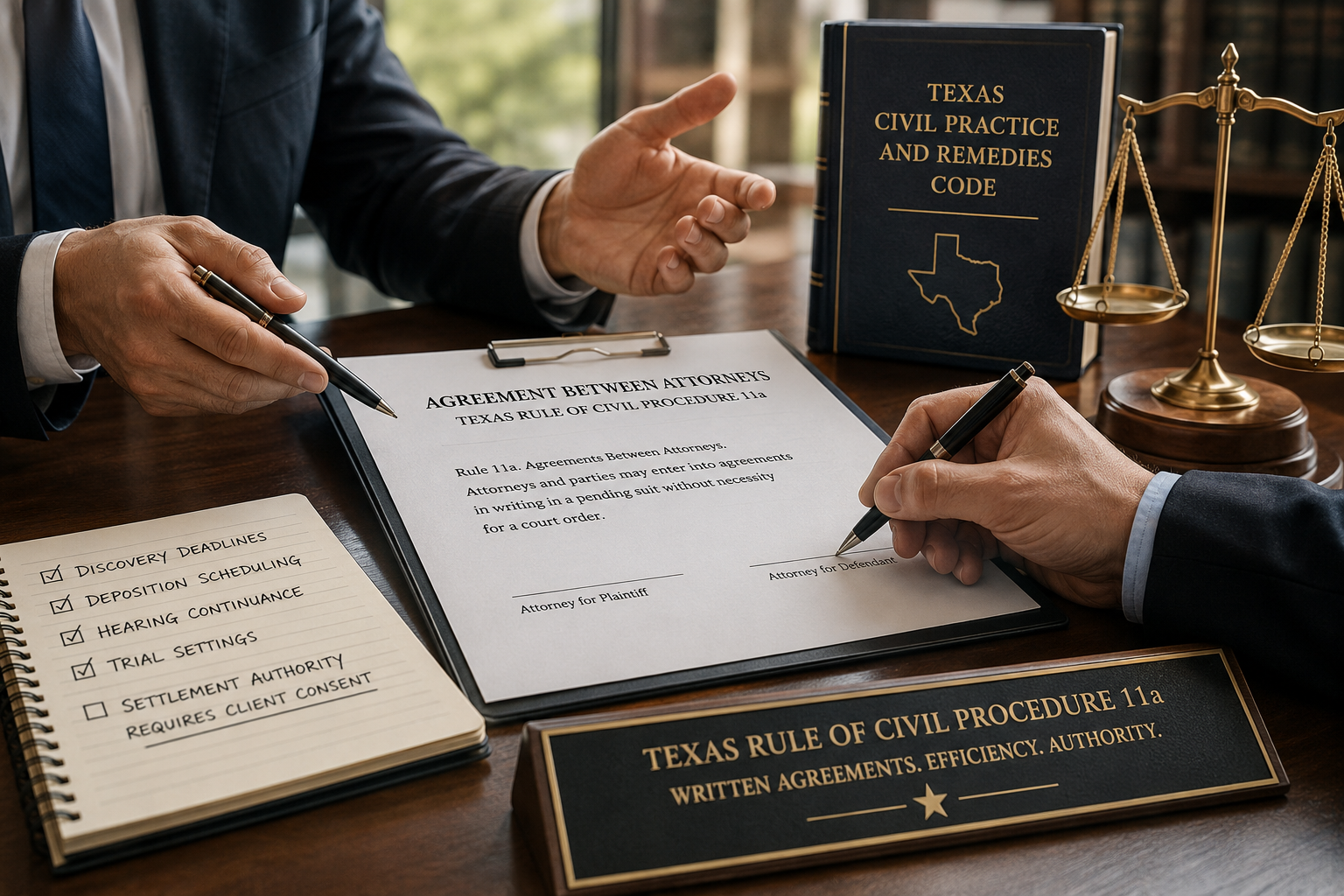
Texas Rule of Civil Procedure 11a provides:
"Attorneys and parties may enter into agreements in writing in a pending suit without necessity for a court order."
This deceptively simple rule reflects a practical reality of litigation: courts expect lawyers to be able to conduct day-to-day litigation without obtaining formal judicial approval for every procedural agreement.
The rule facilitates cooperation and efficiency while reducing unnecessary court involvement.
Why Courts Encourage Attorney Agreements
Modern litigation would become unmanageable if every scheduling adjustment required a hearing.
Lawyers routinely agree to:
- Extend discovery deadlines;
- Reschedule depositions;
- Continue hearings;
- Exchange documents informally;
- Modify procedural timelines; and
- Narrow issues for trial.
Rule 11a recognizes that litigation functions more efficiently when attorneys can reach practical agreements without constantly seeking court intervention.
The Real Issue: Attorney Authority
The difficult question is often not whether an agreement exists.
The difficult question is whether the attorney had authority to make it.
Texas law generally recognizes that attorneys possess authority to manage procedural matters during litigation. However, authority to control litigation does not necessarily include authority to compromise substantive rights.
For example:
- Agreeing to move a deposition date is typically within counsel's authority.
- Settling a lawsuit may require specific client authorization.
- Waiving significant claims may require client consent.
- Agreeing to a final judgment without authority may create substantial problems.
The distinction often becomes critical when a client later claims:
"My lawyer never had permission to agree to that."
Litigation Authority Versus Settlement Authority
Texas courts frequently distinguish between:
Procedural Authority
Attorneys generally possess implied authority to handle procedural aspects of litigation.
Examples include:
- Scheduling matters;
- Discovery agreements;
- Continuance requests;
- Trial logistics; and
- Routine case administration.
Substantive Authority
Settlement authority is different.
Texas courts generally require actual authority before an attorney may compromise a client's claims or defenses.
A settlement reached without authority can lead to significant litigation over enforceability and may expose counsel to professional liability concerns.
Why Written Agreements Matter
Many disputes arise because lawyers rely upon:
- Telephone conversations;
- Informal text messages;
- Oral understandings; or
- Casual email exchanges.
The safest practice is to reduce all agreements to writing.
Written agreements create a clear record regarding:
- The exact terms;
- The date of the agreement;
- The parties involved; and
- The scope of attorney authority.
Good documentation protects everyone involved.
Practical Examples
Example 1: Discovery Extension
Two attorneys agree to extend discovery responses by fourteen days.
This is the type of routine litigation agreement Rule 11a was designed to facilitate.
Example 2: Trial Continuance
Counsel agree to continue a trial setting pending mediation.
The agreement allows the parties to coordinate scheduling without unnecessary motion practice.
Example 3: Unauthorized Settlement
An attorney accepts a settlement offer without client approval.
The opposing side seeks enforcement.
The dispute is no longer about procedure—it becomes a question of authority.
That distinction can determine whether the agreement survives judicial scrutiny.
Best Practices for Texas Lawyers
Attorneys should:
- Confirm important agreements in writing.
- Clearly define the scope of any agreement.
- Obtain explicit client authorization before settling claims.
- Preserve emails and correspondence confirming authority.
- Avoid making commitments that exceed client instructions.
Clients should likewise communicate clearly regarding settlement authority and litigation objectives.
Final Thoughts
Texas Rule of Civil Procedure 11a rarely receives the attention given to Rule 11, yet it plays an important role in everyday litigation practice. The rule allows attorneys to efficiently manage pending lawsuits through written agreements while preserving judicial resources.
However, lawyers should remember that procedural authority and settlement authority are not the same thing. An attorney may have broad authority to conduct litigation, but authority to compromise a client's substantive rights generally requires client consent.
Understanding that distinction can prevent disputes, protect clients, and avoid costly litigation over whether an agreement was ever enforceable in the first place.
Disclaimer: This article is for informational purposes only and does not constitute legal advice. Reading this article does not create an attorney-client relationship. Individuals facing legal issues should consult qualified legal counsel regarding their specific circumstances.
At David C. Barsalou, Attorney at Law, PLLC, we help clients navigate business, family, tax, estate planning, and real estate matters ranging from document drafting to litigation with clarity and confidence. If you’d like guidance on your situation, schedule a consultation today. Call us at (713) 397-4678, email barsalou.law@gmail.com, or reach us through our Contact Page. We’re here to help you take the next step.