Introduction
Many Texans going through a divorce assume that “alimony” works the same way it does in movies or in other states. It doesn’t. Texas does not recognize traditional alimony in the way most people understand it. Instead, Texas law draws a sharp distinction between court-ordered spousal maintenance and privately negotiated contractual alimony.
Understanding the difference matters — because the eligibility requirements, enforcement mechanisms, duration, and tax consequences are very different. Getting this wrong can lock someone into an obligation they didn’t intend, or leave them without protection they thought they had.
What Is Spousal Maintenance Under Texas Law?
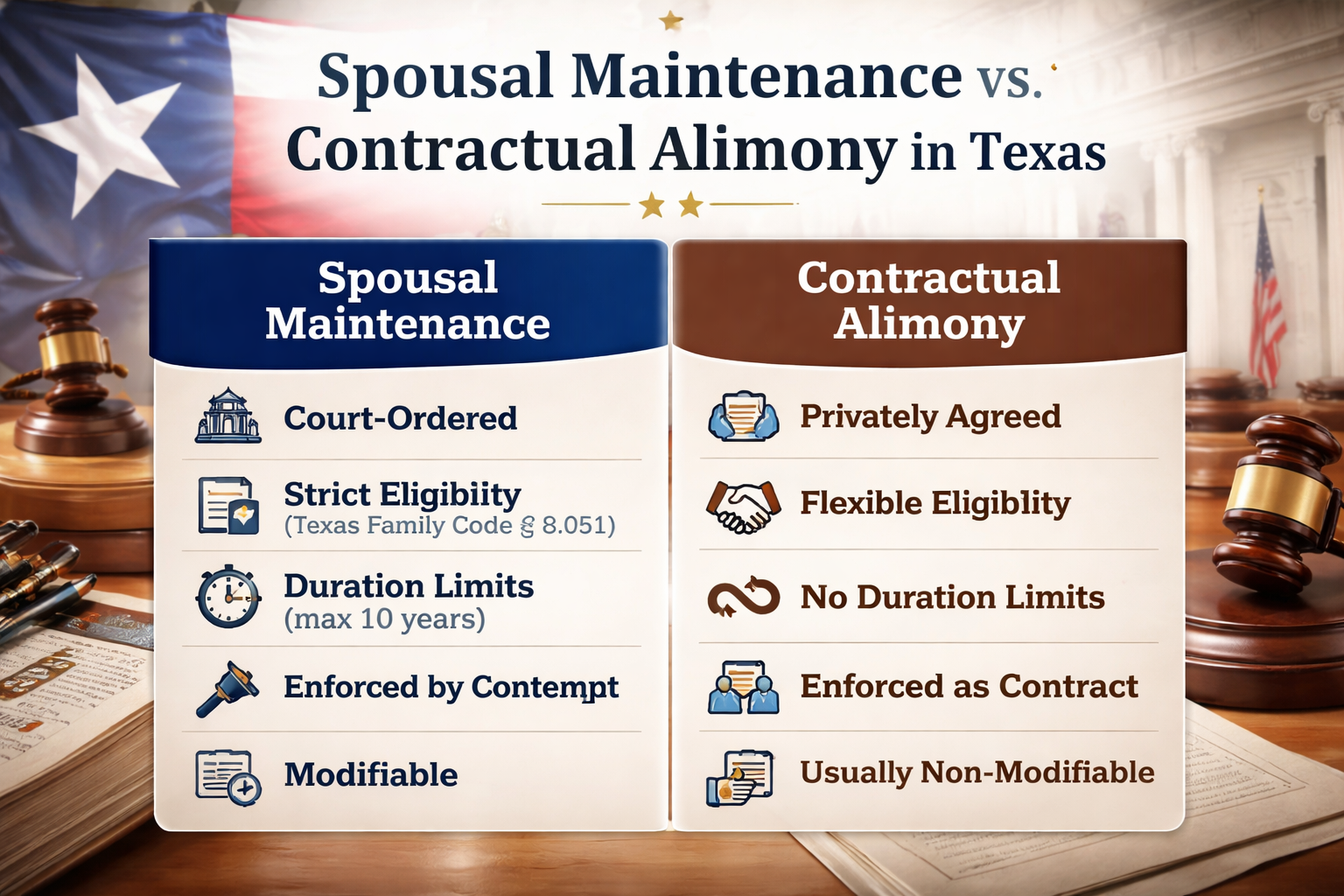
Spousal maintenance is purely statutory. A Texas court cannot award it unless the Family Code specifically allows it.
Statutory Authority
Texas Family Code § 8.051 provides:
“In a suit for dissolution of a marriage, the court may order maintenance for either spouse only if the spouse seeking maintenance lacks sufficient property… to provide for the spouse’s minimum reasonable needs” and one of several additional conditions is met.
Those additional conditions include:
- The other spouse was convicted of family violence (§ 8.051(1))
- The requesting spouse:
- Has a disability (§ 8.051(2)(A))
- Is caring for a disabled child (§ 8.051(2)(B))
- Or lacks earning ability after a long-term marriage (§ 8.051(2)(C))
This is not discretionary generosity. Courts are tightly constrained.
Duration Is Strictly Limited
Even if maintenance is awarded, Texas law caps how long it can last.
Texas Family Code § 8.054 states:
- 5 years for marriages under 20 years
- 7 years for marriages 20–30 years
- 10 years for marriages over 30 years
And courts must order maintenance for “the shortest reasonable period” necessary for the recipient to meet basic needs.
What Is Contractual Alimony?
Contractual alimony is not imposed by the court. It is a private agreement between spouses, usually memorialized in a divorce decree or settlement agreement.
Because it is contractual:
- It is governed by contract law, not Chapter 8
- There are no statutory caps on amount or duration
- Courts enforce it like any other contract
Texas courts have been clear: if parties agree to payments outside the maintenance statute, they are binding — even if a judge could never have ordered them.
Enforcement: The Most Dangerous Difference
This is where people get burned.
Spousal Maintenance
Court-ordered maintenance may be enforced by:
- Contempt
- Wage withholding
- Other statutory remedies
Contractual Alimony
Contractual alimony cannot be enforced by contemptunless the decree clearly incorporates statutory maintenance language.
Instead, enforcement typically means:
- Lawsuit for breach of contract
- Money damages
- Attorney’s fees — but no jail
This distinction matters enormously when leverage and compliance are concerns.
Modification: One Is Flexible, the Other Isn’t
- Spousal maintenance may be modified or terminated upon:
- Remarriage
- Cohabitation
- Material change in circumstances
(Texas Family Code §§ 8.056–8.057) - Contractual alimony generally cannot be modified unless the contract itself allows it
Once you sign, you’re usually locked in.
Why Texas Draws This Line
Texas public policy strongly disfavors permanent support obligations. Courts are instructed to prioritize:
- Property division
- Self-sufficiency
- Finality
That’s why statutory maintenance is narrow — and why contractual alimony exists only by private choice.
Common Mistakes I See
- Assuming “alimony” is automatic
- Agreeing to contractual payments without understanding enforcement limits
- Failing to distinguish statutory vs. contractual language in a decree
- Believing judges can “fix it later” (they usually can’t)
Final Thoughts
If you’re negotiating support in a Texas divorce, the label doesn’t matter — the legal mechanism does. Two payment arrangements that look identical on paper can have radically different legal consequences.
Texas law is unforgiving on this point, and precision matters.
At David C. Barsalou, Attorney at Law, PLLC, we help clients navigate business, family, tax, estate planning, and real estate matters ranging from document drafting to litigation with clarity and confidence. If you’d like guidance on your situation, schedule a consultation today. Call us at (713) 397-4678, email barsalou.law@gmail.com, or reach us through our Contact Page. We’re here to help you take the next step.
