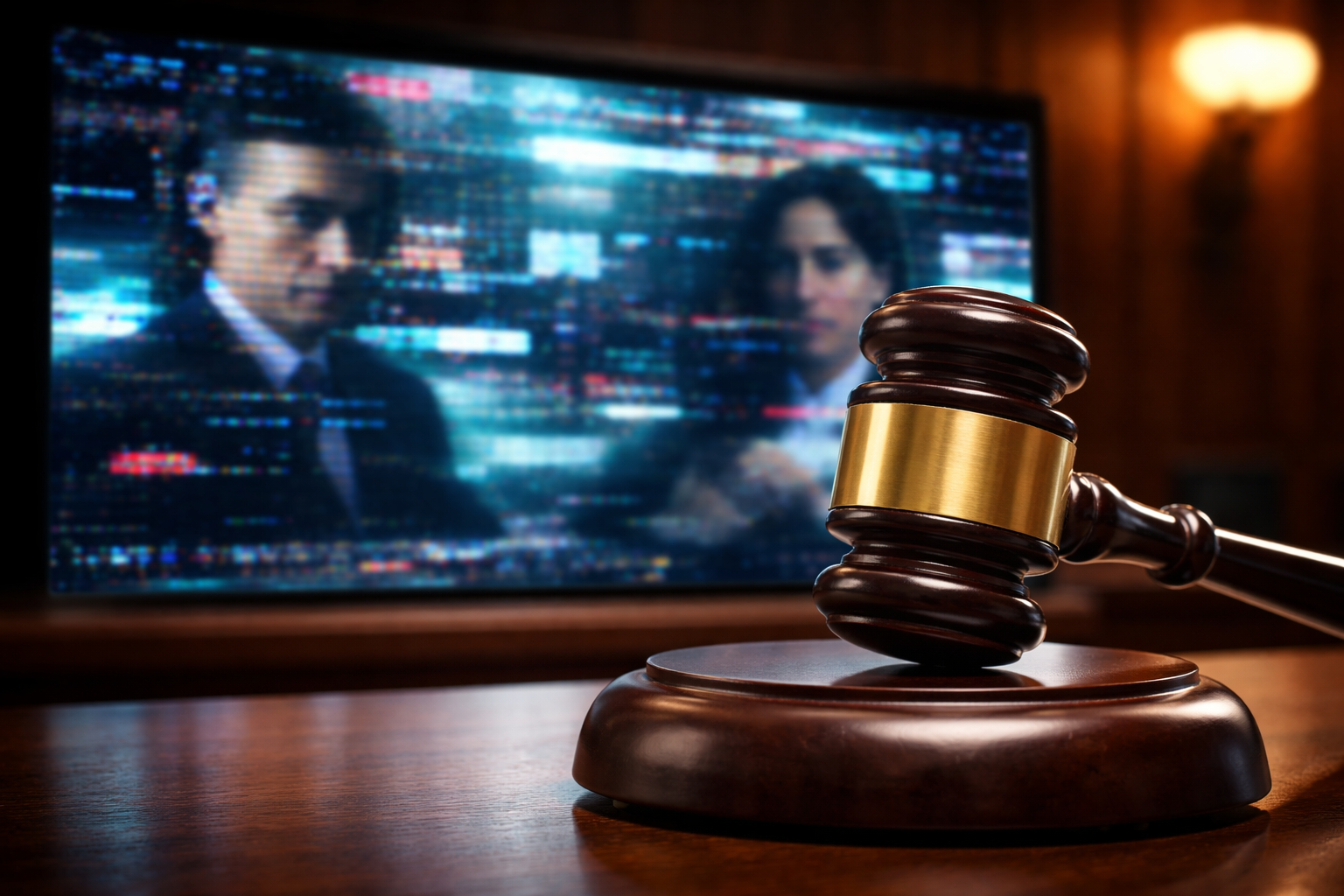
Artificial intelligence has made it easier than ever to create realistic fake videos, voice recordings, and photographs—commonly called “deepfakes.” These technologies raise serious concerns in divorce, custody, business disputes, employment cases, and criminal matters.
So what happens when someone tries to use an AI-generated recording against you in court?
Can deepfakes be admitted as evidence in Texas?
The answer: Sometimes—but only under strict legal rules.
This article explains how Texas law treats AI-generated evidence, what statutes apply, and how courts evaluate authenticity.
What Is a Deepfake?
A deepfake is media created or altered using artificial intelligence to make it appear that a person said or did something they never actually did.
Common examples include:
- Fake voice recordings
- Altered surveillance footage
- Fabricated text messages
- AI-generated photos
- Synthetic video of a person speaking
These tools are increasingly appearing in:
- Divorce and custody disputes
- Business litigation
- Employment cases
- Harassment claims
- Defamation lawsuits
Texas Law Requires Evidence to Be Authenticated
Before any photo, video, audio, or document can be admitted in court, it must be authenticated.
Texas Rule of Evidence 901
Under Texas Rule of Evidence 901(a):
“To satisfy the requirement of authenticating or identifying an item of evidence, the proponent must produce evidence sufficient to support a finding that the item is what the proponent claims it is.”
This means:
The person offering the evidence must prove it is genuine.
With deepfakes, this becomes much harder.
How Courts Authenticate Digital Evidence
Rule 901(b): Methods of Authentication
Rule 901(b) lists acceptable methods, including:
1. Witness Testimony (Rule 901(b)(1))
A witness with personal knowledge may testify:
“Yes, I recorded that video.”
or
“Yes, that is my phone recording.”
If no reliable witness exists, the evidence becomes vulnerable.
2. Distinctive Characteristics (Rule 901(b)(4))
Courts may examine:
- Metadata
- File creation dates
- Device information
- Location data
- Unique identifiers
Deepfakes often lack reliable metadata.
3. Technical or Expert Proof (Rule 901(b)(9))
Courts may rely on:
- Digital forensic experts
- Data integrity analysis
- AI detection tools
- Hash verification
In contested cases, expert testimony is often required.
Texas Hearsay Rules Still Apply
Even if a deepfake is authenticated, it must also comply with hearsay rules.
Texas Rule of Evidence 801–802
Under Rule 802:
“Hearsay is not admissible unless a statute or rule provides otherwise.”
A fake recording repeating out-of-court statements may still be excluded as hearsay.
Authentication alone is not enough.
Courts Can Exclude Unreliable AI Evidence
Rule 403: Unfair Prejudice
Under Texas Rule of Evidence 403, courts may exclude evidence if:
“Its probative value is substantially outweighed by the danger of unfair prejudice, confusion, or misleading the jury.”
Deepfakes are highly misleading by nature.
Judges frequently exclude questionable digital evidence under Rule 403.
Texas Has Criminalized Certain Deepfakes
Texas has also passed laws targeting harmful AI manipulation.
Texas Penal Code § 21.165 – Unlawful Deep Fake Creation
This statute makes it a crime to create or distribute certain deepfake media without consent.
While primarily criminal, it influences civil courts by reinforcing the seriousness of manipulated media.
AI Evidence in Divorce and Family Law Cases
In family law, deepfakes can be especially dangerous.
They often appear in:
- Alleged domestic abuse recordings
- Fake threats
- Altered messages
- Custody disputes
- Parental alienation claims
Courts are increasingly skeptical of “mystery recordings” with no clear source.
Without strong authentication, these materials are likely to be excluded.
Business and Employment Disputes
In commercial cases, AI evidence appears in:
- Fake emails
- Altered financial records
- Synthetic phone calls
- Fraud allegations
Texas courts typically require:
- Server logs
- Provider records
- Forensic analysis
- Chain-of-custody proof
Without this foundation, AI-generated evidence often fails.
The Emerging Texas AI Regulatory Framework
Texas is also moving toward broader regulation of artificial intelligence systems.
Recent legislation emphasizes:
- Transparency
- Accountability
- Consumer protection
- Prevention of deceptive AI use
While much of this law is still developing, courts are becoming more cautious about automated evidence.
How to Challenge Suspected Deepfake Evidence
If you believe evidence is manipulated, your attorney may:
1. File a Motion to Exclude
Based on:
- Rule 901 (authentication)
- Rule 403 (prejudice)
- Rule 702 (expert reliability)
2. Request Forensic Discovery
Including:
- Original device data
- Cloud backups
- Server logs
- Metadata records
3. Retain a Digital Forensics Expert
Experts can analyze:
- Compression artifacts
- Frame inconsistencies
- Audio anomalies
- AI generation patterns
4. Cross-Examine the Source
Many fake recordings collapse under questioning.
Practical Takeaways for Texans
If you are involved in a legal dispute:
✅ Do not assume a video or recording is real
✅Preserve your own digital records
✅Avoid sharing unverified media
✅Seek legal advice immediately
✅Document device ownership and access
In the AI era, “seeing is believing” is no longer true.
Why This Matters for Your Case
As artificial intelligence becomes more powerful, courts are adapting.
Texas judges now expect:
- Strong technical proof
- Reliable witnesses
- Transparent data sources
- Expert testimony when needed
Unverified AI evidence is increasingly viewed with suspicion.
When to Contact a Texas Attorney
If AI-generated media is being used against you, speak with a qualified Texas attorney immediately.
Early intervention can:
- Prevent improper admission
- Preserve your rights
- Protect your reputation
- Strengthen your case
Final Thoughts
Deepfake technology has changed the legal landscape.
Under Texas law:
✔ Evidence must be authenticated
✔ Reliability is essential
✔ Courts can exclude misleading AI media
✔ Expert testimony is often required
✔ Criminal and civil rules now overlap
If someone is trying to use AI-generated evidence against you, the law provides powerful tools to fight back.
At David C. Barsalou, Attorney at Law, PLLC, we help clients navigate business, family, tax, estate planning, and real estate matters ranging from document drafting to litigation with clarity and confidence. If you’d like guidance on your situation, schedule a consultation today. Call us at (713) 397-4678, email barsalou.law@gmail.com, or reach us through our Contact Page. We’re here to help you take the next step.