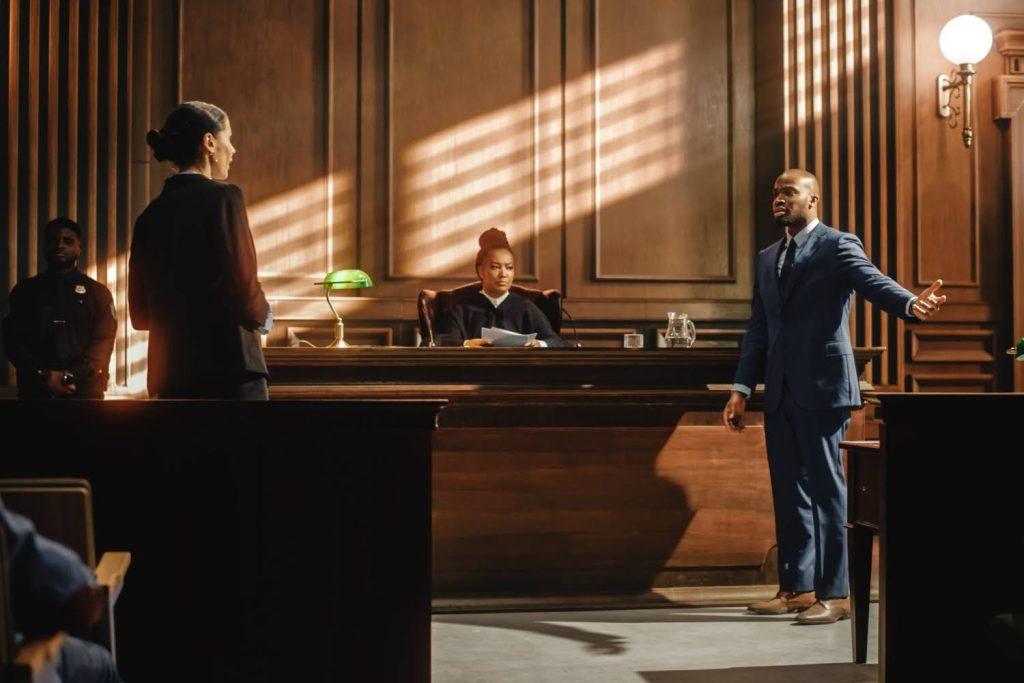
Most lawyers hear the phrase voir dire and immediately think of jury selection. Panels, strikes, cause challenges, and the careful process of uncovering bias without alienating jurors dominate the term’s popular meaning.
But voir dire is not confined to jurors—and one of the more peculiar moments in trial practice occurs when voir dire is conducted during the examination of a witness, often mid-testimony, sometimes abruptly, and usually outside the presence of the jury. To observers, and even to some lawyers, it can feel improvised or unnecessary.
It isn’t. And it doesn’t disappear just because there is no jury.
What “Voir Dire” Really Means—and Why It Applies to Witnesses
At its root, voir dire means “to speak the truth,” but procedurally it refers to a preliminary examination conducted to determine admissibility, competency, or qualification before evidence is considered by the factfinder.
Jury selection is simply the most visible application.
When applied to witnesses, voir dire serves a different but equally important function: it allows the court to determine whether testimony is legally permissible before it influences the outcome of the case.
Witness voir dire commonly addresses whether:
- A witness is competent to testify on a particular matter
- A proper foundation has been laid
- An expert is qualified and limited in scope
- A statement is admissible under a hearsay exception
- Constitutional requirements (voluntariness, confrontation, due process) are satisfied
In short, jury voir dire screens decision-makers; witness voir dire screens evidence.
Why Voir Dire Happens Mid-Examination
Witness voir dire most often arises after an objection interrupts testimony:
- “Objection, lack of foundation.”
- “Objection, hearsay.”
- “Objection, expert qualification.”
- “Objection, voluntariness.”
At that moment, the court cannot allow the testimony to proceed until it resolves a threshold legal question. The solution is voir dire: targeted questioning designed to create a factual record on which the court can rule.
In jury trials, this typically requires excusing the jury. But the underlying purpose has nothing to do with jurors themselves.
Jury Trials vs. Bench Trials: Same Function, Different Mechanics
Because voir dire is so visibly dramatic in jury trials, it is often assumed to be jury-dependent. It is not.
Voir dire of witnesses occurs in both jury trials and bench trials. What changes is not the legal basis, but the procedure.
In Jury Trials
- The objection is raised
- The jury is excused
- Voir dire occurs outside the jury’s presence
- The court rules on admissibility
- The jury returns, or the evidence is excluded
In Bench Trials
- The objection is raised
- The court permits voir dire on the record
- The judge explicitly rules on admissibility or limits consideration
- The testimony proceeds—or does not—based on that ruling
In a bench trial, there is no jury to protect. Instead, the court is protecting the integrity of the record and the discipline of its own decision-making process.
The Judge’s Dual Role—and Why Voir Dire Still Matters Without a Jury
Even in a bench trial, the judge occupies two analytically distinct roles:
- Gatekeeper of admissibility, responsible for enforcing evidentiary and constitutional limits
- Finder of fact, responsible for weighing credibility and determining what has been proven
Voir dire is the mechanism that allows the court to consciously resolve admissibility before evidence is considered in its fact-finding capacity. Judges are trained to compartmentalize, but they still insist on making that compartmentalization explicit—particularly when the ruling may matter on appeal.
This is why judges in bench trials often say things like:
- “I’ll hear you on voir dire.”
- “Proceed subject to the objection.”
- “I’m taking this for record purposes only.”
- “I will not consider that absent proper foundation.”
These statements perform the same function as sending the jury out of the room.
The Gatekeeping Function You Don’t Expect
The deeper justification for witness voir dire lies in the court’s role as evidentiary gatekeeper. Under both state and federal evidence rules, the judge—not the factfinder—decides admissibility.
Without voir dire, courts would be forced either to:
- Allow the factfinder to hear potentially inadmissible evidence and “disregard” it later, or
- Rule on objections without an adequate factual record
Voir dire avoids both outcomes.
This is especially important with:
- Expert testimony
- Technical or financial evidence
- Statements implicating constitutional protections
These are legal determinations, not matters of credibility.
Why Witness Voir Dire Feels Awkward
Voir dire during witness examination often feels disruptive because it breaks trial rhythm. Storytelling gives way to technical questioning. Lawyers ask questions they would never ask in front of a jury. Judges may take a more active role.
That discomfort is a feature, not a flaw.
Witness voir dire is one of the few moments in trial practice where advocacy yields to pure legal mechanics—where the question is not whether evidence is persuasive, but whether it is permissible at all.
Strategic Implications for Trial Lawyers
When used deliberately, witness voir dire is not merely defensive. It can:
- Narrow the scope of testimony
- Lock in foundational limitations
- Exclude or cabin damaging evidence
- Preserve appellate issues cleanly
- Signal command of evidentiary rules
In bench trials especially, precision matters. Sloppy voir dire educates opposing counsel and irritates the court. Targeted voir dire demonstrates discipline and credibility.
Judges notice the difference immediately.
Final Thought: Voir Dire Is About Permission, Not Persuasion
The oddity of voir dire during witness examination stems from expecting persuasion where none is intended.
Voir dire is not about convincing a jury—or even a judge—of what is true. It is about convincing the court that the law permits the factfinder to hear the evidence at all.
Whether in a jury trial or a bench trial, that quiet procedural safeguard ensures that verdicts are built on admissible foundations—and that the record can withstand scrutiny long after the trial ends.
At David C. Barsalou, Attorney at Law, PLLC, we help clients navigate business, family, tax, estate planning, and real estate matters ranging from document drafting to litigation with clarity and confidence. If you’d like guidance on your situation, schedule a consultation today. Call us at (713) 397-4678, email barsalou.law@gmail.com, or reach us through our Contact Page. We’re here to help you take the next step.