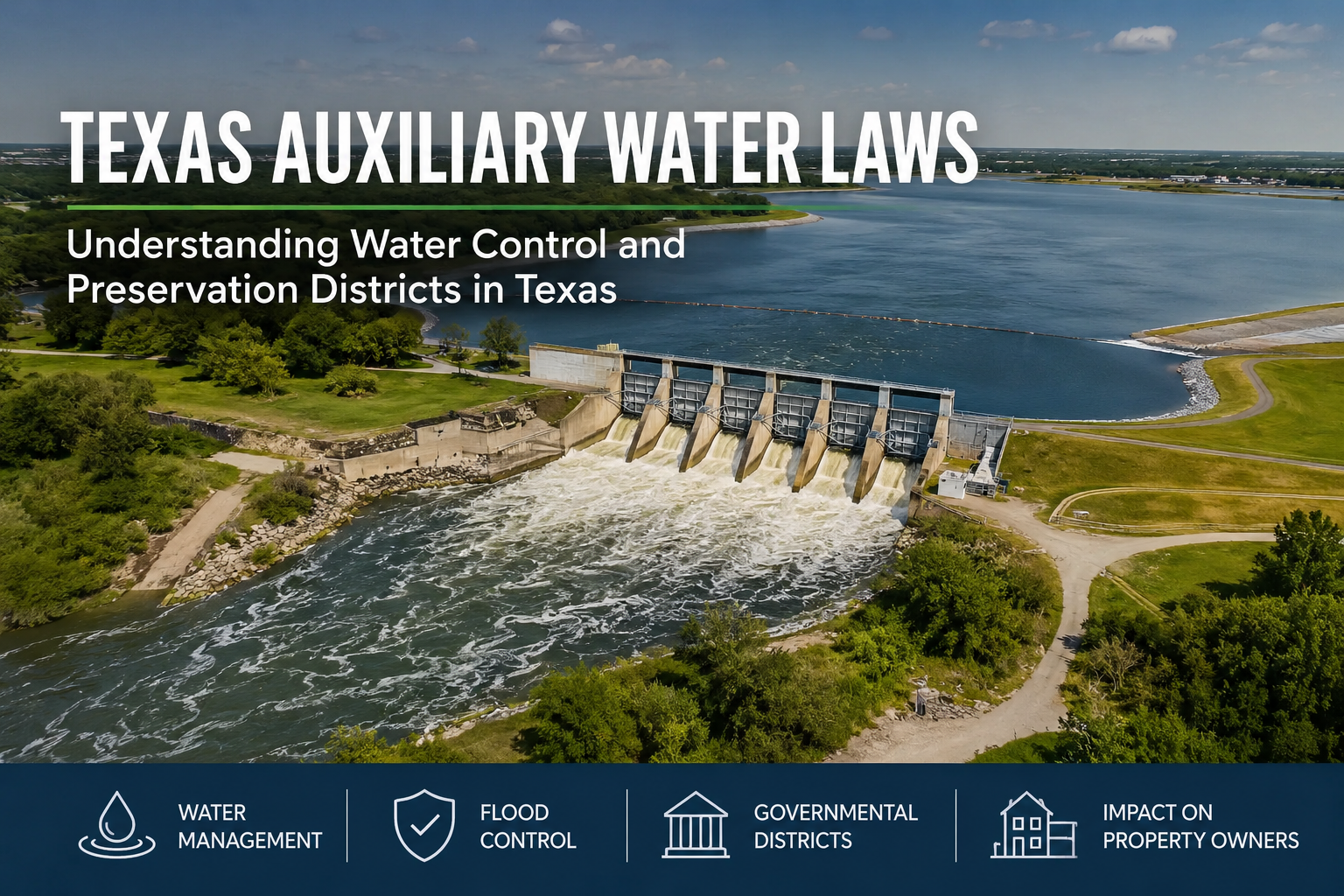
What Are the Texas Auxiliary Water Laws?
Most Texans have heard of the Texas Water Code, but relatively few know that Texas still maintains a collection of Auxiliary Water Laws that govern certain water districts and other specialized water-related entities.
These statutes may appear obscure, but they continue to provide the legal authority for numerous governmental water districts throughout Texas. For landowners, developers, and businesses, these districts can affect taxation, infrastructure, drainage, flood control, and water availability.
Why Were These Laws Created?
One of the primary purposes of the Water Control and Preservation District statutes was to allow local regions to protect and improve their water resources.
For example, Article 7809 provides:
"Said districts, when established, shall be for the purpose of the control and preservation of the purity of the waters of any rivers, creeks, bayous, lakes, canals, streams or other waters... by the prevention of the inflow of salt water or other deleterious substances... and the impounding of fresh water...." (Justia Law)
Although the language dates back more than a century, these goals remain highly relevant in modern Texas.
How Are Water Control and Preservation Districts Created?
The statutes authorize the creation of districts covering:
- One county
- Multiple counties
- Portions of counties
- Areas including municipalities or unincorporated land
Article 7808 states:
"One or more water control and preservation districts may be established..." (Justia Law)
These districts are governmental entities rather than private organizations.
What Powers Do These Districts Have?
The Legislature granted these districts broad authority to accomplish their purposes.
Among other things, Article 7810 authorizes districts to:
- Construct dams
- Build levees
- Install gates and locks
- Construct other water improvements
- Perform work outside district boundaries when necessary
- Issue bonds to finance projects (Justia Law)
These powers help explain why water districts often play significant roles in large development projects across Texas.
Why Should Property Owners Care?
Many Texans purchase property without realizing that it may lie within a water district.
Depending on the district, property owners may encounter:
- Special taxing authority
- Drainage projects
- Flood-control improvements
- Water infrastructure
- Utility services
- Easement issues
Understanding whether property is located within a governmental water district can be an important part of due diligence before purchasing real estate.
How Do These Laws Relate to Modern Texas Water Law?
Texas eventually codified much of its general water law into the Texas Water Code. However, many special water district statutes were notincorporated into the Water Code and continue to exist separately as the Auxiliary Water Laws. The Texas Legislative Reference Library notes that these laws remain an important source for researching water districts that were never folded into the Water Code. (Legislative Reference Library of Texas)
When Can These Laws Matter in Litigation?
Although most people will never litigate under the Auxiliary Water Laws directly, these statutes may become relevant in disputes involving:
- Property development
- Governmental authority
- Easements
- Drainage improvements
- Flood-control projects
- Bond issues
- Water district boundaries
For attorneys handling Texas real estate litigation, understanding these historical statutes can occasionally become surprisingly important.
Conclusion
Texas water law is much broader than the Texas Water Code alone. The Texas Auxiliary Water Laws continue to authorize and govern numerous water districts that influence land development, infrastructure, and water management throughout the state.
If you own property, plan to develop land, or become involved in a dispute involving a governmental water district, understanding these often-overlooked statutes may help you better understand your legal rights and obligations.
At David C. Barsalou, Attorney at Law, PLLC, we help clients navigate business, family, tax, estate planning, and real estate matters ranging from document drafting to litigation with clarity and confidence. If you’d like guidance on your situation, schedule a consultation today. Call us at (713) 397-4678, email barsalou.law@gmail.com, or reach us through our Contact Page. We’re here to help you take the next step.