Introduction
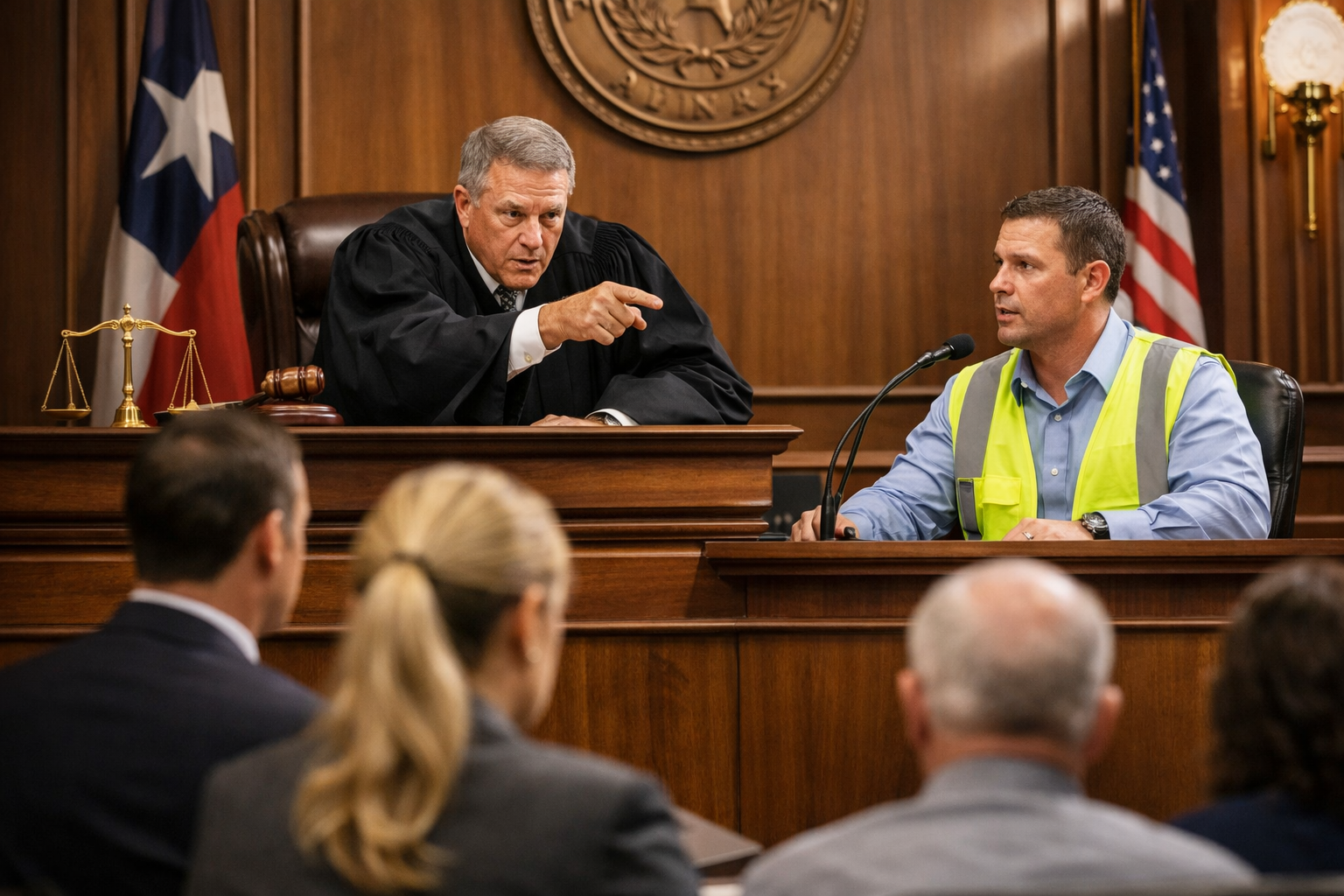
Most people assume trials are controlled entirely by the attorneys—each side presents its case, calls witnesses, and the judge simply rules on objections. But Texas law allows something far more unusual: the judge can call a witness on their own initiative.
This little-known authority, codified in Texas Rule of Evidence 614, can dramatically change the trajectory of a case. It’s rarely used—but when it is, it can catch attorneys completely off guard.
The Rule: Texas Rule of Evidence 614
Texas explicitly authorizes judicial participation in witness presentation:
“The court may call a witness on its own or at a party’s request. Each party is entitled to cross-examine the witness.”
— Tex. R. Evid. 614(a)
The rule goes further:
“The court may examine a witness regardless of who calls the witness.”
— Tex. R. Evid. 614(b)
And importantly:
“A party may object to the court’s calling or examining a witness either at that time or at the next opportunity when the jury is not present.”
— Tex. R. Evid. 614(c)
This is not theoretical authority—it is real, procedural power.
Why This Rule Exists
At its core, Rule 614 reflects a tension in trial practice:
- Trials are adversarial
- But courts are tasked with finding the truth
Rule 614 allows a judge to step in when:
- Critical facts are unclear
- Both parties have failed to develop the record
- A key witness exists but neither side calls them
- Testimony becomes confusing or incomplete
In other words, it is a safety valve against incomplete advocacy.
When Does This Actually Happen?
While rare, Rule 614 tends to surface in specific contexts:
1. Family Law Proceedings
In bench trials (especially custody or enforcement matters), judges may:
- Call a neutral third party (teacher, counselor, etc.)
- Clarify inconsistencies in testimony
2. Pro Se or Weakly Developed Cases
If one or both parties fail to properly present evidence, a judge may intervene to:
- Fill gaps in the record
- Prevent an unjust outcome based purely on poor lawyering
3. Highly Technical Disputes
In construction, accounting, or valuation disputes:
- A judge may question or even call a witness to clarify technical issues
Strategic Implications for Attorneys
1. You Are Not Fully in Control
Even in a well-prepared case, the court can:
- Introduce new testimony
- Shift the factual focus
- Undermine a carefully planned narrative
That’s unusual—and potentially dangerous.
2. Cross-Examination Still Applies
The rule preserves fairness:
“Each party is entitled to cross-examine the witness.”
So while the judge can call the witness, you still get to attack credibility and substance.
3. Objections Must Be Timely—but Carefully Handled
Rule 614(c) allows objections, but practically:
- Objecting to a judge’s conduct is delicate
- Best practice is to:
- Request a sidebar or recess
- Make a clean record outside the jury’s presence
4. Jury Perception Risk
In jury trials, this is where things get interesting:
- Jurors may give extra weight to a witness called or emphasized by the judge
- Judicial questioning can appear as endorsement or skepticism
That creates a subtle but powerful influence on the outcome.
Limits on Judicial Authority
Despite its breadth, Rule 614 is not unlimited.
1. The Judge Must Remain Neutral
Texas courts consistently hold that judges cannot:
- Become advocates
- Signal bias
- Improperly influence the jury
Excessive questioning or leading behavior can create reversible error.
2. Due Process Still Applies
Even when a judge calls a witness:
- Parties must have the opportunity to cross-examine
- The record must remain fair and balanced
If not, appellate courts may intervene.
Practical Example
Imagine a construction dispute where:
- Both sides present conflicting expert testimony
- Neither calls the actual project manager
The judge, frustrated with gaps in testimony, calls the project manager directly under Rule 614.
Now:
- The factual record changes
- Both parties must adapt in real time
- Cross-examination becomes critical
That’s Rule 614 in action.
Why This Rule Is Often Overlooked
Rule 614 flies under the radar because:
- It’s rarely invoked
- It feels inconsistent with adversarial norms
- Many attorneys assume judges won’t use it
But in reality, it’s always sitting there—quietly available.
Final Thoughts
Texas Rule of Evidence 614 is one of those “you don’t think about it until it happens” rules.
It reflects a deeper truth about litigation:
- You can prepare the case
- You can control your witnesses
- But you cannot fully control the courtroom
And occasionally, the judge may step in and remind everyone of that.
At David C. Barsalou, Attorney at Law, PLLC, we help clients navigate business, family, tax, estate planning, and real estate matters ranging from document drafting to litigation with clarity and confidence. If you’d like guidance on your situation, schedule a consultation today. Call us at (713) 397-4678, email barsalou.law@gmail.com, or reach us through our Contact Page. We’re here to help you take the next step.